

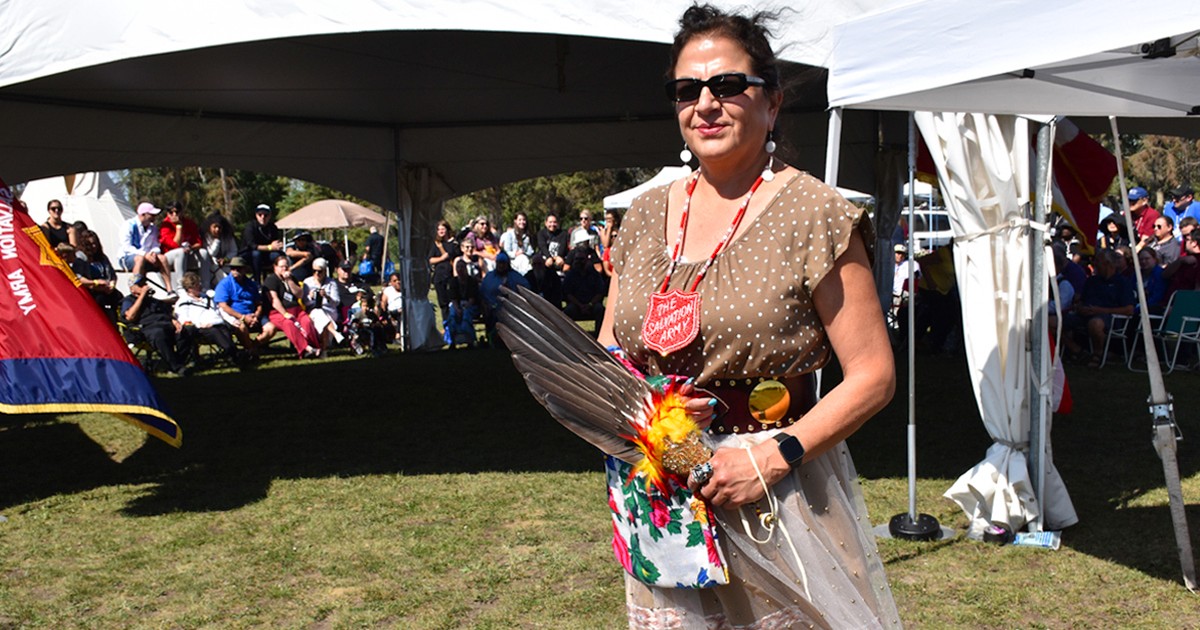
“A handshake goes a long way,” says Tracy Desjarlais (Piapot First Nation of Saskatchewan), Indigenous liaison for public affairs and emergency disaster services (EDS) for the Canada and Bermuda Territory. “And to build trust within the nations, it’s important for us to be present.”
As part of The Salvation Army’s commitment to establishing this presence, building trust and creating relationships with Indigenous communities, the territory developed the Indigenous liaison role, which Desjarlais has held for the past three years. Abbigail Oliver, Salvationist staff writer, sat down with Desjarlais to learn more about her culture and history, the work she’s been doing, and how the Army can better serve Indigenous Peoples across Canada.
Tell me about yourself and your current role at The Salvation Army.
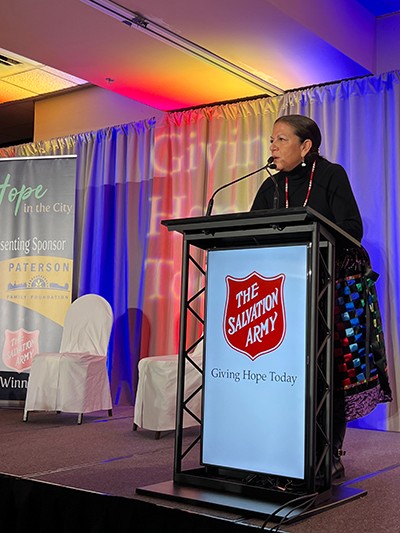
Tracy Desjarlais: My spirit name is Old Lady Eagle Woman, and I am from the Piapot First Nation in Saskatchewan. I’ve been working at The Salvation Army since April 2023, starting as the Indigenous liaison in Regina, where I live. In October 2024, I was seconded to be the Indigenous liaison for public affairs and EDS for the entire territory.
I have 25 years of experience working in the courthouse in Regina, first as a judicial officer, and then as an Indigenous court worker where I assisted Indigenous people in the court system. I learned about all people’s traumas and helped them navigate the court system and find community supports, and assisted them on their journeys.
Growing up, my grandmother was the only woman chief in our First Nation, and I learned a lot from her. I used to go with her to different meetings, watching and observing how she engaged with people in a respectful manner. I learned that a handshake goes a long way.
Now, I have the opportunity to attend different ceremonies in various First Nations communities—for example, sitting in on a Dakota ceremony, which would be different from a Cree, Anishinaabe or Saulteaux ceremony. Everybody has their own distinct traditions, language and culture, and I’ve had the pleasure to get to know their elders and community champions, watching and learning from them.
How does The Salvation Army intersect with Indigenous communities across Canada?
TD: The Salvation Army serves Indigenous communities in many ways. From what I’ve seen during my time in this role, many Indigenous people—I call them my relatives—are in those spaces where The Salvation Army provides support, whether it’s food assistance, shelter or other programming. Some are experiencing homelessness. When I walk into the Army’s different housing facilities, I often see my relatives there. Additionally, The Salvation Army provides safe spaces for our women and young girls, and for survivors of human trafficking.
We’ve been providing these services for a long time, but now it’s important for us to give back to the Indigenous community and to help them do for themselves. That’s big.
Can you tell me about the role of Indigenous liaison? Why is this work important to our mission?
TD: As Indigenous liaison, I am responsible for building bridges between The Salvation Army and the Indigenous community. I try to meet with different leadership, community members and organizations across the territory to build those relationships, from coast to coast to coast.
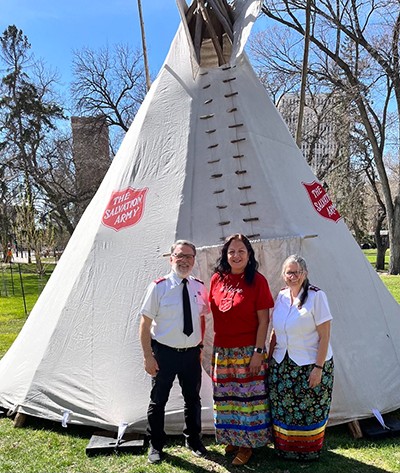
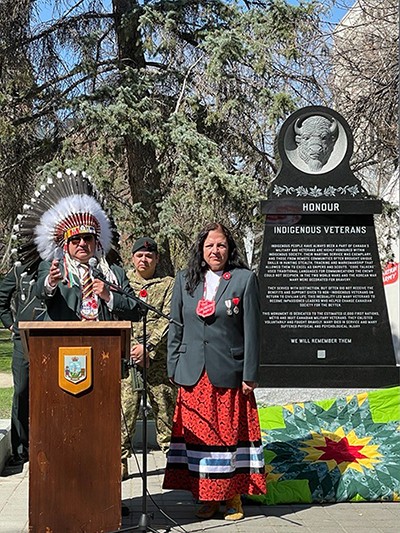
I also attend different community and Indigenous events, such as chiefs assemblies. For example, I sat on a committee where we created an Indigenous veterans monument to be placed in the city of Regina and I wore two hats there—as the president of the Saskatchewan First Nations Veterans Association, as well as the Indigenous liaison. We had our Salvation Army tipi set up, and an EDS vehicle to serve refreshments to the people who were there to witness the unveiling. Our presence helped show the Indigenous community that we care.
Establishing those connectionson behalf of The Salvation Army is important so that we can remind people of how we can help, share knowledge and continue to build those relationships in the spirit of reconciliation.
At the same time, I’m also educating Salvation Army staff and officers on the history and culture of First Nations, so that they can continue to serve First Nations communities more effectively.
How is EDS vital to the Army’s relationship with Indigenous communities?
TD: Once we establish a good relationship with a First Nations community, we can start offering more EDS training and building capacity within the community to respond to emergencies.
Some nations are more advanced in their emergency management. Some have fire trucks, and others don’t have anything. So, part of my job is to connect with them and determine what their needs are and how we can help, while also understanding their culture so that we can better serve them. For example, I often start by talking to one of their elders, and they will guide me in what they need and who to speak with. It’s important to me to have those face-to-face interactions, as opposed to just a phone call. It helps build those trusting relationships.
Once we understand the community better, our team provides training to help volunteers learn about being good partners with Indigenous communities. We share what The Salvation Army does and can do for them.
Should there be an emergency in a First Nation community, I have been trained in EDS and would be part of the team that goes out to provide that response, while informing the EDS volunteers of the culture and language of the nation. For The Salvation Army to have the knowledge of those cultural protocols, and be able to provide emergency response, we could be saving lives and reducing harm in that community.
Why is this work important to the broader goal of reconciliation? How can Salvationists and mission partners help work toward this goal?
TD: The Salvation Army continues torespond to the Truth and Reconciliation Commission’s Calls to Action—building partnerships, learning from and walking gently with Indigenous communities.
The harms perpetrated by churches and by figures of authority continue to reverberate throughout Indigenous families and communities. There’s a long way to go in healing those harms, but healing happens when we gather in community. Reconciliation is about creating real relationships with each other in community.
Understanding Indigenous cultures is important for The Salvation Army to provide appropriate, culturally sensitive service to the nations. We, as The Salvation Army, must seek to understand the legacy of the trauma, which includes the residential schools and cultural oppression of our nations. We must learn the traditions, cultures and languages, so that we can understand and respect them in our service.
To build trust within the nations, it’s important for us to be present. We can gain knowledge from the Indigenous community and also share our knowledge with them.
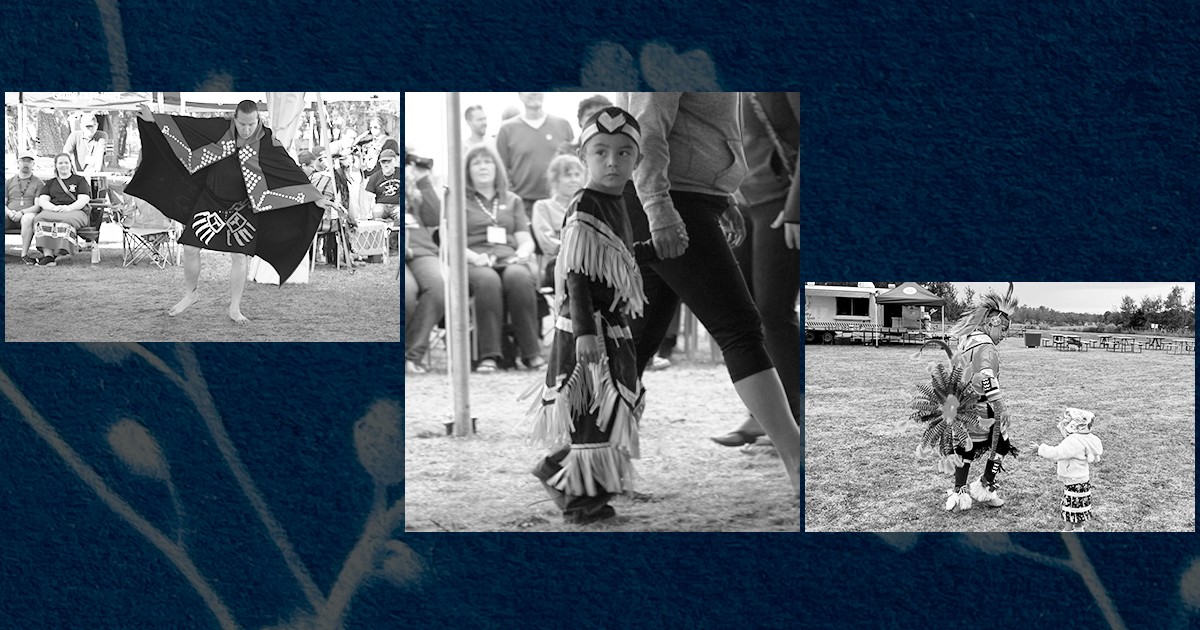
I would encourage everyone: Attend ceremonies, whether it be a powwow or different events such as the Celebration of Culture. Sit with an elder. Learn about the history of the different nations, whether it’s the Dakota, the Métis, the Cree, the Anishinaabe—understand the differences and respond appropriately. Ask questions. Show up, and show that we’re eager to learn and share.
To learn more about The Salvation Army’s Indigenous ministries and find resources, visit salvationist.ca/community-engagement/indigenous-ministries.


Leave a Comment