

Disability, Accessibility and Belonging
Supporting and promoting interdependence, human flourishing and self-determination of all people who are created in God's image.
What does this work look like?
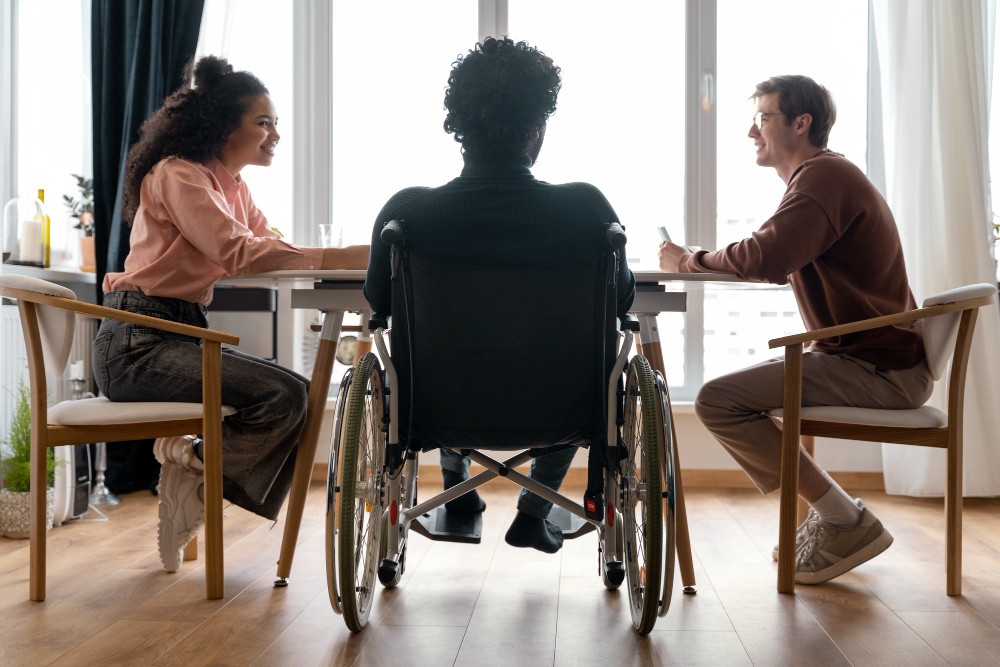
Disability, Accessibility and Belonging is about more than physical access. It is about ensuring that people with disabilities are welcomed, valued, and able to participate fully in every aspect of Salvation Army community life — from programs and services to worship and volunteering.
This work equips ministry units with the knowledge, tools, and resources to understand disability through a social justice lens, improve the accessibility of their spaces and programs, and build communities where every person genuinely belongs.
This resource supports
-
Corps officers and ministry unit leaders building inclusive programs
-
Staff and volunteers who support participants with disabilities
-
Teams completing Territorial Standards of Excellence accessibility requirements
-
Anyone committed to reducing barriers in Salvation Army spaces and services
Three dimensions of inclusion
Genuine inclusion for people with disabilities requires action across three connected dimensions — understanding, access, and community.

Disability
Understanding disability through a social justice and person-centred lens — recognizing that barriers are often created by environments and attitudes rather than by disability itself. Building awareness among corps officers, staff, and volunteers is the foundation of everything else.
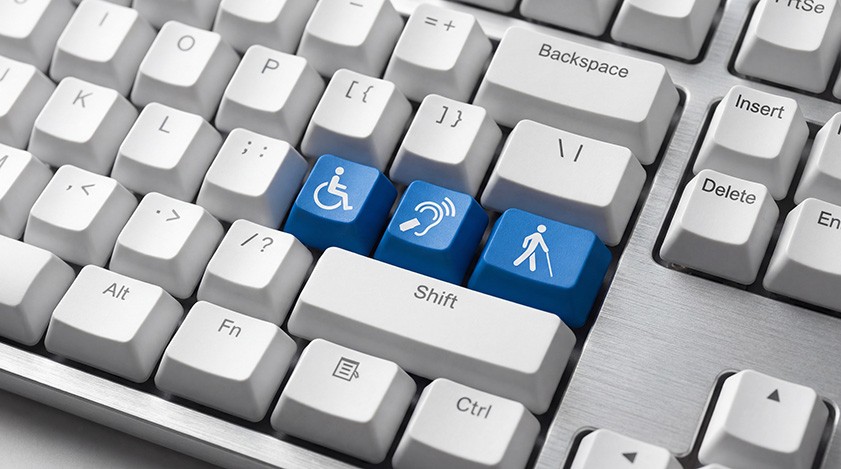
Accessibility
Identifying and removing physical, communication, programmatic, and attitudinal barriers in Salvation Army spaces and services — so that participation is possible for everyone, regardless of disability type or support needs.
Belonging
Moving beyond access toward genuine belonging — where people with disabilities are not just present but are valued, contributing members of the community. Belonging is built through relationships, welcome, and the intentional cultivation of inclusive cultures.
Participation resources
Tools, guides, and materials to help ministry units build accessible, welcoming programs and communities for people with disabilities.

RightNow Media
RightNow Media gives Salvation Army corps in Canada and Bermuda free access to thousands of video Bible studies for small groups, leaders and families.
Open our curated library | Register for free access | Learn more
-
Book Recommendations
Book Recommendations (03/01/2024)
-
Beyond Saints and Superheroes
Watch Here
Podcast: (Season 3, Episode 7) Allen Jorgenson and Laura MacGregor
Join Amy and Miriam as they talk with Allen Jorgenson and Laura MacGregor about their recent book: "Beyond Saints and Superheroes: Supporting Parents Raising Children with Disabilities - A Practical Guide for Faith Communities."
Available with captions on YouTube: https://youtu.be/4-uwXfrG7wU
-
Broadview Webinar Series
Watch Here
Prescence to Participation - The Spirit is Not Disabled
Major Shelley Kerr (Divisional Headquarters, Bermuda) and Major Christine Johnston (Broadview Village) have both been involved in ministry with people with disabilities for a few years. They have both come to recognize that people with disability, who are often seen as those with needs actually have much to offer our faith communities. Throughout the past few years Shelley and Christine both have developed a growing passion to see all people, regardless of their ability, fully engaged in our Corps and other ministry units. In Christine's own life experience, she has discovered that her disabilities may cause some limitations and challenges but they are also a gift of God that allow her to minister effectively and often from a unique standpoint.
-
The Adapted Way
The Adapted Way
Our mission is to equip churches with the tools and resources they need to accommodate students with disabilities in their ministries and programs and to present the gospel to them in a way that is accessible. Our dream for this mission is that behavioral and instructional barriers will no longer stand in the way of students learning about who Jesus is and his love for them.
-
STATEMENT OF POSITION
READ MORE
All people are made in the image of God and are of equal intrinsic value. Thus, The Salvation Army celebrates difference and seeks to treat all people with dignity and respect. Many people around the world experience discrimination due to disabilities. The reality ranges from stigma or negative attitudes to deeply engrained and systemic exclusion. The Salvation Army's response is to go beyond minimum national legal requirements and to make it possible for persons with disabilities to be fully included and to flourish. We know less of who God is and how God appears in the world when people with disabilities are excluded. Inclusion is beneficial for everyone. Diversity within our communities and congregations strengthens us and shapes our mission and ministry. The aim of all Salvationist practice is to ensure that we are a church that makes the embodied gospel accessible for all.
-
RightNow Media
RightNow Media gives Salvation Army corps in Canada and Bermuda free access to thousands of video Bible studies for small groups, leaders and families.
Open our curated library | Register for free access | Learn more
-
The Journey Toward Full Participation Recording
Major Catherine Spiller has made the recording to The Journey Toward Full Participation presentation with subtitles.
-
Disability Inclusion Checklist
The Disability Inclusion Checklist is here to help your local mission expression reflect on the inclusion of people with disabilities in your context. The checklist can be used by mission leaders or members keen to advocate for greater disability inclusion
Courtesy of the Australian Territory


Questions about disability inclusion?
community.mission@salvationarmy.ca
