



RECOMMENDATIONS
The Officer Well-Being Study (OWBS) gathered rich insights into the lived experiences, challenges and aspirations of Salvation Army officers. Through this process, six emergent themes were identified, highlighting key factors that shape officer well-being, including relationships, organizational culture, personal engagement and systemic barriers.
Building on these findings, the study’s third phase–meaning-making sessions with officers and leadership–translated the themes into six focused priority areas for action. This collaborative process ensured that the recommendations were not only grounded in research, but also aligned with the practical realities and strategic direction of the organization.
The six key priorities, listed below, define the steps needed to strengthen well-being, guide organizational transformation and support a healthier future for Salvation Army officers.
These priorities were identified as deeply interconnected and mutually reinforcing in nature. As a result, while specific actionable steps will be developed for each of the six key priority areas, officer well-being will be approached holistically, recognizing the importance of addressing the whole experience rather than isolated issues.
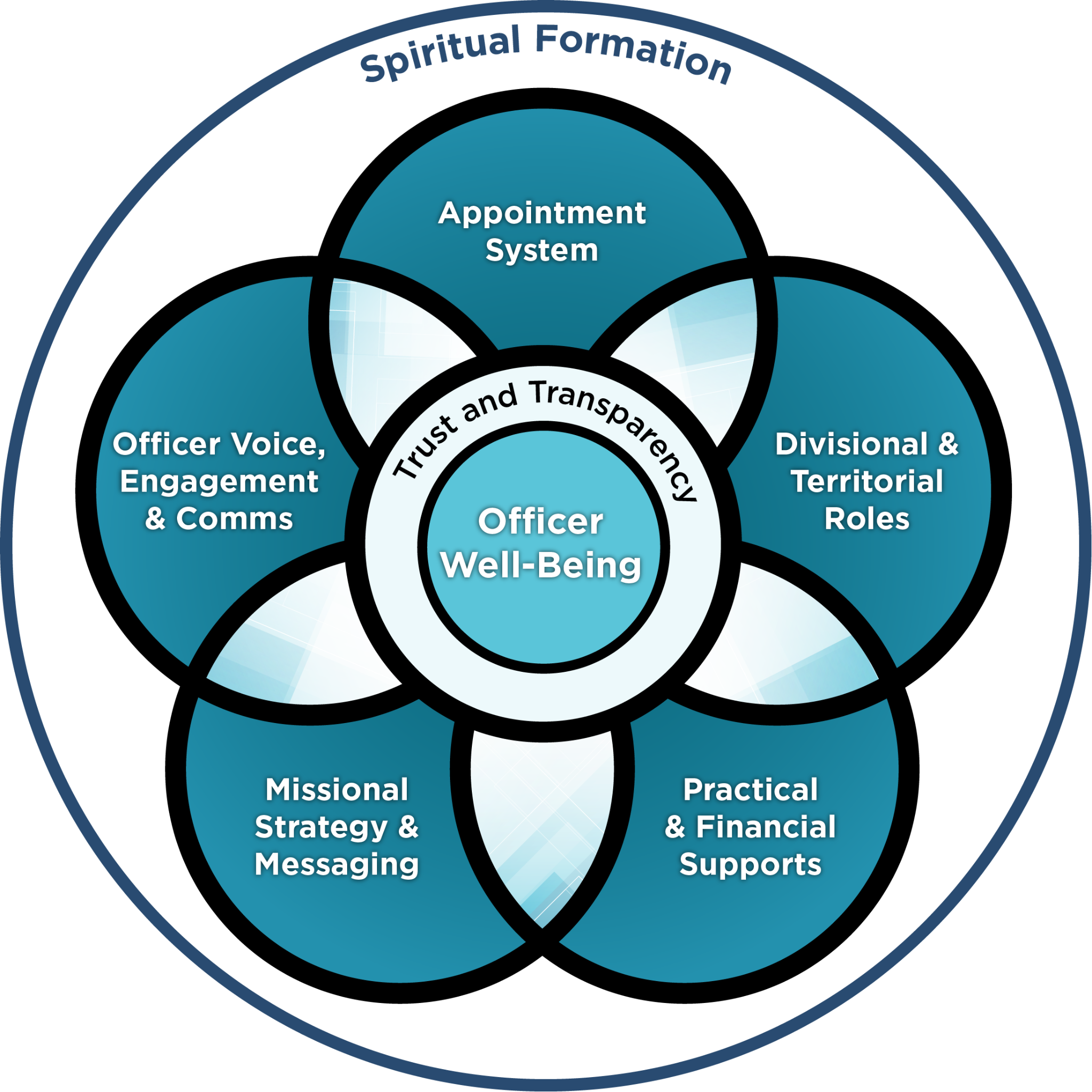
Key Priority 1: Redesign the Appointment and Appointment Transition Process
The appointment process is a defining experience in the life of a Salvation Army officer, shaping not only their ministry but also their personal and family well-being. Officers across the territory have expressed a desire for greater clarity, predictability and involvement in how appointments are determined and transitioned. The current system, heavily influenced by tradition and practicalities, often leaves officers feeling disconnected from decisions that profoundly affect their lives.
Key Priority 2: Foster Trust and Transparency
Trust is a cornerstone of healthy organizational culture and officers have made it clear that rebuilding trust requires more than occasional gestures—it calls for sustained, visible commitment to openness and accountability. Many officers shared that they often feel left out of key decisions or uncertain about the rationale behind leadership actions, which can erode confidence and connection.
Key Priority 3: Strengthen Officer Voice, Engagement and Communication
Officers are deeply invested in The Salvation Army’s mission and want to be active participants in shaping its future. The study revealed that while officers are often asked for input, they do not always feel their perspectives are genuinely considered. This disconnect can lead to disengagement and a sense of disempowerment.
Key Priority 4: Increase Practical and Financial Support for Ministry Units
The demands of officership extend beyond preaching and administration to include managing complex ministry units and delivering programs that meet community needs. Officers often face significant operational challenges—limited administrative support, inadequate technology and resource constraints—that hinder their ability to focus on mission impact. The study highlighted that when ministry units lack sufficient financial and practical support, officers are forced to absorb these burdens personally, reducing sustainability and effectiveness.
Key Priority 5: Clarify Divisional and Territorial Leadership Roles
This priority aims to bring greater clarity to the distinct roles and responsibilities of divisional and territorial leadership, enabling officers to know exactly where to turn for guidance, support and decision-making. When these boundaries are unclear, officers can experience confusion and inefficiencies that undermine trust and organizational cohesion. By defining and communicating these roles clearly, the Army can create a leadership structure that is predictable, transparent and aligned with mission priorities.
Key Priority 6: Decide Missional Strategy and Messaging
In a time of cultural and societal change, officers are seeking clarity about The Salvation Army’s mission and how it is communicated both internally and externally. The study revealed that alignment with mission and messaging is a key driver of officer well-being. When officers feel connected to a shared purpose, they experience greater meaning, engagement and resilience in their work. Both officers and leadership expressed strong alignment on the need for inclusive processes that redefine and articulate the Army’s missional identity, ensuring that strategy and communication channels reflect this shared vision.

