



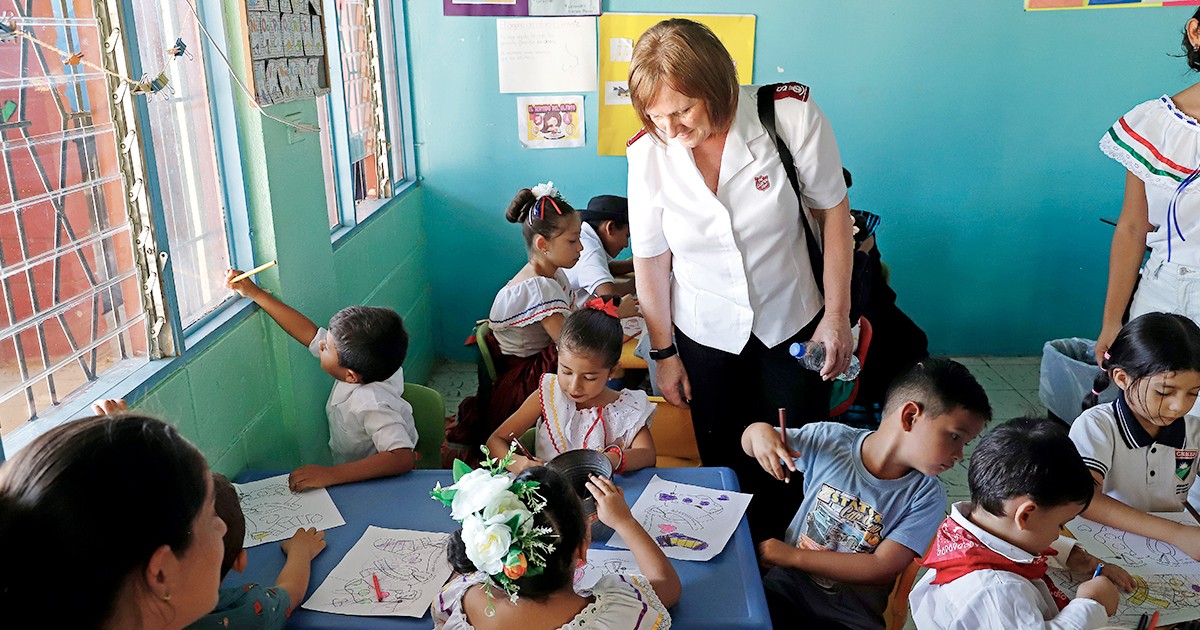
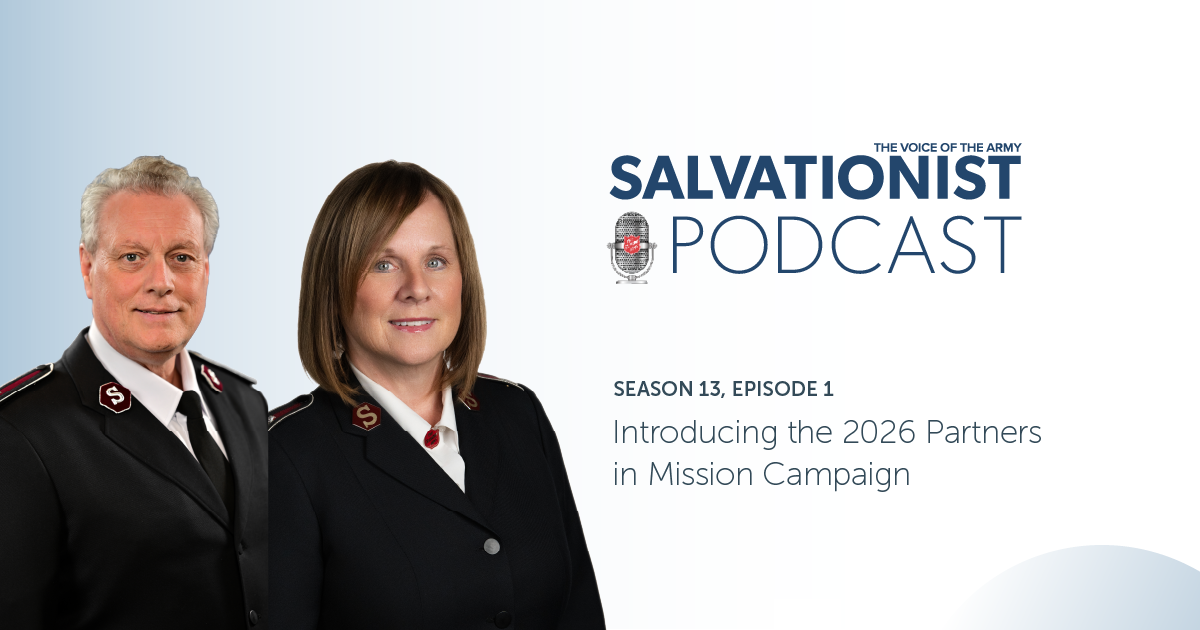
Commissioner Lee Graves, territorial commander, spoke with Lt-Colonel Brenda Murray, director of the international development department, about the Self-Denial Campaign for the Salvationist podcast. Here is an excerpt from their conversation. Listen to the full interview below:
Commissioner Lee Graves: When we think back to the beginning of The Salvation Army, one of our Founders, General William Booth, had an innovative, creative idea. He invited people to give something up for a time so they could contribute to the Army’s work. It became known as the Self-Denial Appeal, linked to the Lenten season. At International Headquarters (IHQ), they look to every territory around the Salvation Army world to participate—whether it’s a territory that is receiving funds or giving funds.
Lt-Colonel Brenda Murray: Yes, it’s so important to realize that everybody does participate. I remember being on a mission trip to Cuba, and at the corps on Sunday, one of our team members was moved to tears to see a woman put money in the offering plate for Self-Denial—to see the need, and yet they’re still giving. That’s what makes the Self-Denial Campaign so rich, that every Salvationist is called to support the campaign around the Army world, and it unifies us in mission and purpose.
LG: This is one of the wonderful ways that we truly are a global family, a global Salvation Army. The international goal for the Self-Denial Campaign is in the range of $25 million (US) annually, and those funds are allocated as territories have need, to operational budgets to keep Salvation Army ministry going. What is our territorial goal?
BM: Our goal is $2.4 million, and I’m happy to say that last year we were just a little short of our goal, which is incredible when we consider the impact that the global pandemic had on international and local initiatives.
LG: The Canada and Bermuda Territory also uses the term Partners in Mission. What is the difference between the Self Denial Campaign and Partners in Mission?
BM: We adopted the Partners in Mission terminology a number of years ago, and I think it very much aligns with the ethos of Self-Denial. It’s really about faith in action. Jesus said, “If any wish to come after me, let them deny themselves and take up their cross and follow me” (Matthew 16:24 NRSVUE). So, to me, it’s about spiritual obedience and sacrifice, setting aside our own personal comfort and convenience to prioritize God’s mission. And when every Salvationist participates in Self-Denial, the worldwide Army stands together in solidarity. We are one Army, with one mission and one message. And I think this speaks to unity in global mission. We are partners in mission.
LG: How can Salvationists and all ministry units be part of our Self-Denial efforts this year?
BM: It’s always encouraging and fun to hear about the different ways corps and ministry units raise funds. It might be a cake auction at a corps, or a Sunday soup and bun lunch, or a walkathon—lots of fun things.
LG: The international development department is also part of projects around the world that are making an incredible difference. What is the difference between the Self-Denial Campaign and the work you do every day in international development?
BM: As well as developing resources for the Self-Denial Campaign, we also oversee approximately 94 humanitarian relief and development projects across 34 countries. We have focus areas of mother and child health projects, agriculture and food security, education, disaster relief and other areas. There are many ways that the funds can come into the department to support our projects—for example, through direct mail appeals, legacies and endowments.
LG: Our goal for the Self-Denial Campaign again this year is $2.4 million. And we can do it. We’re reminded of the words of Jesus, “ ‘Whatever you did for one of the least of these brothers and sisters of mine, you did for me’ ” (Matthew 25:40).
BM: Thank you, Commissioner. I just want to say it’s a real privilege. When I’ve had the opportunity to travel internationally, you really do see the difference that it makes to our global Salvation Army. So often, people say thank you. So, on behalf of all the people around the world who have said that to me, I would love to express my thanks to everyone who supports The Salvation Army internationally.
This story is from:



Leave a Comment