



As I was growing up in Jamaica, faith was the underlying rhythm of all the simple moments of everyday life.
Sunday dinner was sacred. Preparations for cooking began early, before church. I remember the sound of grating the coconut for the rice and peas, while the pressure cooker pot sent out steam. After a powerful Sunday holiness service, we gathered again to complete the meal, usually fried chicken, stewed pork or beef. In my family, dinner was always at three o’clock, and we sat together, sometimes around a table but mostly at the back step or on a stone, to eat a scrumptious meal of fried chicken with rice and peas, plantain and a Jamaican-style cabbage slaw, with a tall glass of carrot and beetroot juice (with milk) or lemonade (when money was tight).
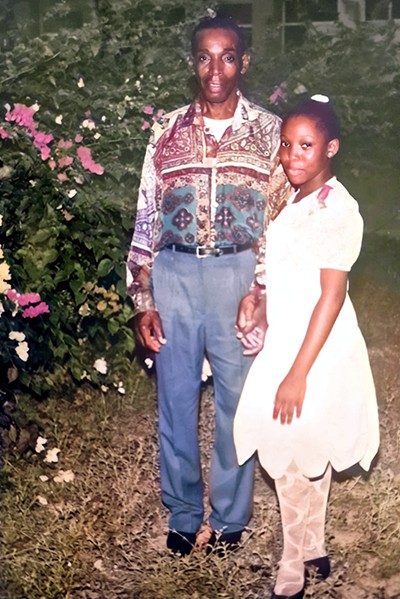
Usually, friends or cousins would stop by, and there was always enough food because it was about more than just the food—it was also about the fellowship and feeding of the soul. If my mom realized she had company, she would rub up a quick toto (a traditional, dense and moist coconut cake) or dookunu (a traditional Jamaican dessert or snack). We had coconut trees, so sometimes Daddy would chop us a “jelly” in the evening, or we walked about a mile away to our favourite ice cream spot, called “Crazy Jim,” just to walk off the food. This ritual of breaking bread is a vital part of our communal bonds and certainly reinforces my Christian living.
The lively, expressive nature of Caribbean arts and music flows naturally into worship. One of my favourite memories is the entire church rocking or dancing to the sound of the beat of the drums, where the band may or may not have sheet music. As Jamaicans, our expression—of music, clothes, hair and confidence—is always big. We praise God in a big way, and we don’t hide it because ourJamaican pride won’t let us. Being deeply involved in my Salvation Army corps—as a band member and in praise and worship—wasn’t just church duty; it was a culturally intuitive way to connect with God. The passion, movement and resilience celebrated in our culture find their most authentic voice in our testimonies, and I find that the words of songs resonate with me as strongly as Scripture.
This cultural vibrancy doesn’t just coexist alongside my faith; it informs how I perceive God’s love being expressed in the world. My journey as a Christian, Salvationist, officer, mother and member of the African diaspora—specifically through the vibrant lens of the Caribbean experience—has deeply shaped my understanding of divine grace and my mission as a follower of Christ. I find great resonance in Filipino theologian José de Mesa’s words, “God appears to us through the burning bush of our cultures,” as my Caribbean identity is inseparably woven into the fabric of my faith.
Cultural Identity and Faith: The Joyful Connection
Embracing my culture allows me to see how God’s message transcends and adapts, becoming palpable and relevant in every context. This approach mirrors the missionary principle of the Apostle Paul—a figure who stands out as a guiding light for me—to “become all things to all people so that by all possible means I might save some” (1 Corinthians 9:22).
My deep sense of belonging extends beyond my local community. As a Jamaican, a Canadian and a Christian, I share the perspective of loving beyond boundaries.
The Salvation Army, seen in the Caribbean as a unique expression of God’s love, thoughtfully tailored to meet the diverse needs of the people it serves, reinforces the idea of a global family.
The unity and shared purpose of The Salvation Army’s worldwide network, which supports local needs, such as education, disaster relief and poverty alleviation in the Caribbean, reminds me that we are part of something much larger: God’s kingdom.
The Challenge of Two Worlds
The intersection of my Caribbean identity and faith has involved navigating the tension between personal control and divine destiny. When I left Jamaica, I had no intentions of being where I am now. I originally came to Canada as a student, following a time of personal difficulty. But my relocation initiated a “crazy rollercoaster ride,” moving me from Jamaica to the Scarborough area of Toronto, then to Mississauga, Ont., and back, and finally to Winnipeg, where I attended the College for Officer Training and now serve as a corps officer.
This challenging journey highlighted the pull between my human striving and God’s faithfulness. The real difficulty was in balancing my own plans with God’s way. Instead of dwelling on the pain, I chose then—and still choose—to trust in the promise: “For I know the plans I have for you ... plans to prosper you and not to harm you, plans to give you hope and a future” (Jeremiah 29:11).
As I allow Jesus to lead me, I have experienced the exchange of beauty for ashes, strength for fear, gladness for mourning and peace for despair (see Isaiah 61:3). The spiritual and geographical uprooting brought me back to the simple, childlike faith of being perfectly willing to trust that Jesus knows where we are going.
A Call to Service and Trust
In response to Jesus’ guiding light, I try to embody the four-year-old me: not perfect or fully knowing but instead being perfectly willing to trust that Jesus knows my journey. This trust, which allows God to trade my control for his way, is beautifully captured in the song my mother gave me as a prayer when I left Jamaica to resettle in Canada:
I’m in his hands, I’m in his hands;
Whate’er the future holds
I’m in his hands,
The days I cannot see
Have all been planned for me;
His way is best, you see;
I’m in his hands. (SASB 848)
The moment we try to control our destiny, chaos happens. God’s way, revealed through the experiences and cultures that shape us, is always best. Let us embrace our role as active participants in a grand narrative of redemption. Let us pray for guidance as we seek to fulfil God’s calling, both locally and globally, reflecting the love and grace of Jesus Christ in all we do.
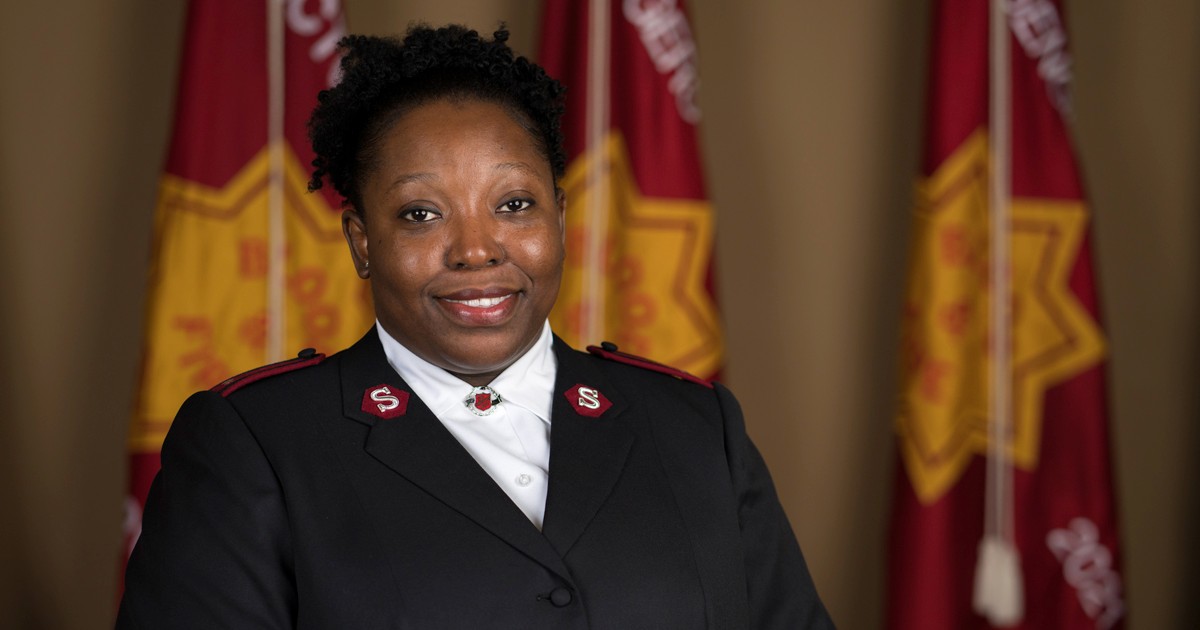
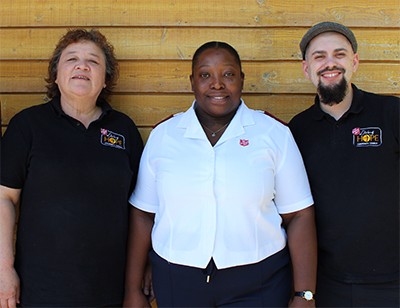
Lieutenant Krishna McFarlane is the corps officer at Living Hope Community Church in Winnipeg.




Beautiful article, and I am proud to work alongside Pastor Krishna as I know how much she puts into her church and her mission! God Bless you!