


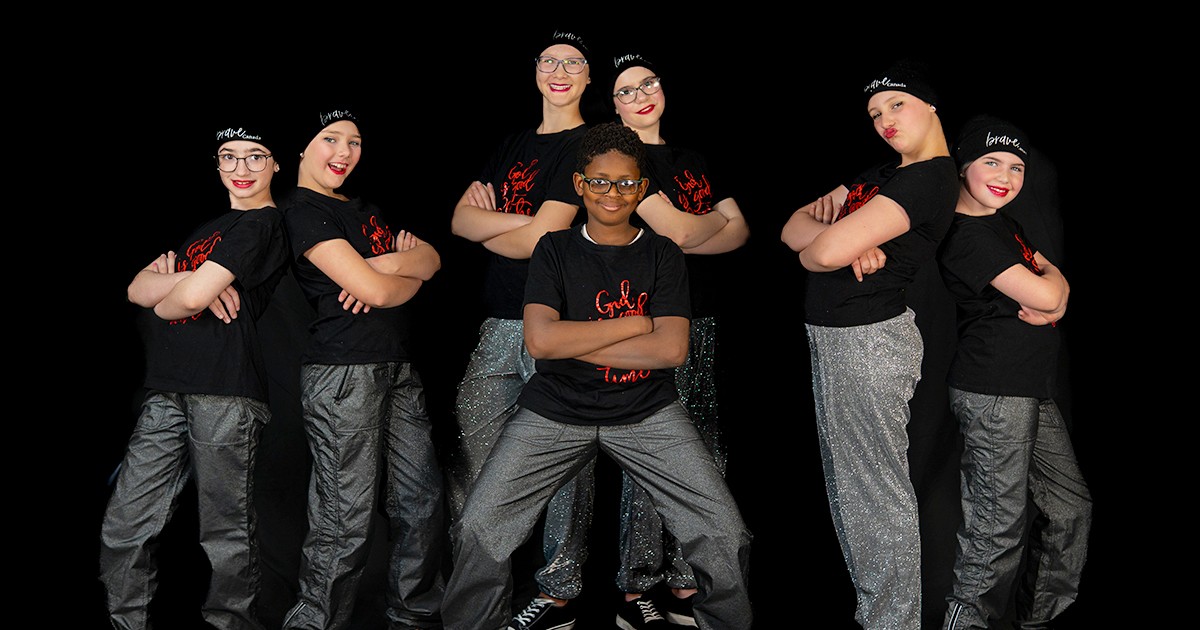
For more than a decade, the S.O.UL. Dance program at Prince George Community Church, B.C., has been providing an accessible outlet for children and youth to express their souls, while learning about God and dance.
“Dance is such a beautiful combination of physical and soul expression,” says Kessa Daniels, who leads the program. “When we’re able to connect with God through music, movement and the teachings of the Bible, we can express our faith in a way that no other art form can.”
S.O.UL. Dance (Seeking Out U Lord) has two main program branches: the first, called the recreational stream, is outreach based. The other is the competitive stream with a greater focus on advanced dance skill, technique and vocabulary, paired with a discipleship component.
According to Daniels, most of the youth at the corps are connected to the church through S.O.UL. Dance. “We’re meeting new kids through the recreation program. They’re coming back for a couple sessions, and then they’re getting involved in the competitive program,” she says. “It’s wonderful to see that outreach ministry filtering into our corps, bringing discipleship to youth from the community.”
A DIFFERENT MESSAGE
With the cost of living on the rise, there is a high demand for affordable extracurricular activities for youth. Many parents struggle to afford to put their children into clubs and community sports, especially those such as dance that require significant start-up costs for equipment and registration fees.
"Dancing at The Salvation Army means spreading the love of God." - Charlize Adolph
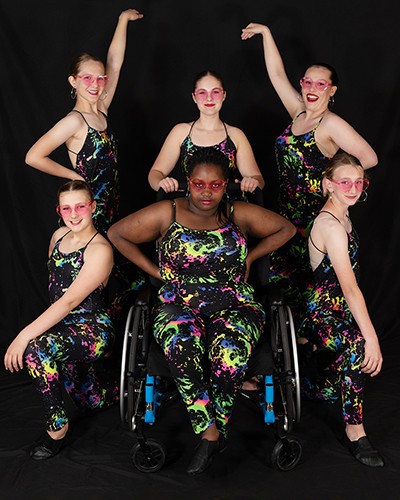
The S.O.UL. Dance recreational stream reaches out to kids in the community who have an interest in taking dance lessons but whose families may not be able to afford traditional dance studios. Some students experience other barriers, such as a disability, that prevent them from participating in traditional dance education. Others in the recreational program prefer S.O.UL. Dance because of its commitment to using Christian, Jesus-centred media rather than secular music.
“We only dance to faith-based music because we know the importance of how music interacts with your soul,” explains Daniels. “We can share a different message by dancing to faith-based music rather than secular music.”
Participants pay a $25 registration fee, with subsidies available for unique individual needs, which includes everything required to participate, such as proper footwear, costumes and instruction. The program is led by volunteers and fuelled by public donations of supplies and equipment, allowing it to operate in a more cost-effective way.
“Here in Prince George, we’ve built relationships with some of the local studios, people and organizations within the competition world. At the end of competition season, many of them will bring older costumes, which we then mend and use,” says Daniels. “We have also had some support from our community and family services for funding our recreational program and covering some registration fees for families in financial need. Footwear has been provided by the generous donations of the community.”
The recreational program runs for 10 weeks, twice a year, and typically sees up to 40 participants at a time. It’s available to children of all ages and abilities, but most dancers fall between the ages of nine and 15. Youth spend the full 10 weeks learning the basics of dance and technique, and at the end, they put on a showcase performance.
MAKING DISCIPLES
The competitive branch of S.O.UL. Dance has a greater focus on discipleship. It invites youth who regularly or repeatedly attend the recreational program, and who express interest in dancing more than 20 weeks out of the year, to continue their dance education in a more intensive way.
This stream emphasizes not only developing dancing skills, but also spiritual character. To be part of the competitive program, dancers must also participate in weekly discipleship classes.
“We’re getting out there, we’re going on stage, and sometimes we are the only connection that people have to the Word of God,” says Daniels. “Youth develop their dancing abilities, but they are also developing their faith, and we are walking alongside them in their spiritual growth.”
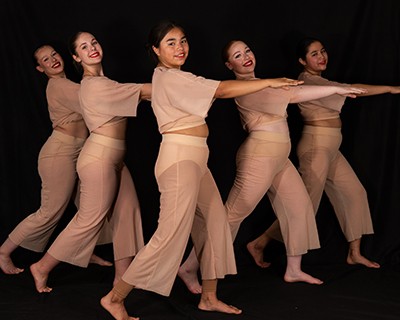
The competitive program teaches all different styles of dance from lyrical to jazz to tap. As Daniels notes, some dancers will begin their journey in the recreational program and move into the competitive stream as they make the decision to take dance—and discipleship—more seriously.
CLOSER TO GOD
One dancer, Charlize Adolph, first began in the recreational stream when she was seven. She grew up in the program and now at 20, she participates in the competitive program and teaches younger dancers at the recreational level. As part of her commitment to S.O.UL. Dance, Adolph also attends the young adult Bible study, an outlet that helps deepen her relationship with God alongside her dance learning.
She didn’t have any experience starting out, but she began attending S.O.UL. Danceat Prince George Community Church because it was more affordable than other dance studios in the community.
“Since then, my faith has grown a lot through dance. It makes me feel closer to God,” says Adolph. “Modern dance is my favourite because I find it easy to show my emotions.”
Adolph recalls going through a difficult time in 2021 and 2022. She experienced a lot of anxiety, and it was hard to express her emotions in a healthy way, but dance helped her through it and kept her connected to her faith during hardship.
Over the years, she has learned that dancing is a competitive sport, and there is a lot of animosity and bullying that happens within the dance community. For Adolph, the supportive community at S.O.UL. Dance is much different. “Through S.O.UL. Dance, I’ve learned to cheer everyone on, even if I’m competing against them,” she says.
“Dancing at The Salvation Army means spreading the love of God,” says Adolph. “We all want to dance the best we can, but in the end, spreading the gospel is the most important part of dancing with this studio.”
MINISTRY IN MOTION
Rooted in the love of Christ, S.O.UL. Dance intentionally cultivates an atmosphere where everybody is welcome, regardless of their ability or dance knowledge. Kindness, compassion and inclusivity are at the foundation of the curriculum and are just as important as the dance technique.
According to Daniels, one longtime dancer who has cerebral palsy has been able to participate with her peers, and the team found creative ways to incorporate and accommodate her wheelchair into the dance so that she would feel included.
“From a dance world perspective, when we go to competitions year after year, we’re seeing more of that inclusivity and boundaries being pushed in ways that they haven’t been before,” explains Daniels.
“We hope that those reading this article will keep this ministry in their prayers,” she says. “I pray that God will continue to use children and youth and the ministry of dance for the greater kingdom.
Photos: Brekin “Captures of Cuzzin” Daniels
This story is from:



Leave a Comment