


Education is a main contributor to social mobility, and for many, it is a source of empowerment and confidence.
Shelter U, an innovative new program at Booth University College (UC), is opening new doors to education for students who might not have them otherwise. In partnership with The Salvation Army’s Centre of Hope and emergency shelters in Winnipeg, Shelter U combines the rigours of university education with wrap-around supports, all while ensuring that the program remains entirely accessible.
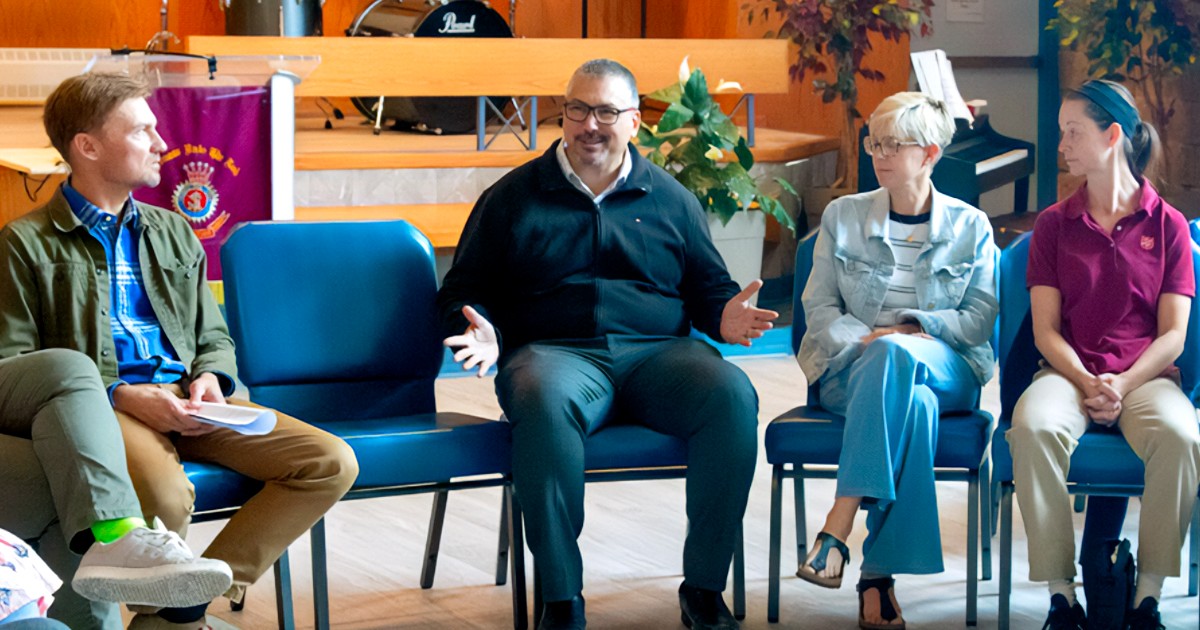
The objective is to provide dignity for people facing barriers to education by carving out a dedicated space to explore and learn. Classrooms include a mix of campus-based and shelter-based students who learn together in a safe, encouraging environment.
The Exploration of Learning
The course design for Shelter U takes inspiration from the Clemente Course in the Humanities, developed in the United States, which offers learning opportunities for non-traditional students through community agencies, such as women’s support organizations, prisons and emergency shelters. Shelter U also builds on learnings from the Inside Out Prison Exchange, a similar program that mixes campus-based students with incarcerated students.
“The mixed classroom can make for an incredible learning environment because it bridges so many differences in a strategically collaborative way, where all students are equals and have the opportunity to experience the dignity of being a student, just like anyone else,” says Aaron Klassen, assistant professor of sociology at Booth UC and co-ordinator of the Shelter U program. “At the same time, our campus-based students get to interact with real people who have experienced these barriers to education, and they get a better sense of what it is like to overcome these barriers, partnering with one another in a collective learning experience.”
Classes meet weekly on Wednesdays in a round-circle format, covering humanities-based material, such as music sociology and creative writing.
Students are not required to have any formal educational background; what matters most is the ability to read and reflect on course material.
“For example, when studying music sociology, we participated in ‘deep listening’ of various themes and musical genres, and we got to reflect on how that music can relate to our lived experiences. Then, we looked at that music from a social perspective, to see how music is integrated into our society,” says Klassen. “That critical thinking and reflection is very healing and transformative for our students.”
A Brave Community
From the start of the course, facilitators and students work together to create a safe learning environment.
“We start by talking about what a safe space looks like, and then everyone is invited to make that a ‘brave space’ where they can volunteer ideas and know that those ideas are welcomed and defended,” explains Klassen. “We’re all equal partners in that exploration of learning, ideas and knowledge. There’s a freedom to express ourselves in that space.”
Rather than traditional mid-term exams, students participate in mid-term check-ins with course facilitators to share their highlights and challenges, and to give feedback that helps inform course instruction.
“These mid-term check-ins are an important learning point,” says Klassen. “They help us determine what is successful, what is unsuccessful, and how we should move forward with our programming, ensuring that the learning remains accessible to all.”
Additionally, a class liaison, such as a shelter staff member, helps assist students both inside and outside the classroom.
By the end of the course, students complete a group project that is presented to classmates and guests at a closing ceremony, where certificates of completion are also handed out.
According to Klassen, the sole objective of Shelter U is to explore the desire for learning and to see where that takes each individual. For some, they find purpose in learning and want to continue, and for others, it might not be for them. “Both of those outcomes are considered successes because they come as a result of these students exploring a desire for learning, discovering what that means for them, and committing to the next steps on their own terms,” he says.
A Lot of Joy and Hope
For Alicia, Shelter U helped ignite a love of learning in a safe, supportive environment.
“I’m a survivor of sexual exploitation, human trafficking, addiction and gang affiliation,” says Alicia, who entered a Salvation Army safe house in 2022 before moving to an Army shelter specifically designed for women healing from human trafficking.
When she first entered recovery, she began writing poetry to connect with and process her feelings. “It was hard to tell people what I went through, even counsellors, but poetry really helped,” she explains. “Writing became a big passion of mine. As I continued my healing, I started writing short stories, and I was able to take some of my stories and poetry public, sharing it with other survivors and raising awareness.”
Although she had made great strides in her journey of healing, Alicia hadn’t been exposed to many opportunities for personal growth and education. So, she was excited when she heard that the Shelter U pilot program was partnering with the program she was in.
Part of what made Alicia feel so comfortable in the Shelter U learning environment was that she was able to attend with people she already knew.
“When you come off of the streets, and come out of traumatic situations, whether it’s drug use or domestic violence or poverty, everything is so scary,” she says. “Being able to go into Shelter U with my own supports and with survivors that I knew from my program made a big difference. Then, if I got discouraged or if I didn’t know something, or if I had to ask a lot of questions, I felt OK because I was with people I trusted.”
Shelter U helped Alicia build confidence and showed her what she could do with her writing skills. It introduced her to new interests in education and learning in general, and after completing the program, she decided that she wanted to pursue further university education.
Alicia has received a scholarship from Booth UC and enrolled in full-time studies where she is working toward a bachelor’s degree in social work. She also continues to act as an advocate for the Shelter U program, consulting with course facilitators as someone with lived experience.
“At Shelter U, I felt a lot of joy and a lot of hope,” she says. “It’s taken me some time to be comfortable with my past, but I don’t have to be afraid anymore. I love who I am and I’m proud to be a part of this and to share my story.”
Education for a Better World
Booth UC and its community agency partners have agreed to extend the pilot with upcoming courses covering topics such as visual arts and creative writing.
“This is an important initiative for today, where access to education is still one of the best options for social mobility,” says Klassen. “And this program is important not only for the students, but also for society and social change. Together, we can provide the conditions for a better world through education.”


Leave a Comment