



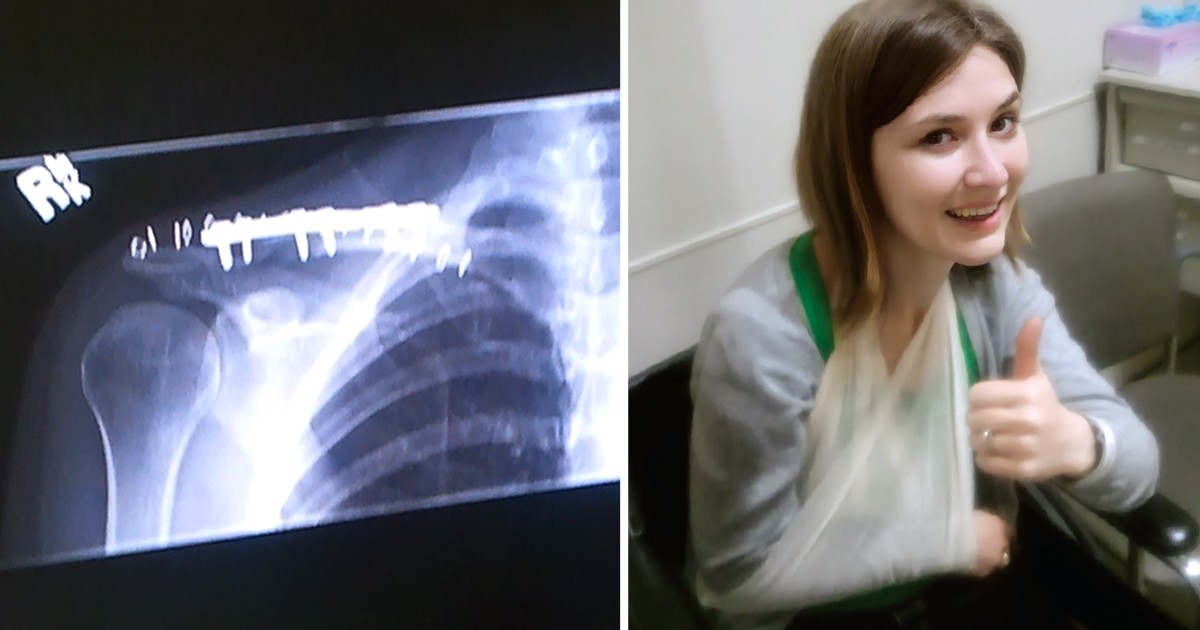
Fourteen years ago, I went for a bike ride that would change my life forever. Less than a kilometre from my house, my tires got stuck in some streetcar tracks, and I was violently thrown over my handlebars. My right shoulder hit the pavement first, taking the brunt of the impact and breaking badly in the process.
I still feel sick to my stomach when I remember that terrifying experience. My memories, at once both hazy and vivid, make it seem all the more surreal. My head on the pavement as I watched my new cellphone skid down the road away from me. The pregnant woman who was passing by and stayed with me until the ambulance arrived. The pop song Call Me Maybe playing on the radio in the background when I called my emergency contact and asked them to meet me at the hospital. The firefighter who hovered over me as I sat on the side of the road, making sure I didn’t pass out.
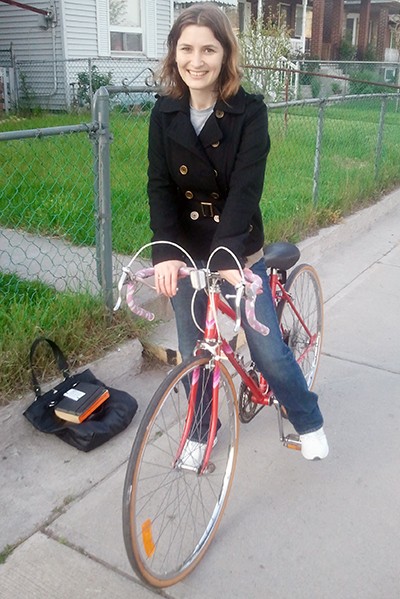
That accident was responsible for two surgeries and at least three subsequent related injuries, the most recent of which was an unfortunate case of tennis elbow.
I’ve often thought of that accident sardonically as “the gift that keeps on giving.” But I didn’t know how true that could be until a fateful conversation with my physiotherapist last fall.
The Way to Healing
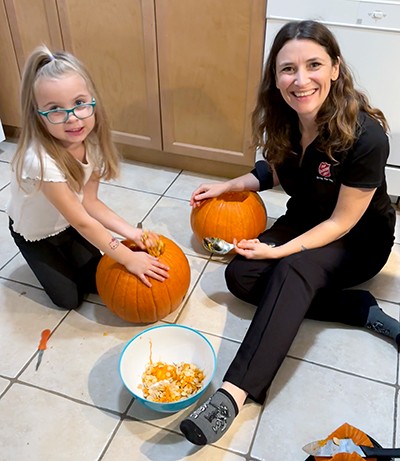
I was making dinner for my kids when the latest injury happened—about as far away from playing tennis as you could imagine. And so, when I found myself in my physiotherapist’s office yet again, I was slightly embarrassed. Who wants to admit they got tennis elbow from awkwardly grabbing a loaf of bread from the back of the fridge?
There was no way around it, however. The pain was so bad, I couldn’t use a mouse or a keyboard, severely limiting my ability to work. Changing a diaper, zipping up a coat, making dinner—all these ordinary, everyday tasks were agony.
She examined my right arm slowly and carefully, wrist to shoulder, feeling each muscle and tendon.
“I think this,” she said finally, gently squeezing my forearm, “goes back to your bike accident. The muscles, the tendons, everything—they’re all connected.”
I felt tears of frustration welling up in my eyes as she explained how all these moving parts fit together. But my arm was not a well-oiled machine; it was a mess.
Thanks to surgery and a metal plate, my broken collar bone has been knit back together, but it will always be lumpy and uneven; the curving 15-centimetre scar on my shoulder has faded but will never disappear.
My shoulder is forever scarred, and I expected it never to be the same; what I didn’t expect was how it would impact the rest of my body. It wasn’t fair.
She paused, noticing my tears. We’d been working together on various issues for almost a year, so she knew how much I had been struggling.
“You need to accept it—your shoulder,” she said, placing her hand there. “Ask yourself: What has it given you?”
I scoffed, thinking of the accident and all the pain it had caused me. “Nothing.”
She came around to face me. “You need to learn to love it,” she continued. “It’s the only way to healing.”
Love my shoulder? Love one of the worst things that had ever happened to me? Impossible, I thought.
The pain was so bad, I couldn’t use a mouse or a keyboard, severely limiting my ability to work. Changing a diaper, zipping up a coat, making dinner—all these ordinary, everyday tasks were agony. KRISTIN OSTENSEN
An Imperfect Body
But her words stayed with me, and over the next few days, I tried to imagine what that might be like—to learn to love my accident, my pain, my scars.
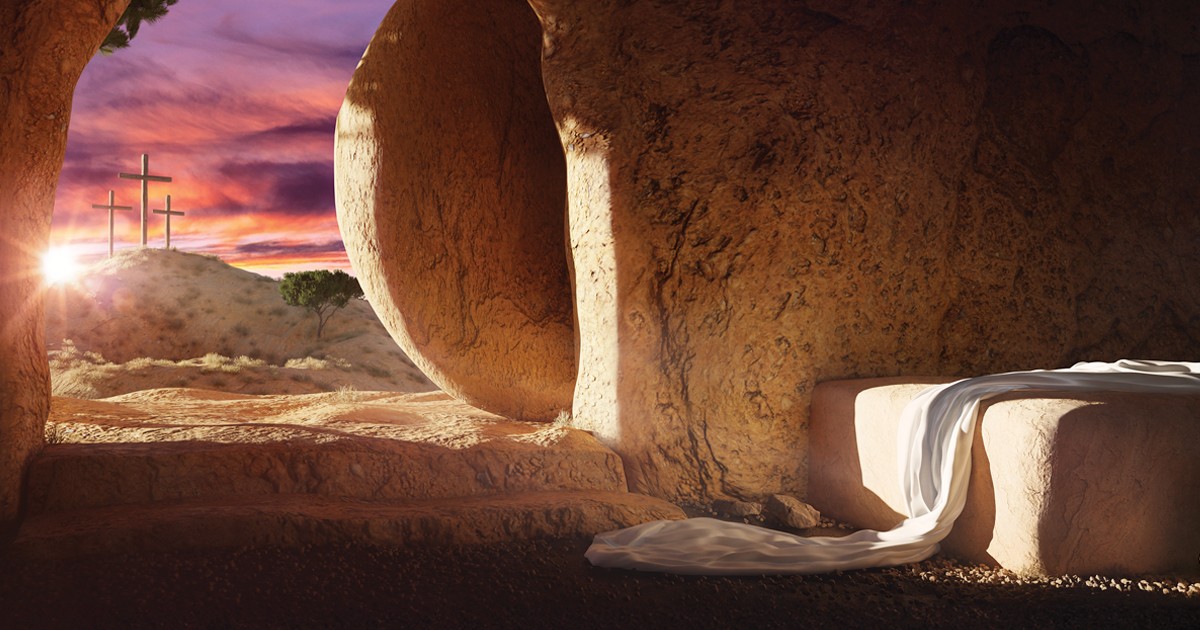
And I found myself thinking about Jesus—His death on the cross, His Resurrection, His scars.
After He came back from the grave, Jesus could have given Himself the “perfect” body, free from the signs of what He’d endured. But He didn’t. He kept the nail marks in His hands, the puncture wound where His side was pierced.
These scars proved that the resurrected Jesus was the same Jesus who went to the cross. They reassured His disciple Thomas who declared that he would not believe Jesus had risen again unless he saw the nail marks in His hands and put his hand into His side (see John 20:24-29). When they meet again and Thomas does just that, it’s a moment of joy and reconciliation, as Thomas says to Him, “My Lord and my God!”
Reading this story, we tend to see this encounter with the body of Christ from Thomas’ perspective and celebrate his journey from doubt to faith. But as I reflected on my own wounds, I wondered how Jesus felt about His post-Resurrection body. Did Jesus love His scars?
I tried to imagine Jesus resenting His wounds, the way I resented mine, but I couldn’t. So, what had they given Him?
What had they given us?
Signs of Salvation
Jesus chose to make His scars a part of His story—a reminder not just of what He had endured, but what He had overcome.
Jesus conquered death.
His scars are signs of our salvation. They are the love of God in flesh. The greatest of all gifts.
What has my accident given me? Fourteen years later, it has given me a much greater focus on my physical health—something that benefits me now and will continue to do so as I get older. I exercise every day and feel stronger than I have in years.
It has given me gratitude for the life I have now. My injuries could easily have been much worse, even fatal.
It has given me a better understanding of what it is like to suffer from chronic pain and has increased my compassion toward myself and others who find themselves in a similar situation.
And it has given me a new lens through which to understand the death and Resurrection of Jesus; a new appreciation for what it meant for God to become a man, to suffer greatly and to carry that suffering with Him even after His body was restored.
Trying to reframe the accident around what it has given me doesn’t erase the pain it has caused me. I’ll always remember that bike ride. I’m sure Jesus never forgot the nails.
The path of healing is slow, winding and full of setbacks. But maybe one day, I will truly be able to say I love my scars.
Photos: Courtesy of Kristin Ostensen
This story is from:



Leave a Comment