



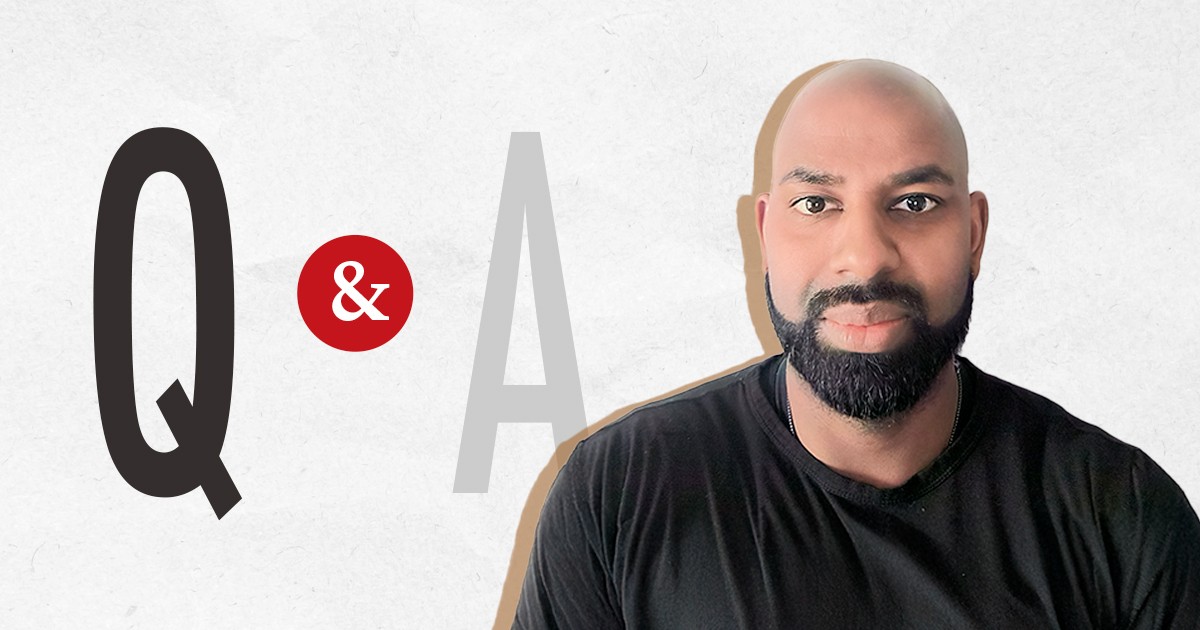
Stephen Moorgen is the modern slavery and human trafficking (MSHT) response facilitator in the Prairies and Northern Territories Division.
Tell us about the origins of your faith.
I am a first-generation Canadian with Black West Indian and East Indian heritage. I grew up in the Christian community and was a youth and young adult pastor for four years. I love working with and empowering the voices of youth and marginalized people. I have seen God move in so many miraculous ways and love to share those stories about the goodness of God.
There are also some areas where I have been hurt by “religion” in the past. I went through a divorce four years ago, and my feelings of shame and embarrassment were only exacerbated by religious organizations. I felt alone and isolated.
When I started working for The Salvation Army, I felt seen and loved. They helped restore my faith about what it means to love and meet people where they are. I’m a single parent with seven kids, three biological kids and four foster kids, and they have supported and walked alongside me.
Through all these struggles, Isaiah 43:18 (NLT) has become my life verse: “But forget all that—it is nothing compared to what I am going to do.”
Tell us about your family.
I feel called to model healthy and godly masculinity in my community. Deciding to foster children as a single dad has better showed me the heart of God. Being a foster parent has provided the grounds for God to show up and do the miraculous. There have been so many small and large expressions of God’s faithfulness. Recently, after sudden growth in our family, I needed a vehicle large enough to accommodate all eight of us and shared this need during a time of corporate prayer with my co-workers at The Salvation Army. That prayer was answered within the hour!
What is your role with The Salvation Army?
I believe my past professional experiences—in law enforcement, labour investigations and pastoring—have all led me here, to the fight against MSHT, and the restoration of people affected by it.
I work with an incredible team in the Prairies and Northern Territories Division. An important part of what we do is providing solution-based practices when we identify gaps—connecting people to each other and supporting people in trafficking situations, as well as awareness, education and prevention. I believe The Salvation Army should continue to expand its MSHT response because it intersects with every area the Army works in.
One thing people don’t often realize about human trafficking is that the church has a role to play in education, prevention and awareness. We should be a place of safety and refuge for all those affected by it: “Religion that pleases God the Father must be pure and spotless. You must help needy orphans and widows and not let this world make you evil” (James 1:27 CEV). One way the church can respond is how we engage men and boys about pornography, even though those conversations are hard and awkward.
What inspires you about the Army?
The Salvation Army is “boots on the ground” responding to people where they are and endeavouring to demonstrate hope in those difficult situations. It inspires me how the Army is out in the world, being the hands and feet ofJesus, but not of the world.
What piece of art has made the most impact on you and why?
Watching The Chosen. When Jesus says to Mary in the first episode, “Fear not, for I have redeemed you, I have called you by name, you are mine,” it makes me ugly cry. To know that Jesus sees me, in the midst of life, uncertainty, pain, embarrassment and hurt, has changed me, broken my heart and given me hope.
This story is from:


Leave a Comment