



Exploring the “I am” statements of Jesus in the Gospel of John.
Are you afraid of the dark? Even if the answer is no, many of us would admit to a sense of unease being in a dark room. We can’t see tripping hazards, clothes left lying on a chair seem to morph into the shape of a monster, and noises seem amplified when we can’t easily identify the source of the sound. We stumble around, find the light switch, turn it on and breathe a sigh of relief.
The contrast between light and darkness is a theme woven throughout John’s Gospel, whose opening paragraph tells us how “the light shines in the darkness, and the darkness has not overcome it” (John 1:5). This theme of contrast often refers to the spiritual dynamics of belief versus unbelief or understanding versus ignorance. However, it also refers to the presence and purpose of Jesus entering our world and being the light among us. When Jesus said, “I am the light of the world” (John 8:12), it is more than an intellectual statement; it is a promise of relationship as we share the light that dwells with and within each of us.
We understand this relationship of presence by paying attention to the context in which Jesus makes this statement, the Festival of Tabernacles (Sukkot). Jesus has travelled with his disciples to Jerusalem to celebrate this festival. Sukkot is a joyous autumnal festival, occurring in the northern hemisphere just as the days are becoming shorter. Gathering together in the lands that surround the temple, temporary shelters are built with wood and tree branches, and for a week people live in these shelters, dance, feast and celebrate in community.
In the Sukkot celebrations, those gathered remember the wilderness wanderings, and the gracious provision of God as the Israelites packed up and moved regularly on their journey to the Promised Land. As well as this holy remembering, they also thank God for their harvest and anticipate the gift of the Messiah.
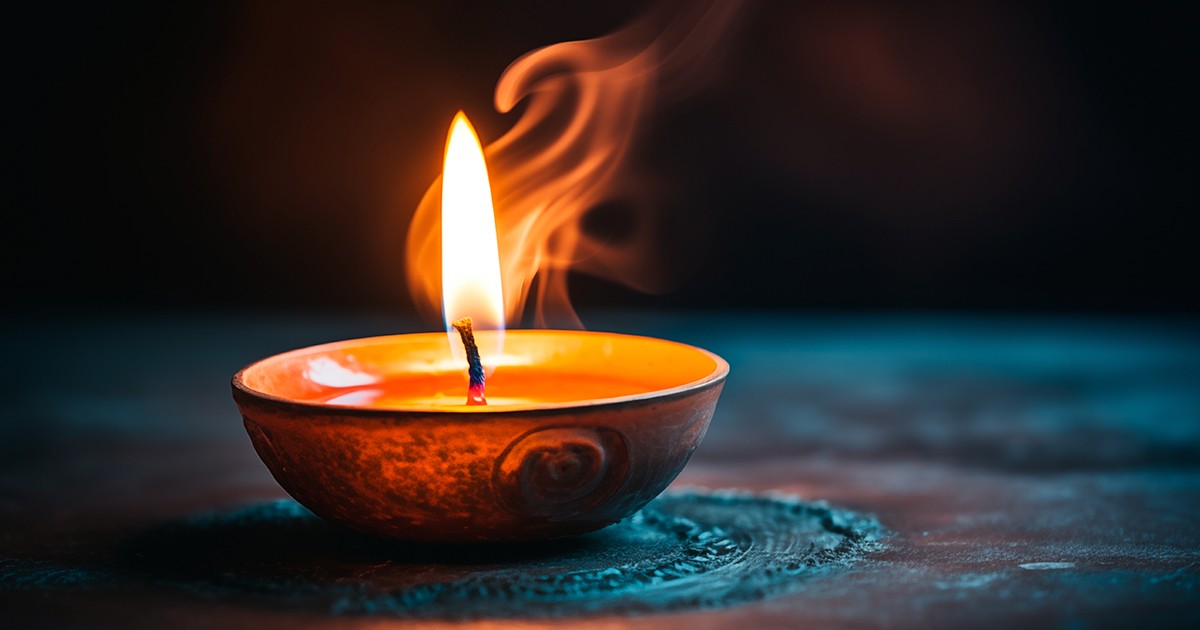
Every evening, at each corner of the outer courtyard of the temple, four enormous bowls filled with oil and wicks are lit, transforming the temple into a shimmering beacon of light. Try to picture how incredible this sight would have been. Almost two millennia before electricity was invented and with no tall structures, the dark night would have been completely transformed. As the people gathered to remember God’s presence as the pillar of fire that led the Israelites by night (see Exodus 13:21) and look forward to the Messiah, Jesus proclaimed: “I am the light of the world.” It is not surprising that the religious leaders who heard this claim were furious.
As we read the remainder of this verse, we realize this name is more than a proclamation—it is a promise of relationship. Jesus goes on to say: “Whoever follows me will never walk in darkness, but will have the light of life” (John 8:12). Just as temple lanterns transformed the dark sky, Jesus will transform the darkness of our lives. This transformation is not a magic eraser that eliminates our circumstances; rather, it is a promise of God’s presence in our circumstances. Just as the pillar of fire was the presence of God that led the Israelites through the wilderness, so, too, will Jesus be present with us in our darkness.
At times, the shadows of grief—the darkness of a diagnosis for ourselves or a loved one, the bleakness of past-due notices and stress-filled work environments—threaten to overwhelm us. Jesus, as our light in the world, promises to be with us in the midst of these dark circumstances, and that they will not overcome us (John 1:5).
When Jesus ascended into heaven, his presence continued in the hearts and lives of believers. Jesus raised up the church to be his presence in the world. Therefore, as we claim Jesus as our light in our world, let us also consider how we may reflect his light in the lives of others.
Major Corinne Cameron is the corps officer at Yorkminster Citadel in Toronto.
PRAYER PRACTICE
In a dark or dimly lit room, light a candle. Rest in God’s presence as the burning light transforms the darkness that surrounds it. As you watch the candle burn, begin with a time of holy remembering for how God has been present through your life, then offer a prayer of gratitude. Continuing in this time of prayer, consider these questions:
- Where in my life do I need the light of Christ?
- How may I shine the light of Christ to another?
Photo: ThomasVogel/iStock via Getty Images Plus
This story is from:





Leave a Comment