



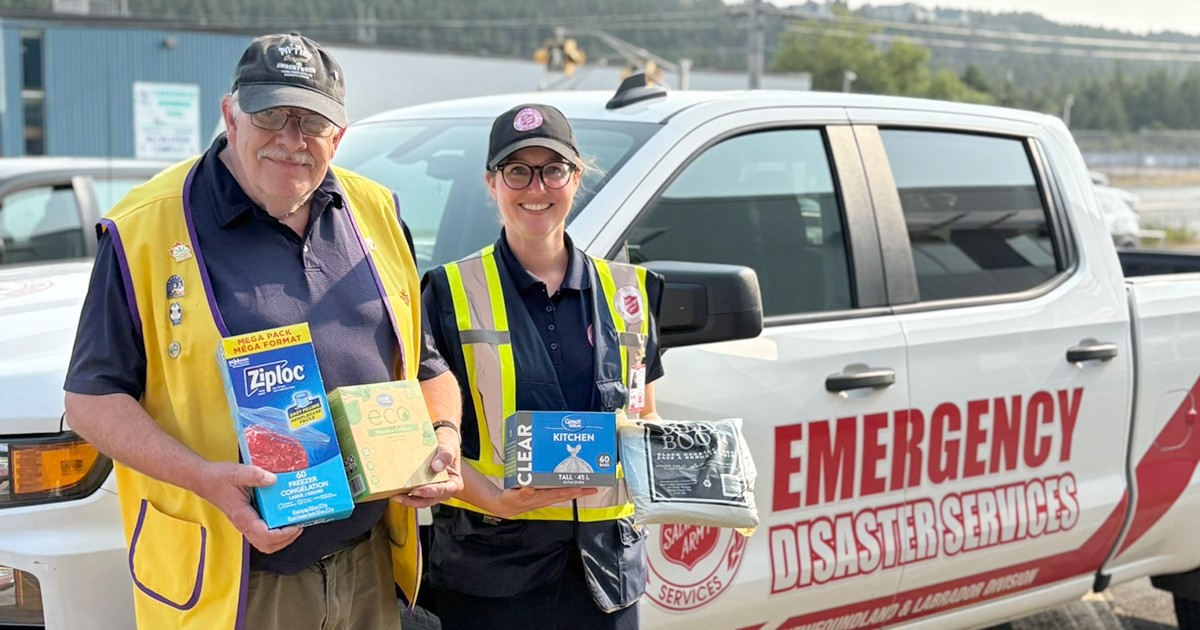
When disaster strikes, The Salvation Army’s Red Shield is a recognized symbol of hope and support in communities across Canada and Bermuda.
Our emergency disaster services (EDS) responds to emergencies of all scopes and sizes, from local fires to large-scale natural disasters. Teams respond to the immediate needs of communities, while grounding their work in emotional and spiritual care and the hope of Jesus Christ.
Networks of EDS personnel are situated from coast to coast, ready to mobilize at a moment’s notice. This response relies on preparation and training of volunteers, organized leadership and a wide range of resources, from a fleet of emergency vehicles to basic supplies.
And in a territory as vast and diverse as Canada and Bermuda, these operations vary by division, shaped entirely by th egeography, climate and unique needs of local regions. Here’s a behind-the-scenes look at how it all comes together to support communities in the face of disaster.
HOW EDS OPERATES
There are more than 100 emergency disaster services teams in Canada and Bermuda. Each division has an EDS department, and many ministry units have their own EDS teams that operate street ministries and who can quickly mobilize for a local emergency.

WHAT DOES EDS RESPOND TO?
Local fires, power outages, food insecurity, extreme heat and cold, floods, wildfires, hurricanes, tsunamis, earthquakes and more.
As of 2026, all divisional EDS departments report to THQ, helping to standardize operations across the territory while allowing each division to respond appropriately to local needs, which vary by region. For example, typically the West Coast has a regular wildfire season, Atlantic Canada experiences more hurricanes and winter storms, and extreme heat and cold affect communities nationwide.
“Each division is shaped by its landscape,” says Ian Pollard, divisional EDS director for British Columbia. “In some regions, such as the Prairies, most responses are remote. Others, such as the Atlantic Division, rely on existing infrastructure and a network of churches ready to provide space and volunteers during a response.”
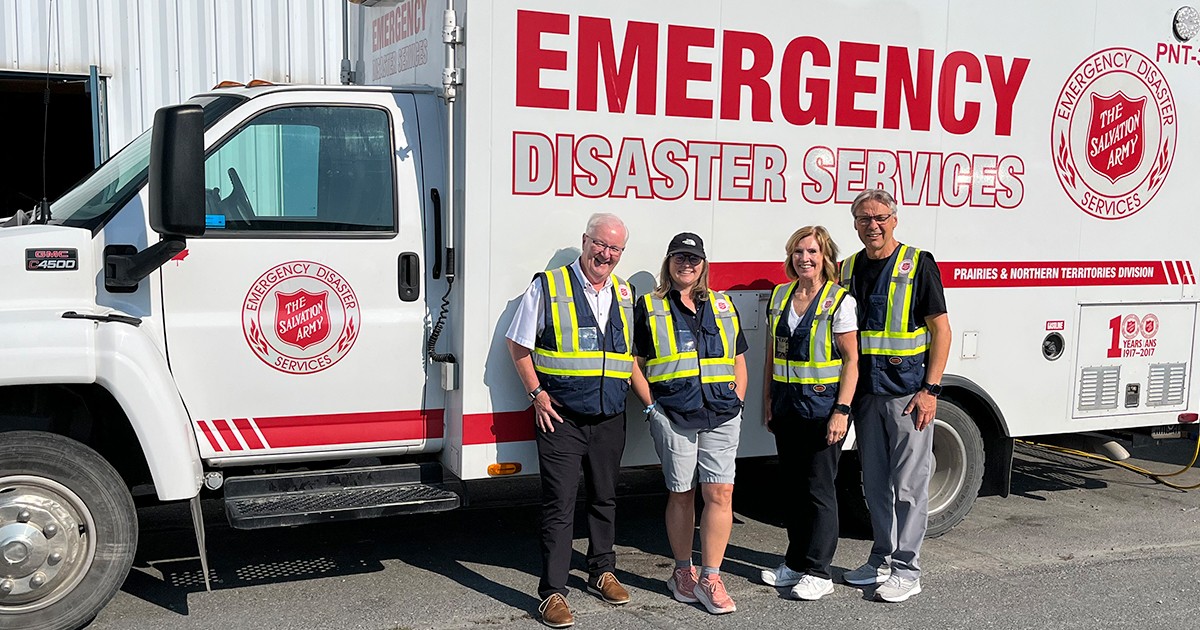
ACTIVATION
Emergency disaster services follows a bottom-up approach. Most calls come from the local level—whether it’s a municipal government, a fire department or a ministry unit’s EDS team that has expended its resources and needs divisional assistance.
“An MOU is a memorandum of understanding, and we have lots of them in place across the country between municipalities and our teams,” explains Amy Timperley, territorial manager of mitigation, preparedness and planning. “We are generally called out by the local fire department, city or province.”
“We don’t self-deploy, but we will reach out if we know something is happening,” adds Adam Marshall, EDS director for the Ontario Division. “We remind them that we’re here and to let us know if they need us.”
This year, EDS is implementing a1-800 number to make call-outs easier. It will be an around-the-clock answering service for municipalities and provincial governments to reach out when they need disaster support. Once the call is received, information will be collected and teams will begin to mobilize.
MOBILIZATION
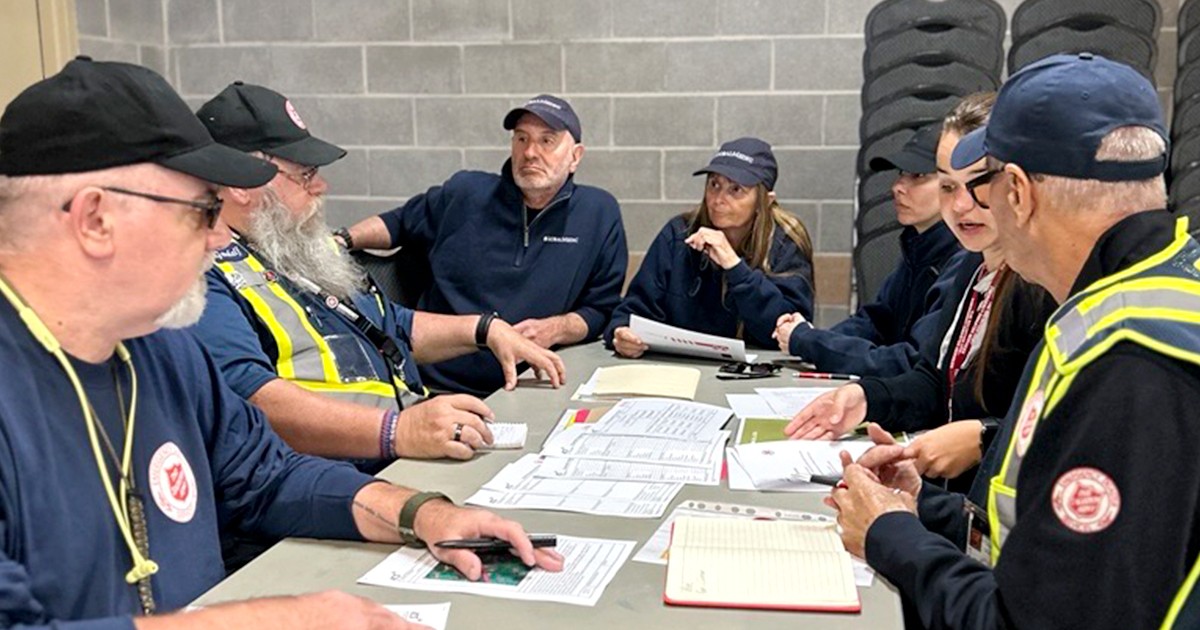
The first step in a deployment is to confirm the details—the location, size and scope of the emergency, as well as the immediate needs of those involved. These needs can, and often do, change over time as the emergency develops.

PREPAREDNESS AND TRAINING
The Canada and Bermuda Territory has a national training program for EDS volunteers. It includes basic courses to become an EDS worker, as well as more advanced training options for those looking to specialize or be deployed internationally. In addition to academic training, EDS workers must have hands-on experience with the vehicles and equipment used. This may include participating in practice exercises or street ministry.
Once the scope of the emergency is determined, the initial priorities are to set up an incident command system (ICS), and ensure teams, supplies and equipment are available and set up. Volunteers are called upon based on location, training, skill and readiness.
“In Ontario, for example, we have an instant messenger group chat for volunteers in every region, and it’s broken down based on their catchment areas,” explains Marshall. “We also have lists of qualifications, strengths and education. So, if I have a volunteer that happens to be a mechanic, I’m going to send them out in our truck.”
“In the Prairies and Northern Territories, there’s a two-week readiness system with pre-made groups that cycle out based on availability,” adds Craig Broadhurst, EDS specialist for the Prairies and Northern Territories Division.
“If an emergency were to happen during their two-week readiness period, they would be called upon. After that period, it cycles out to the next group. That way when something happens, we have our volunteer list ready and we can just say, ‘Let’s go.’ ”
ON THE GROUND
Once teams are mobilized, workers load up supplies into the emergency vehicles and drive to the assigned location.
“We are usually set up at a nearby but safe area just outside a disaster site,” says Pollard. “We have several four-wheel drive canteen trucks and vehicles that can respond to isolated areas.”
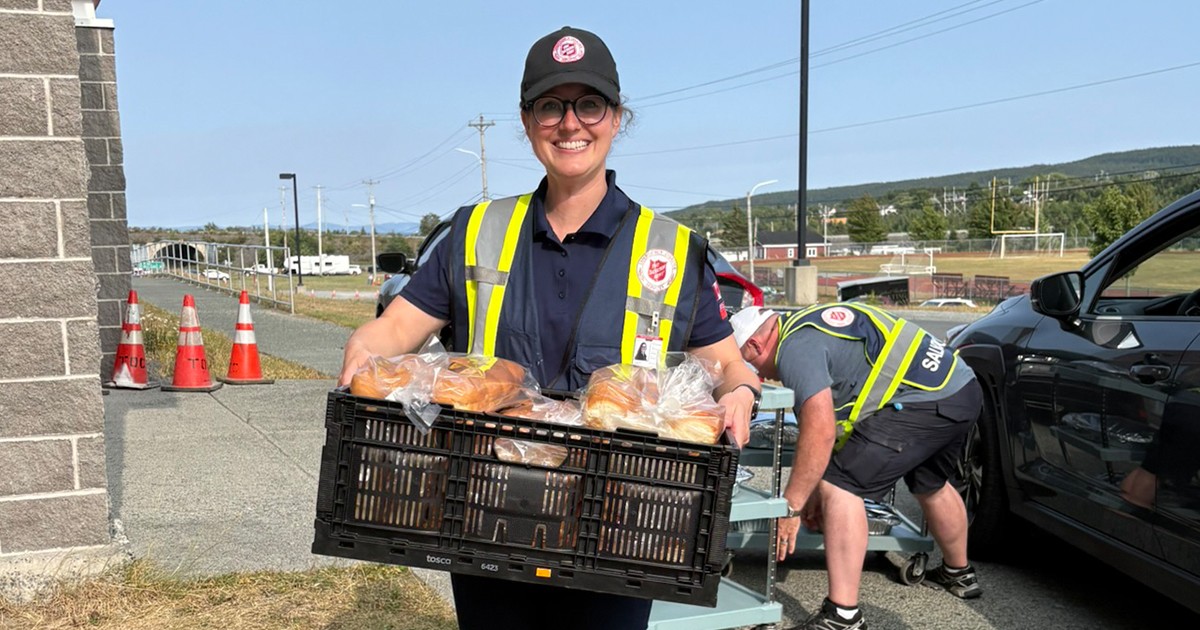
During a large-scale emergency response, days begin with a short briefing, and the emotional and spiritual care (ESC) officer will pray. Some of the main services involve feeding evacuees and first responders; offering emotional and spiritual care; providing emergency clothing, hygiene kits and cleaning supplies; distributing gift cards for essential items; and responding to food insecurity by delivering perishable and non-perishable food to communities.
Days are long, and volunteers can be working for eight to 12 hours each day. “Volunteer accommodations can range from a trailer, on a cot at a recreation centre or school gym, or at a local hotel,” says Pollard.
“Here in the Prairies and Northern Territories, we’re responding to a lot of remote locations,” explains Broadhurst. “We cook out of kitchen canteens set up in the parking lots of community arenas or churches. We’re up at six in the morning making breakfast, cooking, cleaning and prepping for the next day.”
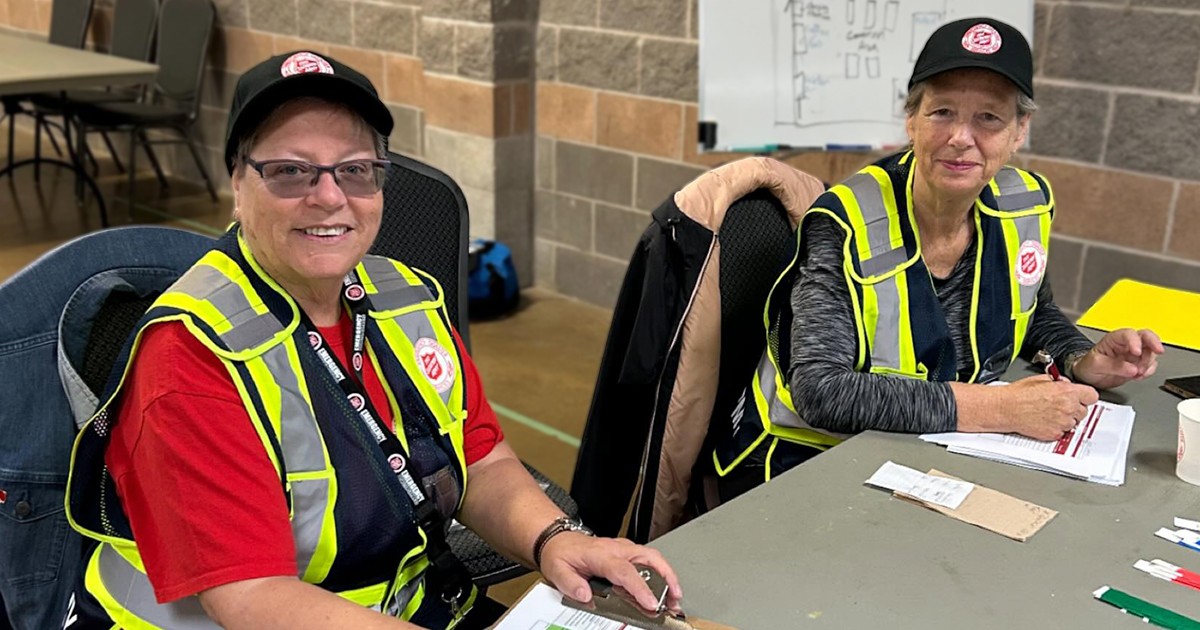
At the end of the day, volunteers will come together for a debrief and to report statistics. Each EDS truck has a QR code in the windshield that volunteers can scan to enter data, such as supplies distributed and number of individuals served that day. Situation reports are then provided to leadership.
“No two disasters are the same,” says Dean Gregory, EDS logistics and ESC specialist for the territory. “Neither are the responses.”
According to Gregory, needs can change rapidly, and on-the-ground teams must be ready to adapt and respond accordingly. For example, EDS was called out to Crowsnest Pass, Alta., to assist with a search and rescue in September 2025. The initial ask was for The Salvation Army to provide a few meals a day for 80 people. Within 24 hours, more rescue workers arrived and suddenly the small response team of three people needed to serve meals to more than 300.
“We were right next to Fernie, B.C., so that’s when we had to reach out to EDS in British Columbia for help,” says Broadhurst. “Emergencies can develop very quickly.”
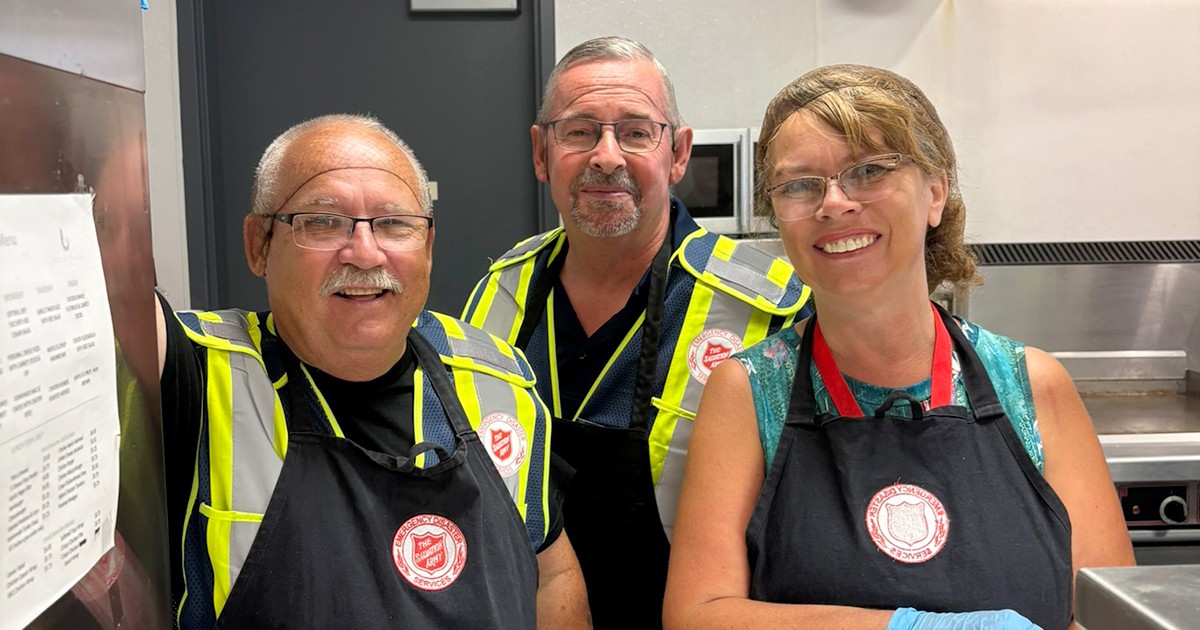
RESOURCES
“The benefit of being part of this organization is the national resources that come with it,” explains Marshall. “Every province has its own catalogue of a wide variety of resources.”
THE EDS FLEET
A Salvation Army EDS response may involve the following vehicles:
- A community response unit (CRU), a mobile canteen for on-the-ground response and distribution of food and other resources
- Serving vehicles, such as trucks, vans and SUVs, for volunteer and supplies transportation
- Support trailers fitted to provide mobile laundry and washroom facilities during deployment
Through grants, operational budgets and donations, EDS has access to a fleet of vehicles (see sidebar), as well as communications trailers, portable towable generators, tents, field kitchens and more.
“We prepare supplies prior to going out, and a lot of that we have set up at warehouses or on-board community response units, but quite often, we end up getting donations,” adds Gregory. “People come out of the woodwork to help in any way they can, and most often that’s through donations—everything from monetary donations to food supplies.”
DEBRIEF
“These events are so hard on people, and it can be exhausting,” says Timperley. “You could be out there for 12 to 14 hours a day, cooking, distributing food, reporting statistics. It can become mentally taxing, so it’s important to have supports in place for volunteers.”
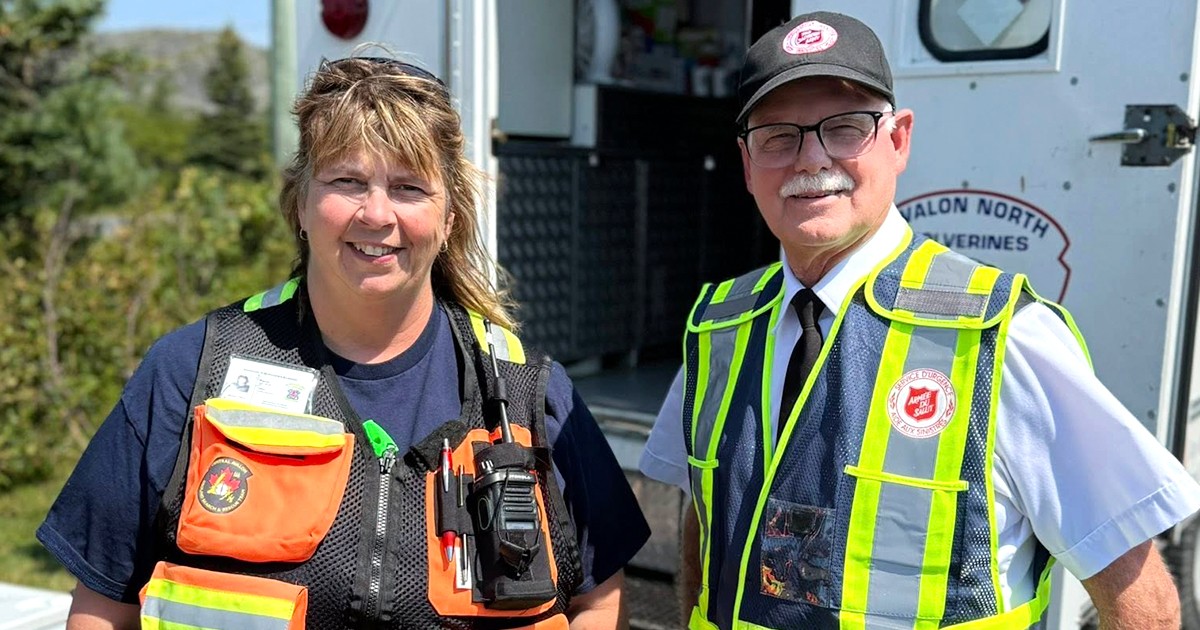
Debriefs take place daily with the responding team and leadership to check how people are feeling, what went well, what could be done differently, and to review volunteers’ emotional, spiritual and physical well-being. If a need is identified, volunteers can access additional counselling through an external assistance program. Emotional and spiritual care officers also routinely connect with on-the-ground volunteers to talk to and pray with them.
A final debrief is done after demobilization, once the response has concluded, and will depend on the length and complexity of the response. “We give people a chance to talk through what they’ve seen and to help process the experience,” says Gregory. “This typically happens within the first 24-48 hours after demobilization. Returning home to normal life after having been out in a disaster can have some challenges. We go back to our houses and families after being around people who may have lost everything, and that can come with some guilt. We try to walk them through that.”
GIVING HOPE
Emergency disaster services is a growing field, and The Salvation Army is well positioned to provide it. Through churches, thrift stores and social services, the Army already has an established presence in 400 communities across Canada.
“We’re ministering to people and building trust and relationships, not only with the residents, but with the governments and other parties,” says Pollard.
National co-ordination also allows people and resources to be deployed quickly and efficiently.
“We’re a recognizable international organization. We’re able to draw resources from across the division or the country,” says Pollard. “We’ve built trust. People know they can call us at any time, for any emergency, and we will be there.”
What sets The Salvation Army apart from other relief organizations is its foundation of faith. Emergency disaster services provides practical support that not only meets human needs but also shares the love of Jesus Christ—a mission that is especially important during disaster, when people need comfort and hope.
“Emotional care is a big part of what we do—a listening ear, a shoulder to cry on,” says Marshall. “At the same time, we let people know that our motivation behind it all is through the grace of God."
This story is from:


Leave a Comment