



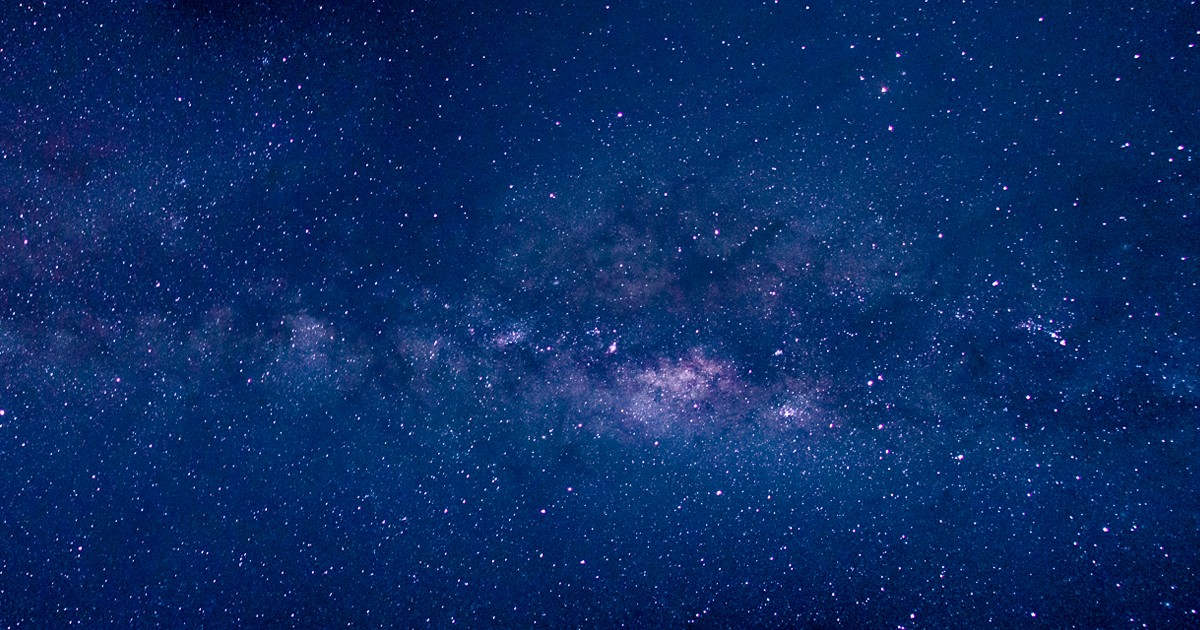
Since childhood, few things have left me in awe quite like lying on my back, stargazing.
So, in April 2026, when four astronauts on the Artemis II mission became the first humans in more than 50 years to journey around the moon, I joined countless millions who watched.
What stayed with many wasn’t just the mission—it was what the astronauts said after returning home. Some struggled to put the experience into words.
At a press conference, Commander Reid Wiseman seemed to be in awe and wonder. He admitted to breaking down in tears upon returning.
“I’m not really a religious person, but there was no other way for me to process what we experienced,” he said.
Wiseman asked a naval chaplain to meet with him after they landed and broke down in tears at the sight of a cross he was wearing.
Pilot Victor Glover described something similar. Looking back at Earth from space, he was struck by how beautiful and fragile it seemed. Surrounded by so much darkness and emptiness, Earth didn’t seem ordinary at all—it seemed like a beautiful oasis of wonder in the middle of nowhere. During the mission, which happened around Easter, Glover spoke openly about his Christian faith. He connected what he was seeing with what he believed about God and creation.
Close Connections
His reflections reminded many of a moment in 1998, when John Glenn gazed out the windows of Discovery, 36 years after he had been the first American to orbit the earth in 1962, and said, “To look out at this kind of creation and not believe in God is to me impossible. It just strengthens my faith.”
Not everyone appreciated hearing highly trained astronauts talk like this. “It didn’t belong in a scientific mission,” they said. “Science and religion shouldn’t mix.”
But others pointed out that science and faith have always been closely connected. Many early scientists were deeply religious. They saw their work as a way of understanding the world more deeply.
“To look out at this kind of creation and not believe in God is to me impossible.” JOHN GLENN
Clues
Pretend you could travel at the speed of light. It would still take about 45 minutes just to get from the sun to the outer edge of our solar system. And most of that journey would be nothing but darkness. Now, with each new jaw-dropping image from the James Webb Space telescope, countless stars and galaxies are discovered, so finely tuned that they cause scientists to marvel.
Stars and planets make up only a tiny fraction of what’s out there. Watching Earth from far away—set against a vast emptiness—it doesn’t feel small in a meaningless way. It feels special, leaving one to wonder if there’s more meaning to our existence. And that’s why the astronauts’ experience was so powerful.
In my backyard, gazing at stars beyond counting, I’ve sometimes wondered, Why so many, God?
I like to think of stars as God’s patio lanterns; they leave me wondering if He is not the ultimate showman, providing flashy, attractive clues that He’s there, that He can be known.
That we are loved.
Photo: Paulo Storch/stock.Adobe.com





Thank you Phil! I love your title "God's Patio Lanterns". I am printing this off to read over and over.