


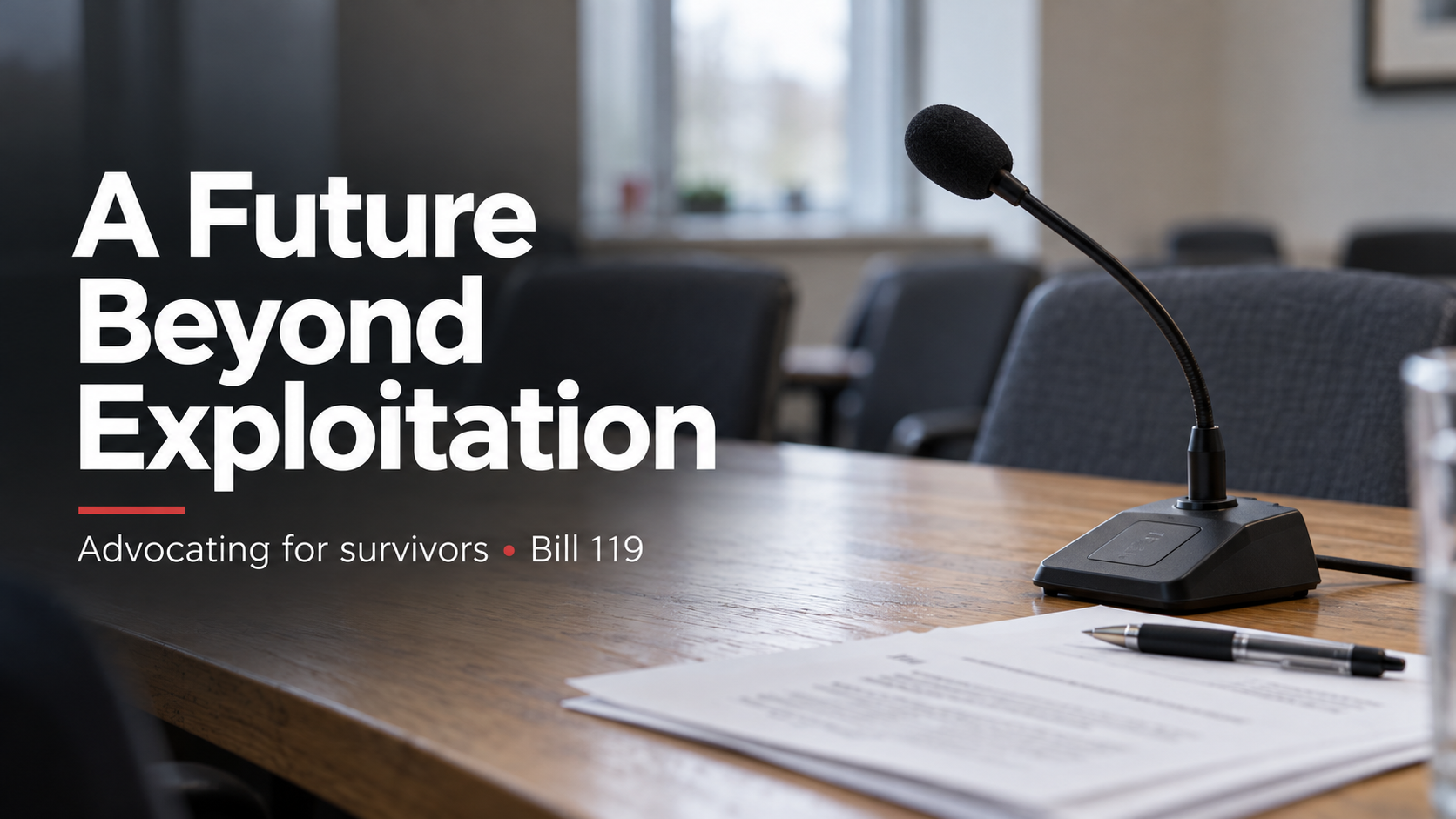
On October 5, 2026, Lieutenant Mirna Dirani and Tamara Doerksen represented The Salvation Army at public hearings on Bill 119, the Protecting Ontario’s Streets and Communities Act, 2026. Together, they brought experience supporting survivors into a discussion about how proposed protections could make a practical difference.
Doerksen serves on the Army’s territorial modern slavery and human trafficking response committee. Lieutenant Dirani is a resource officer for immigrant and refugee services and a modern slavery and human trafficking response advocate for the Ontario Division.
As they shared, leaving human trafficking can begin with finding somewhere safe to sleep. But when shelter spaces are unavailable, that safety may come at a cost: a hotel room charged to a personal credit card, followed by expenses for food, medication and transportation.
For survivors rebuilding their lives, those costs can become another barrier to stability.
“The trafficking has ended, but the financial consequences have not,” Lieutenant Dirani told Ontario’s Standing Committee on Justice Policy. “That financial burden creates another layer of vulnerability during recovery.”
Their message was clear: survivors need protections they can understand, access and use, alongside trusted support throughout recovery.
The Cost of Starting Again
A central focus of the Salvation Army’s presentation was the bill’s proposed coerced debt framework, which would help address debts connected to human trafficking.
As The Salvation Army’s representatives shared, financial relief is closely connected to the wider work of recovery. Debt can stand between a survivor and the housing, employment and stability they need to move forward.
“Through our work supporting survivors of human trafficking, we have seen firsthand that leaving exploitation is often only the beginning of recovery,” said Lieutenant Dirani.
Leaving exploitation is often only the beginning of recovery.
She described survivors using personal credit cards for temporary accommodation when a shelter was unavailable, unsafe or unsuitable. Others faced expenses related to travel and identity documents after discovering that traffickers had obtained documents in their names without their knowledge or consent.
These experiences informed a practical question the Army brought to the committee: would debts incurred after a person leaves trafficking, but directly connected to the consequences of that exploitation, qualify under the proposed framework?
The question reflects what front-line workers encounter as they help people move from immediate safety toward lasting stability. The costs of exploitation do not necessarily stop when someone leaves.
Support Within Reach
The Salvation Army welcomed the role of designated organizations in helping survivors navigate the proposed process.
“Survivors should not be expected to navigate complex legal, financial and administrative processes alone,” said Doerksen.
She emphasized the importance of experienced organizations that understand trauma and have established relationships with creditors and financial institutions. These organizations also need adequate resources to help survivors identify claims, access support and continue their recovery.
The Army urged that implementation be shaped by survivors and the people who work alongside them. Processes should respond to survivors’ needs and circumstances, including the difficulties many face in participating in the criminal justice system.
“Access to support should not depend on the outcome of a criminal proceeding,” Doerksen told the committee.
Survivors should not be expected to navigate complex legal, financial and administrative processes alone.
Accessibility was also a recurring concern for Lieutenant Dirani. Survivors may face language barriers, live far from services or be uncertain about seeking help because of their immigration status. People affected by labour trafficking and newcomers without secure status must be able to reach support without fear.
For these protections to make a difference, clear communication and trusted relationships will be essential.
Protection That Travels
The Army’s presentation also addressed the need for safety beyond a survivor’s immediate circumstances.
Doerksen expressed support for recognizing and enforcing qualifying restraining orders issued elsewhere in Canada, acknowledging that survivors may move to another province to find safety and rebuild their lives.
“Protection should not end at a provincial border,” she said.
The Salvation Army also welcomed the proposed extension to victims of criminal harassment of a civil remedy already available to victims of human trafficking. As Doerksen explained, harassment, intimidation, surveillance and threats can continue long after exploitation ends.
These measures recognize that recovery may involve ongoing efforts to remain safe while pursuing housing, employment and renewed independence.
Working Together for Recovery
Throughout the hearing, both representatives returned to the importance of partnership.
Doerksen highlighted the need to work with community organizations that already have trusted relationships with survivors, including those in Indigenous and rural communities. Lieutenant Dirani emphasized connections among schools, social services, government, law enforcement and community partners.
“Recognizing the signs of trafficking is only the first step,” Lieutenant Dirani said. “Survivors need access to trusted organizations that can respond, provide support and help them navigate recovery.”
The Army also emphasized the importance of reducing demand for exploitation by holding traffickers and purchasers accountable. Survivor protection, prevention, early intervention and accountability must work together to address human trafficking effectively.
Survivors need access to trusted organizations that can respond, provide support and help them navigate recovery.
Alongside these recommendations, the Army brought survivors’ everyday challenges into the policy discussion: the cost of a safe room, the challenge of replacing documents, the difficulty of navigating unfamiliar systems and the importance of having someone to turn to.
For Doerksen and Lieutenant Dirani, the promise of Bill 119 rests in how its protections reach the people who need them.
“The Salvation Army supports the intent of Bill 119 and welcomes measures that strengthen protections for survivors of human trafficking,” Doerksen said. “But implementation determines whether a survivor can use the protections and remedies it creates.”
Behind that call is a commitment to walk alongside survivors as they rebuild, and to help make a safer, more stable future possible.


Leave a Comment