



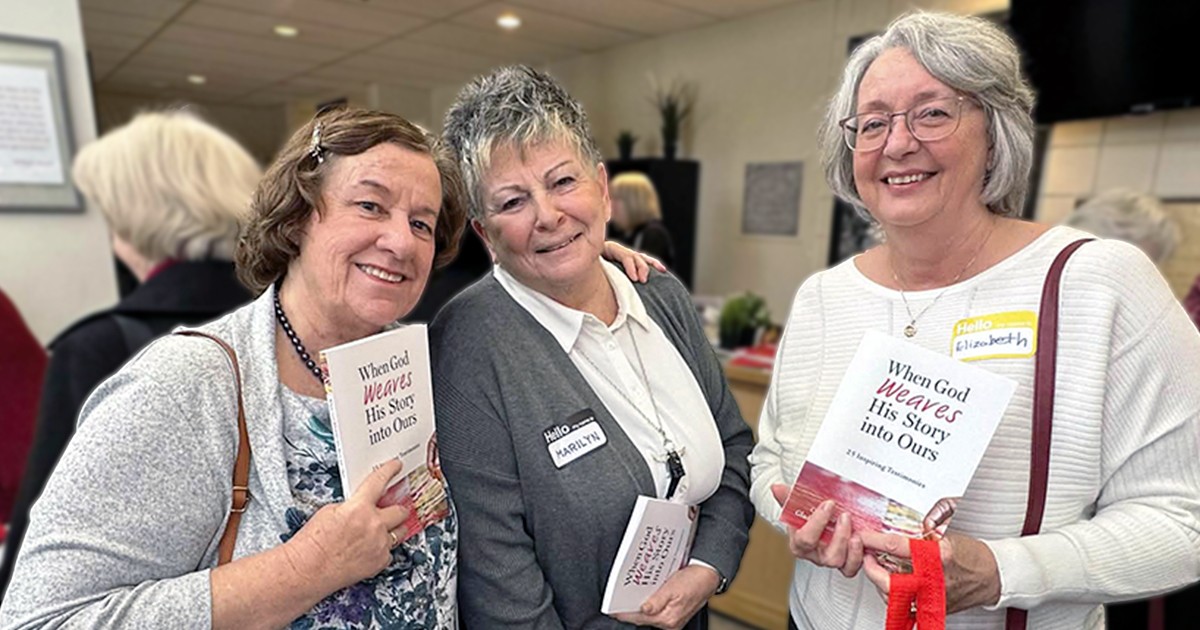
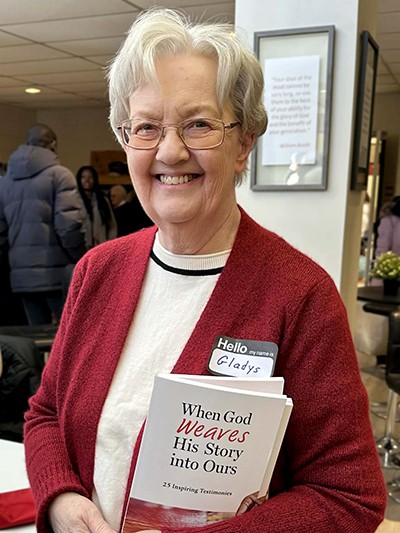
“We often sit beside people in church without really knowing what they’ve lived through,” says Gladys Thompson, Connecting Through Life Stories co-ordinator at Oshawa Temple, Ont. “When they share their story, there’s more understanding, compassion and sometimes even healing.”
As the Apostle Paul wrote in 2 Corinthians 1:3-4, the comfort we receive from God becomes comfort we can offer others. That’s why Thompson felt called to develop a new ministry at the corps to help people share their testimonies, resulting in the compilation of a new book, When God Weaves His Story into Ours.
“Everyone has a story worth telling. You don’t need a dramatic testimony or a perfect life for God to use you. Your faith journey has value—to both God and others,” says Thompson as she shares more about this unique ministry with Salvationist staff writer Abbigail Oliver.
What inspired this book? When and how did you decide to put it together?
Gladys Thompson: The idea goes back to when my mother passed away in 2006. She was almost 95, and she’d often told us stories about God’s faithfulness through hard seasons, especially during the Great Depression. We always hoped she’d write her memoirs, but she never did. After she died, we found a few slips of paper where she’d tried to start. That experience stayed with me—the realization that so many seniors leave this world with their stories still inside them, often because they don’t know how to record them.
With a background in communications, I have had the opportunity to help publish stories from retired international workers, and those pieces reminded me how powerful and encouraging personal testimonies can be. When I retired and settled in Oshawa, I talked with the officer at that time about how I might serve, and that conversation became the starting point for the Connecting Through Life Stories initiative.
I began by teaching a small memoir writing group, and as I listened to the stories people were writing, it became clear that many of them deserved to be shared with a broader audience.
Who was involved in the making of When God Weaves His Story into Ours?
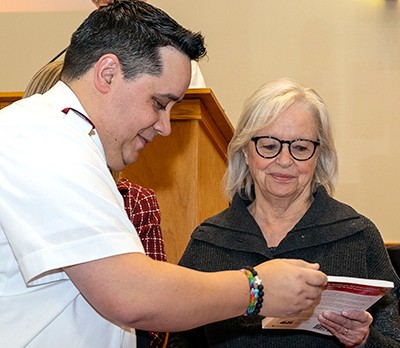
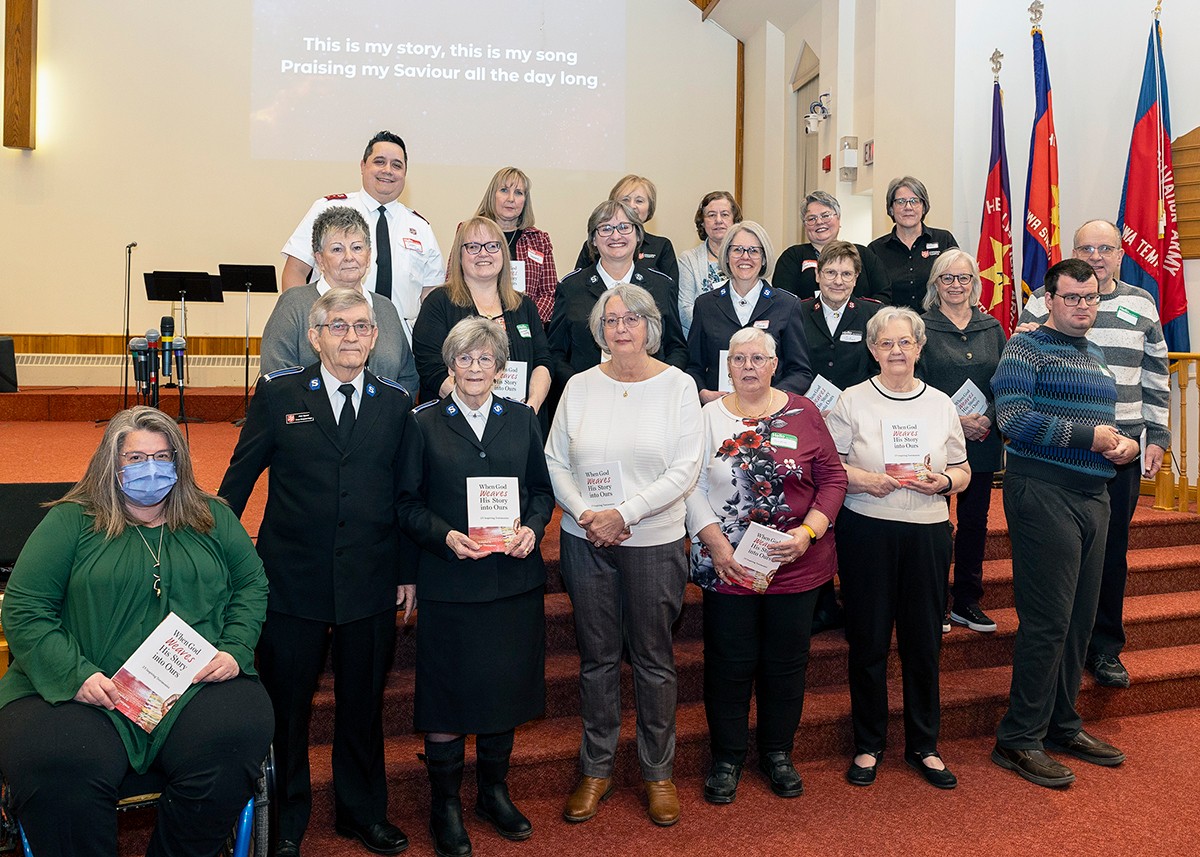
GT: It was a team effort. The contributors include both first-time writers and those who have been published previously. All of them are members of our congregation, all from different backgrounds and of all ages.
Because the book was published under the corps’ name, I worked closely with our corps officer, Captain Justin Gleadall, who served as my main consultant. I invited people who were interested in writing and supported those who needed help shaping their stories. I did an initial edit on each piece before submitting everything to the publisher.
What can readers expect to find inside?
GT: We want readers to feel encouraged. Each story shows God at work in everyday lives, often in ways people don’t realize until they look back. As readers take in these experiences, we pray they’ll notice the ways God has been present in their own journeys, too. We also pray for readers who aren’t Christians, that the honesty and hope in these pages spark curiosity and a desire to explore faith and discover what a relationship with Christ could mean for them.
These stories are relatable; they could happen to any one of us—accidents, navigating dementia, illness, family circumstances and more. By reading them, others will hopefully see that God wants to be part of their story, too, if they let him. Writing a chapter in a book or an article for Salvationist.ca is one way to share our God-stories, but there are others as well, either publicly, in a church or community group, or privately with friends.
Can you tell me more about the Connecting Through Life Stories ministry generally?
GT: Christian memoir-writing workshops are where it all began. Over 28 lessons, we walk through remembering, reflecting and writing. The course covers the kinds of stories people can share and practical tools for organizing their memories. Accountability and group interaction have been a real source of encouragement for those who have been taking part.
The book, When God Weaves His Story into Ours, grew naturally out of these workshops. It now serves as an exampleof what other groups can do—whether that’s publishing a book, creating a church booklet or submitting stories to a magazine.
The next part of the ministry involves a participant’s manual and facilitator’s guide, which I’m now finalizing. The goal is to make it easier for other churches or small groups to offer their own memoir-writing sessions, using material they can adapt to their context.
As this ministry expands, we’re also forming a project committee to support various ways people can share their stories. Not everyone is comfortable writing, so we’re exploring other formats—podcasts, conversations, public speaking, video testimonies and more. We’ve purchased recording equipment and plan to begin producing podcast episodes soon, and we also plan to record video testimonies.
From your perspective, why is storytelling so important?
GT: It matters because it’s one of the ways God repeatedly asks us to reflect on and pass on our faith. When we take time to reflect on our lives, we start to see God’s fingerprints more clearly—the moments he carried, guided or prepared us for what came next. That kind of reflection helps us to grow closer to him.
And for those who are not Christians, honest stories of God’s work can spark curiosity. Testimonies have a way of opening doors—they invite people to wonder what God might do in their own lives.Sharing our stories also preserves our history and helps our descendants better appreciate what life was like for us. When we talk about the homes we grew up in, how we handled illness, how we travelled, or how our families coped during hard times, we give our children and grandchildren a living picture of where they come from.
What would you say to someone who is hesitant about sharing their story, or who thinks their story might be unimportant?
GT: I know how that feels! When God told me to write about my divorce, I struggled with the same question: Who would care about what I had to say? It took a long time, but eventually I did write and simply prayed that God would use it however he wanted, even if it helped only one person. The feedback I received was overwhelming. If God tells you to share your story, just do it, and leave the results to him. He has a way of turning our stories into encouragement for someone else. Your story might be exactly what someone else is waiting to hear.
"When we take time to reflect on our lives, we start to see God's fingerprints more clearly—the moments he carried, guided or prepared us for what came next. That kind of reflection helps us grow closer to him." - GLADYS THOMPSON
For someone who might feel stirred to reflect on their own journey and tell their story, what are the next steps?
GT: The first step is simply to pray about it. Ask God what he wants you to do with your story and trust him to guide you. From there, start exploring some basic resources on how to share a testimony or write a memoir. You don’t need to be a polished writer or speaker—you just need to be honest. Tell the truth about what you’ve lived through, even the hard parts. Own your mistakes, talk about what you learned, and share how God met you along the way. Reflect on your story so it’s fresh in your mind when God opens the door for you to share it.
Before you share anything, pray again. Ask God to use your experience to encourage someone else and then leave the results in his hands.
When God Weaves His Story into Ours is available in paperback, hardcover and as an e-book. Visit saoshawa.ca/book to learn more.
Read “I’m Still Me” by Linda Leigh, a story from When God Weaves His Story into Ours, in Faith & Friends.
This story is from:


Leave a Comment