



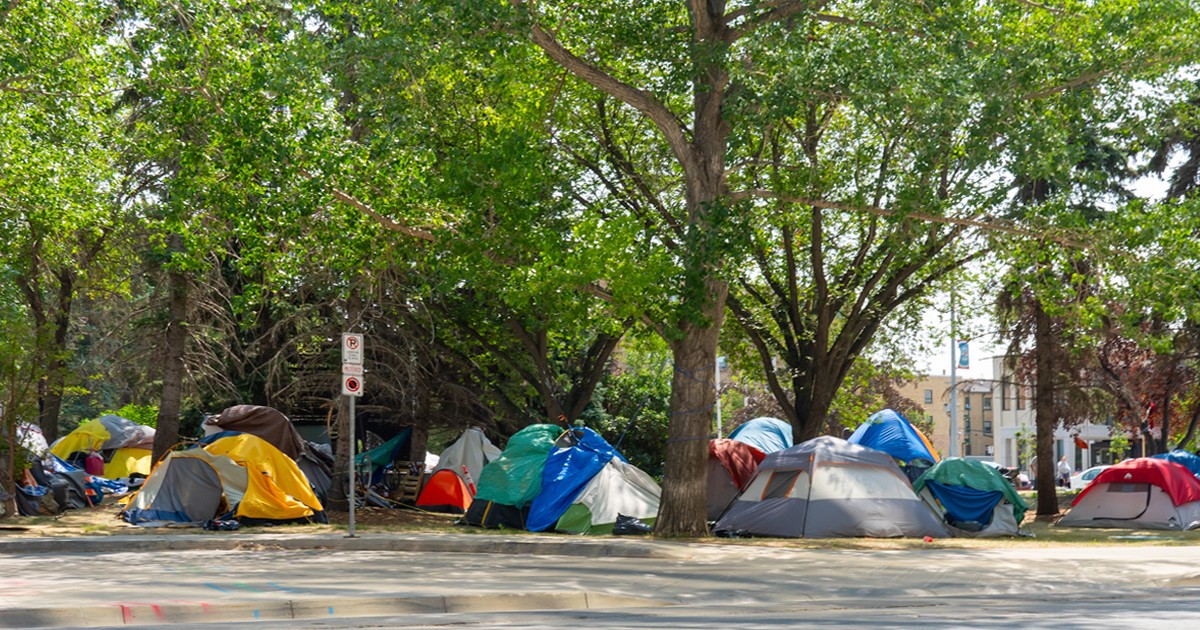
In October, the City of Saskatoon dismantled an encampment at 20th Street West and Avenue K South after escalating tension and confrontations between residents and government officials. The vacant lot beside a rail line had been the site of a makeshift community off and on for several years and had grown to about 80 tents since the summer. Officials said the site was dangerous, citing fire hazards, drug use, violence and other public safety issues. Residents said they had nowhere else to go and filed a human-rights challenge with the courts.
“This is affordable housing for us,” one said.
Urban encampments of those sleeping in tents or temporary shelters have been increasing in cities across Canada. They represent an effort by people who are experiencing homelessness to meet their basic needs for shelter, community and self-determination. But these informal settlements are also a visible and distressing sign of many interconnected issues, including a lack of affordable housing and access to consistent and culturally safe health care.
It’s a growing and complex social issue. What is a hope-filled, Christian response?
Moving To, Not On
Urban encampments on public property or privately owned land rarely offer a dignified or realistic long-term solution to the housing crisis. They often lack basic sanitation, provide inadequate protection from the weather and can pose serious safety and health risks through open fires, animals, substance misuse and the potential for violence.
A range of factors may prevent individuals from accessing emergency shelters, including the impact of trauma, a lack of trust or perceived safety in the available services, and previous negative experiences related to privacy and autonomy.
Each municipality has its own laws and bylaws regarding encampments, with significant differences across provinces. Removing or clearing an encampment is not simply a decision for one agency; it involves co-ordination among provincial government, outreach teams and social services, as well as first responders (police, fire department and EMS) and health supports. Rapid and forceful clearing of encampments without offering a safer alternative can lead to even worse outcomes, such as becoming more vulnerable and losing essential support. Effective response should prioritize safety, communication, dignity and meaningful pathways to stable housing.
The National Housing Strategy Act (2019) recognizes that the right to adequate housing is a fundamental human right affirmed in international law and commits Canada to further progressive realization of this right. To maintain human dignity, the response cannot simply be a forceable declaration to “move on”—it must be a dialogue and an invitation to “move to” an appropriate shelter, recovery program, transitional or supportive housing.
Defend the Rights of the Poor
The Salvation Army’s territorial position statement on poverty and economic justice provides clear ethical direction regarding systemic poverty, stating that “the persistence of widespread poverty and indifference to that poverty in Canada and Bermuda is morally unacceptable” and that “our response to poverty is a measure of our obedience to and love for God.”
The Bible emphasizes the inherent dignity of all people as bearers of God’s image and the importance of taking direct, compassionate and practical action to meet immediate needs (see Matthew 25:35-40). Providing hospitality to strangers, engaging directly with individuals who are marginalized, sharing our resources and restoring people to community are practices encouraged in Scripture. “Speak up for those who cannot speak for themselves, for the rights of all who are destitute. Speak up and judge fairly; defend the rights of the poor and needy” (Proverbs 31:8-9).
Providing tangible services, treating people with dignity, building trusting relationships and connecting people to additional resources all align with this biblical mandate. So do advocacy and collaboration with other stakeholders to move beyond temporary aid and help individuals find stability and restoration.
The Salvation Army Responds
Our social mission units come alongside those experiencing poverty, homelessness and social exclusion every day. Justin Napier, executive director of The Salvation Army’s Gateway of Hope in Langley, B.C., recognizes that encampments are jarring and difficult to see, but “each one of these people has a name; they are a human being with a full story and, very often, unimaginable stuff has happened to them.”
Across the territory, The Salvation Army offers services, shelters, meals and wraparound support while recognizing that broader systemic changes are needed to address the growing housing crisis, alongside addiction and mental health supports. Our programs and services are designed to take a person-centred, holistic approach, meeting the complex vulnerabilities and multifaceted needs of those we serve.
Transformation is possible, and there are stories of clients receiving outreach services from The Salvation Army who eventually join our team as employees or volunteers, seeking to give back in the same places where they first found hope and motivation to change.
Outreach Services
The Salvation Army has an obligation to ensure the safety of mission partners, employees, volunteers and program participants. Some ministry units do offer outreach services or community meals, often supported by mobile kitchens and delivered alongside community partners. In some circumstances, the risk of violence or harassment when serving directly within an encampment is too great.
Al Breitkreuz, program manager at The Salvation Army’s Centre of Hope in Abbotsford, B.C., says we need to move away from a one-dimensional narrative around housing and break down the stigma of perceived laziness among those experiencing homelessness. Outreach means “loving these people with dignity and meeting them where they are, but realizing that real change doesn’t begin until the underlying causes are addressed.”
Destigmatization Is Essential
Certain groups are disproportionately affected by homelessness in Canada, including Indigenous and racialized neighbours, people with disabilities or mental-health challenges, 2SLGTBQIA+ youth and veterans. People living in encampments have typically suffered multiple losses of employment and loved ones in addition to their housing and often find a sense of belonging and perceived community.
Social stigma, engrained patterns of living and personal and systemic barriers can make transition from encampments difficult. The Salvation Army works toward human-centred solutions that continue to uphold the dignity of people affected by de-encampments through transitional and supportive housing. Outreach workers seek to know individuals by name and build trusting relationships, helping reduce barriers and ensuring people know which services are available through community partners.
Our Role as Salvationists
The problem of urban encampments can seem unsolvable—too big, complicated and unpleasant to address. No single organization, including The Salvation Army, can manage the full scope of homelessness alone. As Christians, we are called to recognize those in encampments as our neighbours. While we resist their inhumane living conditions and want to help, we may still wonder what is ours to do.
I propose a three-pronged approach: meeting immediate needs, advocating for broader systemic changes and offering preventative care.
1. Meet Immediate Needs. Social mission units often operate separately from our corps, but there can still be integration and missional alignment. Congregations can support frontline staff through prayer, financial contributions and volunteering.
Salvationists can also come alongside those living in Salvation Army shelters, transitional housing or recovery programs by offering connections to a faith community and giving your time and energy toward mentoring, life skills or employment-readiness opportunities for those moving through recovery and seeking stability.
2. Advocate for Systemic Change. Salvationists can recognize the broader changes required at various levels of government to address homelessness in Canada. Being part of the solution requires education, collaboration, innovative thinking and thoughtful consideration of housing strategies.
Issues such as minimum wage, social assistance and disability programs, mental-health support and substance use treatment all factor into the issue of urban encampments. As citizens, we can learn about these issues and consider how different policy approaches affect people experiencing homelessness and poverty.
3. Provide Preventative Care. We can also work upstream through community mission and corps mission ministry units to reach families and individuals at risk of homelessness.
Intensive case management through Pathway of Hope and other community initiatives can provide wraparound care that helps people maintain housing through life challenges. Goal setting, counselling and food-security programs can change someone’s trajectory and provide timely support before a crisis occurs.
A New Reality
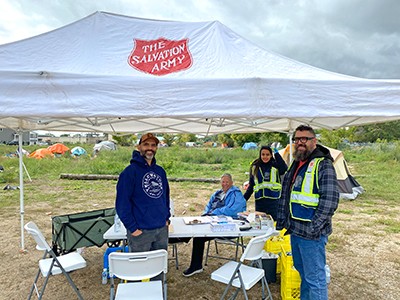
In Saskatoon, The Salvation Army responded to the growing number of encampments across the city this summer by launching Project Hope. A team of outreach workers visited the two main sites twice a week to offer mobile housing case management, providing essential supplies, building relationships and connecting individuals with shelters, housing programs, health-care services, and other community resources.
“It’s a difficult balance between supporting vulnerable individuals and addressing broader community concerns,” says David Clare, manager of housing services. “The goal was not to take sides but to ensure people had access to support and opportunities to move toward greater stability.”
They encountered many seniors, including one man who had been living in a tent outside for four years. He struggled with embarrassment about not being able to read, something that prevented him from pursuing housing. Through regular visits, he began to reconsider the idea of seniors housing.
“He was able to share his worries, which opened the door to considering meaningful changes in his life,” says Clare. “Hope is being able to envision a new reality for yourself.”
I pray that investing our time, talents and treasures in long-term solutions that address the root causes of urban encampments and poverty will lead to more transformed lives as we partner with God and pour ourselves out in love for all our neighbours.
Captain Renee McFadden is the corps officer at The Willows–A Community Church of The Salvation Army, in Langley, B.C.




Leave a Comment