Fires. Floods. Pandemics. While no two disasters are the same, one thing remains constant: the need fora response.
From May 3-9, Canada will observe its annual Emergency Preparedness Week with the theme “Are You Ready?” (see GetPrepared.ca). As one of Canada’s major emergency relief organizations, The Salvation Army is ready to respond when disaster strikes. Here are some of the ways the Army is making an impact in our territory and beyond.
Eco-friendly EDS in Ontario
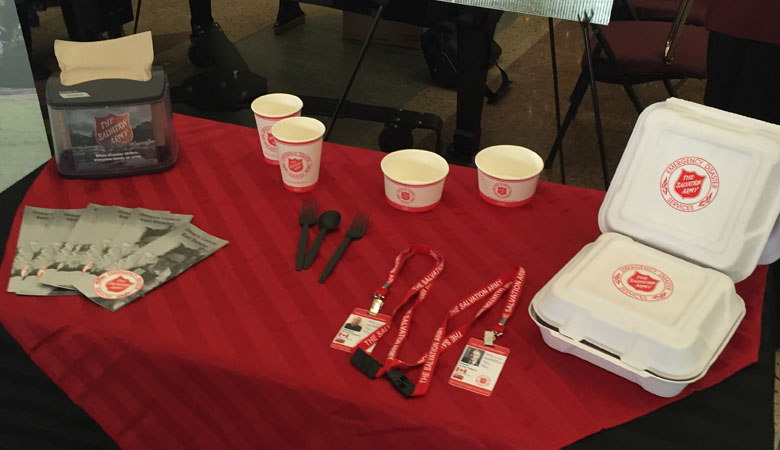
The Salvation Army’s Ontario Central-East Division is taking steps to ensure its emergency disaster services (EDS) adopt sustainable and environmentally friendly practices. Beginning this spring, all of the division’s community response units (CRUs) will use compostable and recyclable items for food delivery, and will serve fair trade coffee.
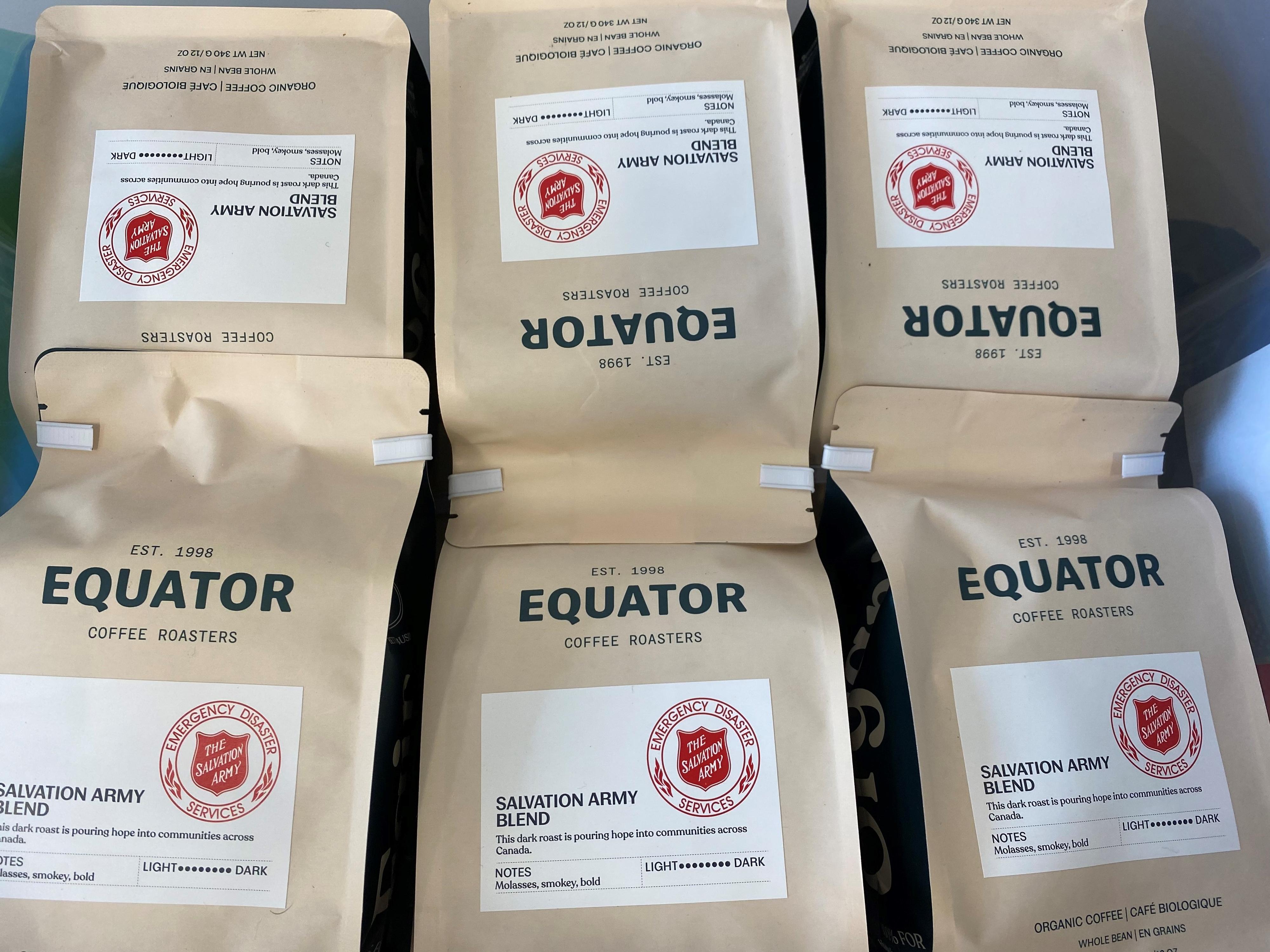
“We say that we’re giving hope today, but we can’t do that at the expense of tomorrow,” says Glenn van Gulik, divisional director of EDS, Ontario Central-East Division. “We also can’t give hope in Canada at the expense of a coffee farmer in a developing country.”
The move toward sustainable practices began with a desire to create consistency within the division in terms of food services, along with the initiative of Jillian Noel, administrative co-ordinator at divisional headquarters, who gave a presentation on sustainability in The Salvation Army to the divisional executive board.
All EDS operations in the Ont. CE Div will serve fair trade coffee, provided by Equator Coffee Roasters
Going forward, the division’s CRUs will be equipped with compostable containers, cups, cutlery and so on, as well as coffee supplied by Equator Coffee Roasters, who have created a special Salvation Army blend.
van Gulik is pleased to report that the new products not only fulfil the Army’s core value of stewardship in the environmental sense, but also in the financial sense. With bulk ordering through one supplier, Gordon Food Services, the division is actually seeing cost savings.
Following the roll-out in the Ontario Central-East Division, van Gulik hopes that other divisions and territories will jump on board as well.
“It just makes sense for us as an organization, and it puts us on a new plane in terms of living up to our brand promise,” concludes van Gulik.
Territory Launches Rapid Emergency Response Team
The Canada and Bermuda Territory has assembled a new emergency disaster services (EDS) team, to better serve the territory in times of need. The Territorial Rapid Emergency Assistance Team (TREAT) currently consists of 18 experienced EDS personnel, representing all nine divisions as well as territorial headquarters.
“The purpose of TREAT is to be available to deploy quickly following an incident to advise local leadership regarding response activities or assume command of Salvation Army response efforts,” explains Perron Goodyear, territorial EDS director and leader of TREAT. “It will enhance the Army’s ability to rapidly respond to emergency or disaster incidents in a professional manner.”
As Goodyear explains, the team will be an integral support to divisions when they are affected by a disaster by providing timely and professional guidance and back-up. The responsibilities of the team will vary depending on the emergency, with team members fulfilling various roles as the need dictates.
“With emergency management becoming more professionalized, having a highly skilled team will enable the Army to continue providing vital ministry during times of crisis,” he says.
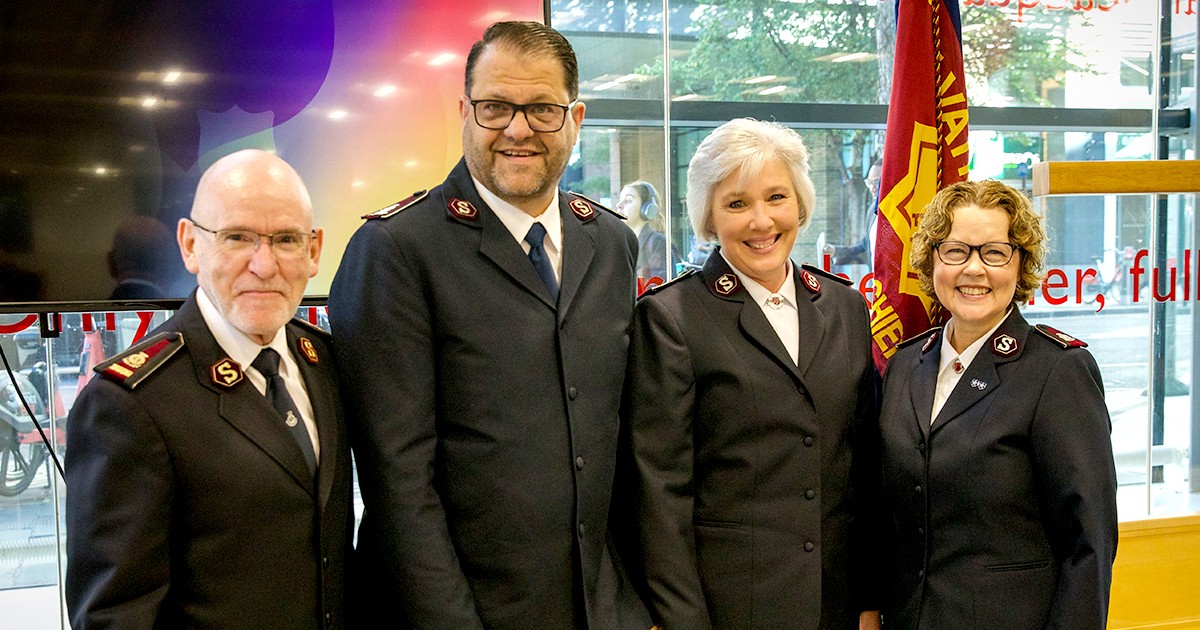
Commissioners Garth and Patti Niemand have been welcomed into their new roles as The Salvation Army's Chief of the Staff and World Secretary for Women’s Ministries, with a call to lead with courage, unity and continued dependence on God.
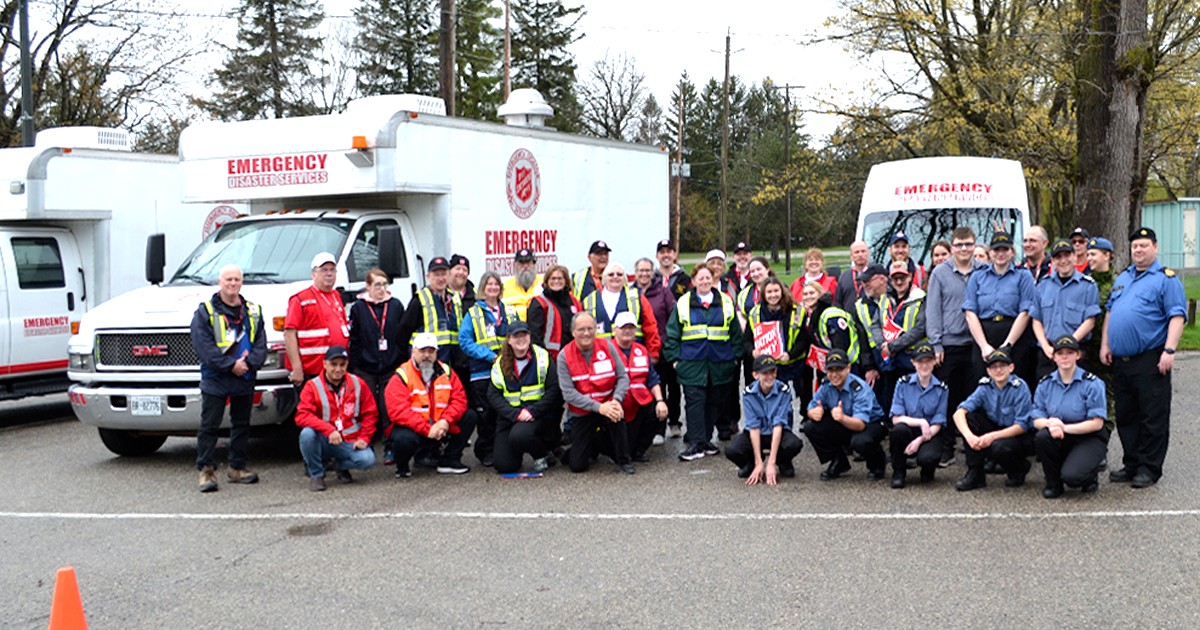
In Woodstock, Ont., a group of young sea cadets is developing vital leadership and disaster response skills through a unique partnership with The Salvation Army. Spearheaded by Trevor McLellan, emergency disaster services (EDS) specialist for the Ontario Division and sea cadet instructor, the program expands training opportunities for youth by




 All EDS operations in the Ont. CE Div will serve fair trade coffee, provided by Equator Coffee Roasters


Leave a Comment