



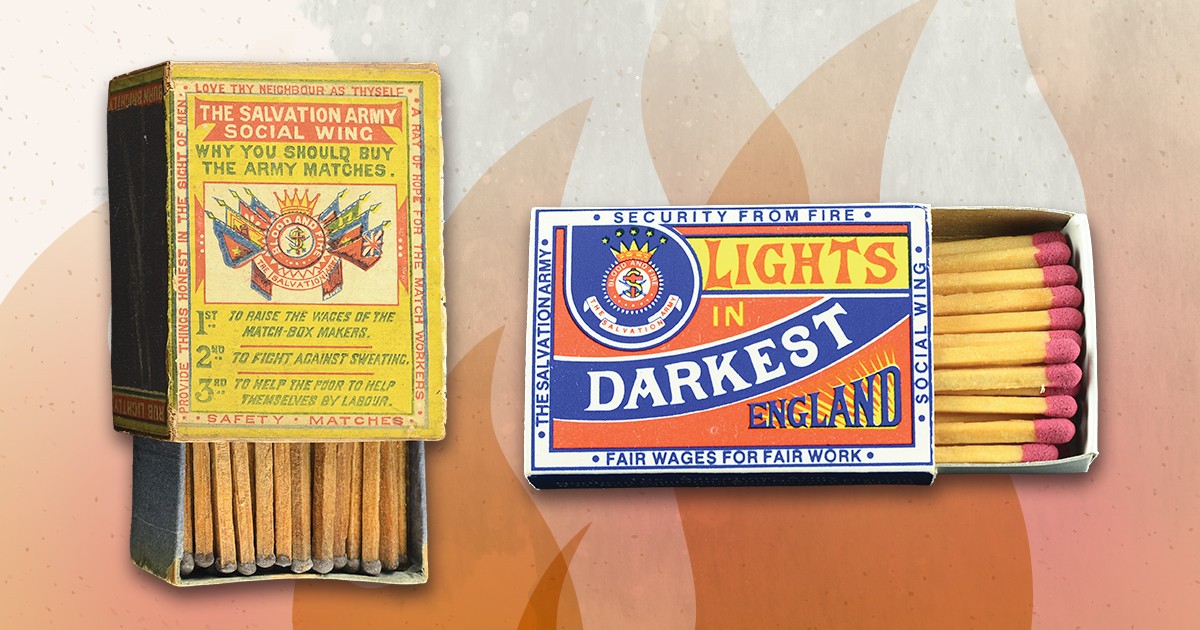
Living History is an ongoing series showcasing just a small assortment of the more than 350,000 items housed at The Salvation Army Heritage Centre in Toronto. This month, we shine a light on a collection of matchboxes that are an “illuminating” part of Salvation Army history.
In the 1880s, The Salvation Army established different employment programs for people experiencing homelessness or addictions, former prisoners and other vulnerable groups as part of General William Booth’s Darkest England Scheme.
One problem connected to the rampant poverty and underemployment in England was the “sweating system,” an exploitive labour practice that took place in factories. Characterized by unsafe conditions, high workloads, long hours, low pay, and subcontracting to skirt labour laws, the practice is where we get the modern term “sweatshop.” These factories employed large numbers of young women. Sweating became a social concern in the late 19th century, due in part to several high-profile labour disputes involving underpaid workers.
One such dispute was the matchgirls’ strike of 1888. The young women employed at the Bryant & May Match Factory in East London went on strike to protest their appalling working conditions.
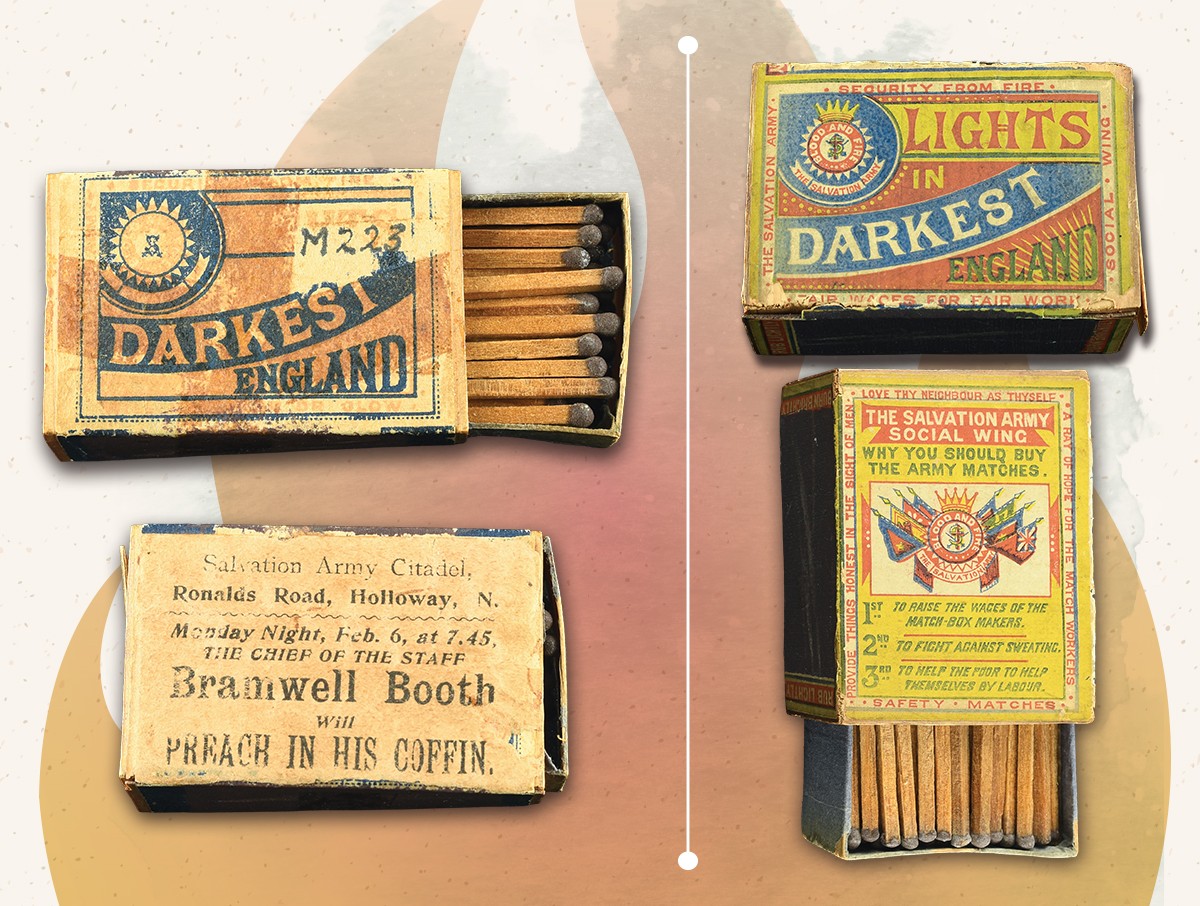
In response, The Salvation Army established its own matchstick factory in London in 1891. The Army’s factory produced “safety” matches using less toxic red phosphorus, and paid workers higher wages.
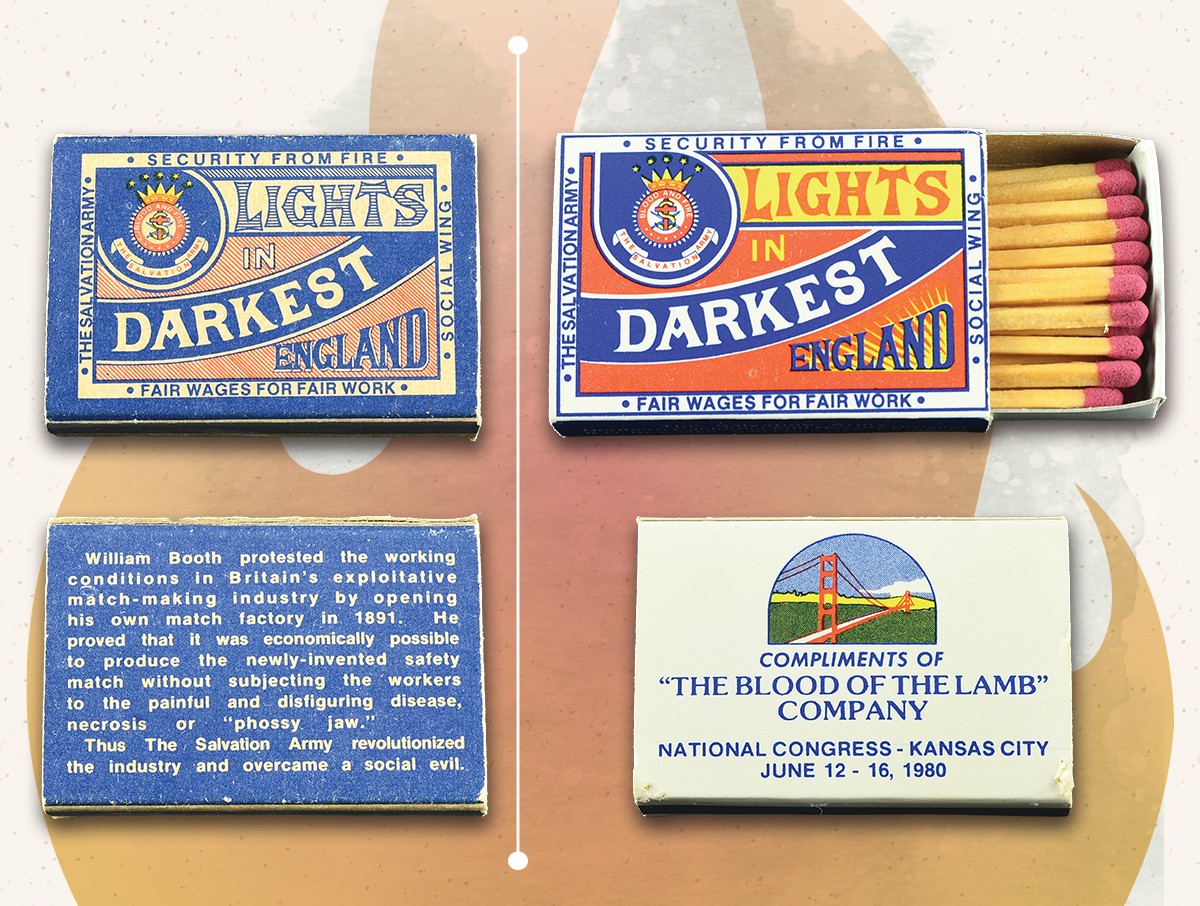
These “Lights in Darkest England” matches were promoted in The War Cry and the Darkest England Gazette. Beyond the urgent objective of curbing the disease of phossy jaw (toxic yellow phosphorus used in the production of matches caused jawbones to decay) was the need to improve the general conditions of the destitute population.
The Salvation Army faced considerable challenges in this endeavour, not the least of which was their matches were three times the price of white-phosphorus-based matches. In addition to the higher prices, the Army refused to employ child labour.
In 1894, General William Booth founded the British Match Consumers’ League. He asked that members only buy matches that conformed to special conditions, whereby they must be of British manufacture, made entirely of sweat-free conditions, and were free from any risks to the health and life of the worker.
Unfortunately, the Army’s factory could not compete with the cheap mass production of matches by other factories. After 10 years of production, the Army’s factory had to close.
But the Army’s efforts were not in vain. Reform was on the horizon due to the continued outcry over poor working conditions and pay. By the beginning of the 20th century, many matchmaking factories had revised their methods to better align with calls for improved wages and conditions.
The Heritage Centre has several “Lights in Darkest England” matchboxes in its collection from different time periods. Two of the matchboxes date to 1891 while others are reproductions.
This story is from:





Leave a Comment