


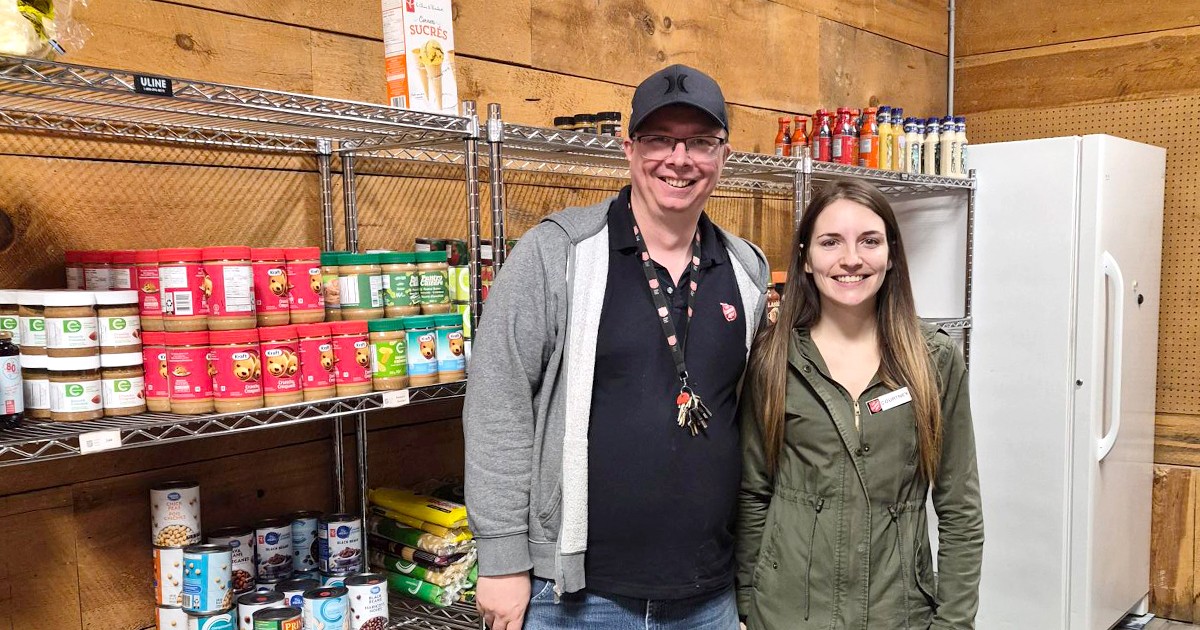
Food insecurity is on the rise across the Canada and Bermuda Territory, and The Salvation Army is well-positioned to assist through its food banks—but the ministry goes far beyond just sharing food.
With 220 community services locations in the territory, food banks are one of the first ways that the Army connects with individuals and families in need. They’re an open door to providing support wherever it’s needed, from housing and employment services to addiction recovery.
“We are so much more than just food banks,” says Peter Thomas, community services consultant in the community mission department, who works closely with ministry units operating food banks. “Food and shelter and a safe space is the first step, but the goal is not just to provide one meal today; it’s to help people change their lives so they don’t need us for that anymore.”
Greater Need
Each year, food banks are seeing more people coming through the doors for assistance. According to Thomas, food insecurity is no longer limited to vulnerable groups but is now affecting a broader range of people. The issue is becoming increasingly widespread and complex.
In Huntsville, Ont., approximately 26 percent of households experience some level of food insecurity, and nearly one in three struggle to afford adequate or nutritious food. Wider economic stress contributes to the issue, with many people spending 70 to 90 percent of their income on housing alone.
“When people think of Muskoka, they picture wealth and cottage country, but that isn’t always the reality,” says Major Dwayne LeDrew, corps and community services officer at Huntsville Corps. “Food insecurity is one of the most pressing social challenges in our region. It affects a wide range of individuals and families.”
On the other side of the country in Williams Lake, B.C., the food bank has seen a nine percent increase in usage so far this year, following a 30 percent increase the year before. “Rising costs of living are placing increased pressure on households,” says Tamara Robinson, community ministries director at Williams Lake Corps.
And the same trend exists in Fort Frances, Ont., which has seen a growing number of people, including a significant population of seniors, relying on the food bank in recent years. “When I started working here three years ago, we were distributing about 40,000 pounds of food a year. Now we’re moving well over 80,000 pounds annually,” says Ryan Daw, community and family services co-ordinator. “People need consistent access to basic, nutritious food without having to choose between paying rent and buying groceries.”
"We are so much more than just food banks." - Peter Thomas
What Sets Us Apart
In each of these communities, ministry units agree that the problem isn’t just food—and neither is the solution. Many people who are facing food insecurity are also facing additional needs, such as housing instability, health challenges and deep isolation.
Army food banks are addressing the shift by focusing on wraparound supports that are transformational, not just transactional. Programs such as The Salvation Army’s Pathway of Hope help to break the cycle of poverty by addressing the root causes and introducing a strengths-based case management system to provide targeted services to people in need. Food banks are a valuable entry point to providing these kinds of comprehensive supports.
“We see food as just one way to bring people through our doors. It gives us an opportunity to connect, have conversations and listen. It might lead to kids going to camp, employment programs, or connections to other supports,” explains Thomas. “We want to break the cycle of poverty, and food is just the beginning. Housing, education and long-term supports are what set us apart from other organizations that offer similar food services.”
According to Keely Brower at the Halifax Centre of Hope, people may come for food, but what they find is relationship. “Often, the most impactful part isn’t the food itself—it’s being seen, known and treated with dignity,” she says. “We also provide referrals to housing, income supports and Pathway of Hope. Our food bank is the gateway to everything else we do.”
For Daw, the food bank is about providing hope when it’s needed most. The people who come into the food bank are considered neighbours and are met with dignity and respect. “We help however we can, whether that’s food, assistance or simply sitting with someone in their moment of crisis,” he says. “Behind every request for assistance is a story, and we meet people with compassion instead of judgment.”
A Network of Hope
In Canada and Bermuda, there are 82 ministry units that are direct members of Food Banks Canada, the national network of food banks working together to address food insecurity. Membership ensures food banks are aligned with national standards and best practices, while strengthening their ability to serve their communities through resources and advocacy.
“Membership provides access to national food sourcing, shared standards, training and research,” says Major LeDrew. “This affiliation enhances both the capacity and effectiveness of our food bank.”
Food Banks Canada developed its national standards of excellence in partnership with Imagine Canada. The framework covers six key areas including governance, people management, financial accountability, public engagement, client care and food safety.
“This process has raised the bar for how we operate,” says Thomas. “It ensures that local ministry units are meeting the standards that are already in place nationally.”
“Being a member of Food Banks Canada means we’re part of a national network that understands our challenges and shares our mission. It also means security,” explains Daw. “It’s the peace of mind that comes from knowing we’ll be able to fill these shelves, even when the need feels overwhelming.”
Daw recalls a devastating flood in September 2025 that temporarily halted operations at the food bank. A water main burst and sent sludge and clay into the foundation of the building, causing severe damage. “It was a moment of true crisis for us. We made one call to Food Banks Canada, and they sent an entire pallet of food immediately,” he says. “That’s not just a transaction; that’s support. You’re not alone in this work, and when disaster strikes, you have a partner who understands the urgency and responds with compassion and efficiency.”
Helping Us Serve
In addition to their Food Banks Canada membership, these ministry units have also undergone an extensive accreditation process. Out of the 82 ministry units connected to Food Banks Canada, 52 are currently accredited, and many others are in the process of becoming accredited.
Accreditation is a full review of food bank operations, including food safety, client dignity, policies and reporting. The process involves a self-assessment, documentation submission and external evaluation and feedback, and it can often take several months to a year to complete.
Huntsville was one of the first ministry units in the territory to complete the process in April 2025. “While we were already doing much of the work, it wasn’t always in writing,” explains Major LeDrew. “This helped us formalize best practices and strengthen our operations.”
Today, The Salvation Army has become a leading influence, and Food Banks Canada now shares materials from accredited ministry units as resources to help guide others.
“There are strong supports available, including templates, training, webinars and direct guidance. You’re not doing it alone,” says Brower.
At Fort Frances Corps, two representatives from Food Banks Canada visited to conduct the accreditation review, and Daw was surprised to find that it was more than reviewing policies and procedures.
“They weren’t just checking boxes; they genuinely wanted to understand our approach and philosophy to food support,” he says. “It felt less like an inspection and more like a collaborative conversation aimed at helping us improve and affirm the good work we were already doing. They were able to provide valuable insights and resources for improvement.”
A Lasting Impact
Food is a critical need, but it’s just one need that The Salvation Army addresses. Food services, including food banks, meal programs and even mobile canteens, are vital entry points to transformation and access to services.
“The food bank is a key expression of our mission,” says Robinson. “Through it, we’ve been able to build relationships and become a trusted source of support. These connections allow us to better understand people’s challenges and walk alongside them.”
“We want to break the cycle. We want to reduce poverty. We’re doing that,” says Thomas. “It’s not just about food—it’s a ministry of presence.”
This story is from:



Leave a Comment