

I lay in bed feeling immobilized by exhaustion. My head throbbed as though caught in a vice, my throat was raw from coughing, and two empty boxes of tissues sat accusingly beside me. Relief was nowhere in sight. It was COVID.
And it was my 65th birthday.
My phone rang. I’d turned the volume down so the sound wouldn’t split my skull, but I answered anyway.
“Hello?”
“This is imaging calling. You recently had your annual breast cancer screening, and we need you to come in for a follow-up ultrasound.”
Silence.
“Hello? Are you there?”
AN UNWELCOME GUEST
I had always known there would be a day when the call came. It didn’t haunt me or play out dramatically in my imagination—it simply felt like an unwelcome guest that had already visited my family too many times. So, when it arrived, I didn’t panic.
What followed was a blur that felt both endless and rushed: ultrasound, referral to a surgeon, biopsy. Weeks later—June 13 at 9:15 a.m.—the diagnosis.
Still no panic. Just calm organization.
I took notes. I asked questions. What type? What stage? Five-year survival rates? It appeared hormone-positive, which usually means good outcomes.
“Oh,” I thought. “Like my mom’s.”
My husband leaned against the wall, visibly holding himself together. The doctor said, “Don’t worry—everything is going to be all right.”
“I think you need to tell him that,” I replied.
At home, I made tea. I ate a late breakfast—because if your life is going to fall apart, it may as well be on a full stomach. I hugged my husband as he unravelled. I reassured my daughter as she cried. I chatted with my best friend while she cried on one side of the screen and I calmly handed out reassurance on the other.
I’ll be fine. I’ll survive.
What surprised me wasn’t fear—it was the calm. Big things have always done that to me. They push me into lists and logic, into holding emotions at arm’s length. It’s the little things that undo me; the big things, at least, give me something solid to organize.
By evening, though, a strange unreality crept in.
Knitting seemed like a reasonable response.
I’d spent 30 years in ministry, followed by a slightly early retirement and what I told myself would be a gentler season—teaching leadership part-time at a Christian university. It was still service, just quieter and slower, often alongside students who somehow made me feel both wise and ancient.
As a teenager, I was certain I’d become an English professor and write great novels. Instead, I built a life of service and learned to squeeze my writing into the margins—between ministry, family and a level of exhaustion that creeps in so gradually you mistake it for adulthood.
This season felt like a gift. I’d even started a PhD—because apparently, I still needed something to achieve.
Then everything stopped.
Like a scene from Star Trek when Q snaps his fingers and time freezes. No forward. No backward. Just suspended.
Cancer does that. It stops you in your tracks.
STAND TALL
When I finally met the oncologist, it became real. Until then, cancer had been statistics and treatment plans—abstract, almost theoretical. Sitting in that office something shifted. For the first time, I was afraid.
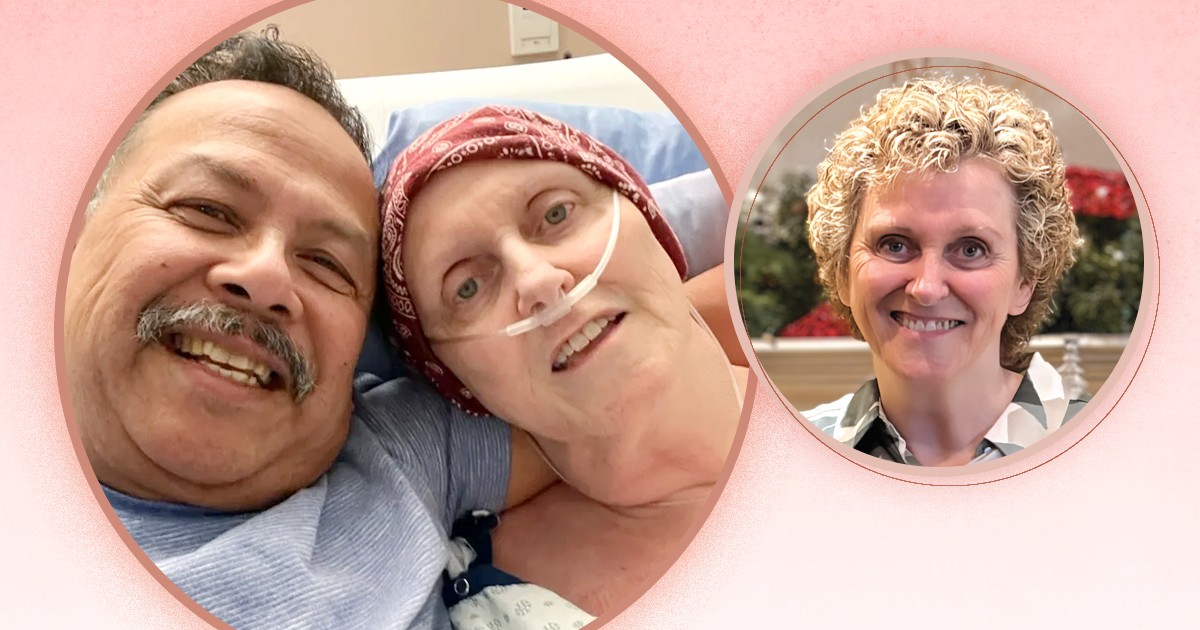
My husband was working, so my son, Nathan, came with me. He’s steady and stoic—like me—and instinctively, I knew he was the right one to have beside me. When he saw the fear flicker across my face, he slipped an arm around me and said quietly, “It’s going to be OK, Mom.”
The oncologist told me I had triple negative breast cancer. She didn’t soften her words. Aggressive. Fast spreading. Harder to treat. Even the name felt unfair, defined entirely by what it isn’t: negative, negative, negative.
I assumed surgery would come first. Instead, she laid out the plan: four chemotherapy drugs, immunotherapy, surgery, radiation. A year of treatment.
Then she added, kindly but bluntly, “You should probably cut your hair. After the second chemo, it’ll fall out—and when it’s long and curly, it doesn’t look pretty.”
I appreciated her honesty. We spoke the same language.
“MY FAITH DIDN’T DISAPPEAR—IT SIMPLIFIED ...I DISCOVERED GOD MORE AS COMPANION THAN PROBLEM-SOLVER.”—MAJOR KATHIE CHIU
By then, the cancer had already grown faster than expected. Fear tightened its grip. The nurse explained things I don’t remember at all. Thank God Nathan was there, writing everything down.
The drive home was heavy. Old companions—fibromyalgia and arthritis— decided to join the protest. My joints swelled. My muscles ached. Sleep became elusive.
Then came the needles, scans, IVs—fast and furious.
Some days I was a warrior. Other days I was convinced I’d be in the 20-25 percent who don’t make it. Most days lived somewhere in between.
I’m deeply grateful those early weeks were spent at our trailer at The Salvation Army’s Camp Sunrise in Gibsons, B.C. The Douglas firs stood quietly, having weathered centuries of storms. They felt like a wordless sermon: Stand tall. I will sustain you.
THE LONG MIDDLE
I started chemotherapy the way I approach most intimidating things: on time, organized and pretending I wasn’t scared. The nurse smiled knowingly, drew the curtain and hung the lineup—steroids, anti-nausea meds, saline, then the toxins.
At first, I kept teaching. Two MA courses. Practicum students. I held on until November, when chemo wiped out my immune system and hemoglobin. I landed in isolation, receiving blood transfusions.
That was my cue to stop—mostly. I kept my practicum students because that still felt doable and meaningful.
Then the hair fell out.
I’d always been easygoing about hair. Chemo changed that. When it grew back, the curls were so tight I looked like Nurse Crane from Call the Midwife. A scarf tied under my chin would’ve completed the look.
Emergency visits became routine—usually when my temperature hit 38 C. I’d present my golden ticket from the cancer centre and be ushered into isolation.
I begged for a break and had surgery in December. What should’ve been an overnight stay turned into 10 days after my lung collapsed—over Christmas, no less.
Humour became essential. Duct tape for the soul.
Once my blood counts recovered, I went back for more chemo. Then radiation—15 daily visits with a cold, humming machine the techs had named Vivian. Finally, immunotherapy. A year that stretched into 15 months.
The long middle lived up to its name.
The physical toll was relentless—chemo brain, aching muscles and joints, metallic-tasting food and mind-numbing fatigue. But the psychological toll surprised me more. Cancer gets into your head. You start interrogating your life. Was it food? Hair dye? Standing too close to the microwave waiting for popcorn?
Then there’s the heart-squeeze of imagining your children’s grief. Your grandchildren growing up without their Nana.
NOT ALONE
My faith didn’t disappear—it simplified. Prayer became smaller, slower. I let go of outcome-based faith and discovered God more as companion than problemsolver.
Some days I didn’t want to pray at all. I was angry. Psalm 13 became my mantra—How long, O Lord?—ending, irritatingly, with trust.
What held me together was community—my prayer group, friends. Writing on Substack became a lifeline, words pouring out like exhaling. The cancer-writing community there met me in my contradictions: faith and doubt, fear and hope.
Now, treatment is over—but is it? Scans. Follow-ups. Fatigue that lingers. An immune system that hasn’t caught up. Recovery looks less like triumph and more like managing, resting, adjusting.
Cancer didn’t make me wiser in tidy ways. It clarified what matters, what can be released. What matters is time with the people I love and doing things that fill my soul.
People look at you and assume you’re fine. You look fine. Your hair is growing back. But healing doesn’t mean returning to normal—it means learning a new way to live.
I end every Substack post the same way: with gratitude. To God. To my readers. To friends. For walking with me. For sharing stories back. For reminding me that none of us do this alone.
And that—more than anything—is what sustains us.
MAJOR KATHIE CHIU is a retired Salvation Army officer. Find more of her writing at kathiechiu.substack.com.
Photos: Courtesy of Mjr Kathie Chiu
This story is from:


Leave a Comment