



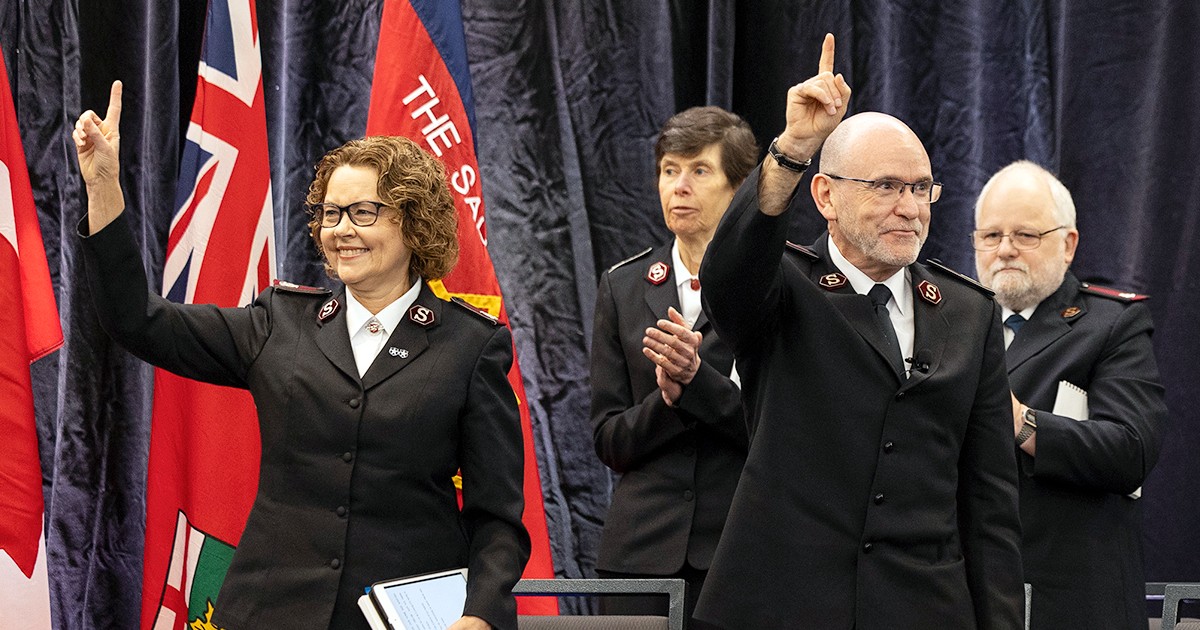
On the final day of the Jesus Our Compass tour, managing editor Kristin Ostensen sat down with General Lyndon Buckingham and Commissioner Bronwyn Buckingham, international leaders of The Salvation Army, to talk about the tour, God’s faithfulness in their lives and their final message for Salvationists in Canada and Bermuda. Listen to the full interview on the Salvationist podcast:
What were some highlights of the tour for you?
General Lyndon Buckingham: As is always the case, my interactions with people. I met so many people who are committed to The Salvation Army, its mission and ministry, whether they’re officers, staff, volunteers or soldiers. That’s been really encouraging.
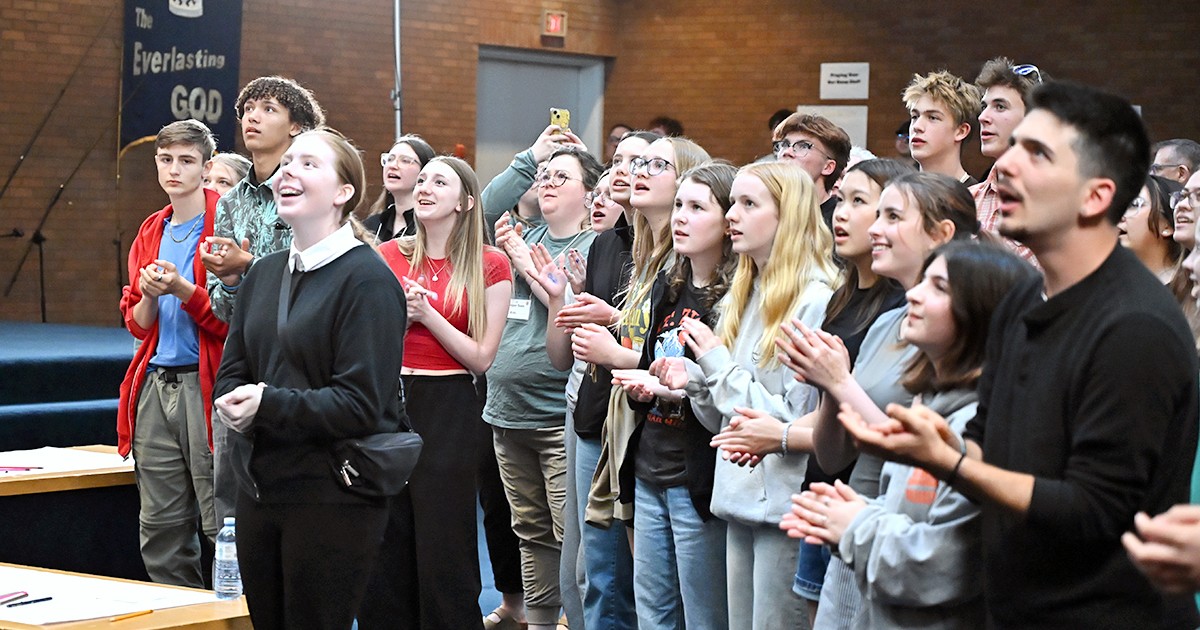
Commissioner Bronwyn Buckingham: When we were in Vancouver, Cariboo Hill Temple hosted a youth service. We saw young adults coming forward for prayer at the end of the service, praying for themselves and for each other. And then, after we sang the final song, they just stayed there, worshipping so freely and enthusiastically. And I said in my heart, Thank you, Lord, for the next generation, who I believe really are the now generation for The Salvation Army.
Throughout the trip, you made engagement with youth a priority through rallies like the one at Cariboo Hill. Why was this important to you?
LB: We’ve had a passion for young people’s ministry for many years, and we’re seeing a move of the Spirit among young people around the world. The Lord is speaking to this generation. He’s making himself known to them, and it was important for us to give expression to that, to remind young people that they are appreciated, they’re valued. They have a place within the movement. We need them. When I think about renewal within the movement, I have a sense that that’s where it’s going to come from.
BB: The next generation is all in for the gospel, they are all in for Jesus, and I believe they are all in for The Salvation Army. But we need to make space for them to grow The Salvation Army in ways that are going to be relevant for their generation and the one that’s coming behind them. We want to be their cheerleaders.
Having travelled the world, what stands out to you about The Salvation Army in Canada? What are some of our strengths?
LB: The diversity, how multicultural it is. There’s an opportunity for The Salvation Army in Canada to paint a beautiful picture, that it’s possible to bring people from different backgrounds together and celebrate community, fellowship and understanding.
I also think that the footprint of The Salvation Army in Canada is large, andyou have a very good reputation. You were spoken about positively in Parliament in Ottawa, and that was a beautiful affirmation of the mission and ministry of the Army here—being recognized as making a really valuable contribution to society.
Of course, this wasn’t your first experience of Canada—you were corps officers in Windsor, Ont., from 1994 to 1998. What are some precious memories from that time, and how did it shape you as people and officers?
BB: At that time, we were young, not only in years, but also in our officer journey—we were lieutenants, so we were inexperienced. And the corps family at South Windsor Citadel completely embraced us, so we felt like we belonged very quickly. It was a rich learning experience for us, moving away from our family and all that was familiar, bringing our two little children to the other side of the world, long before social media and FaceTime. They were years of establishing ourselves as a family unit and establishing ourselves in ministry.
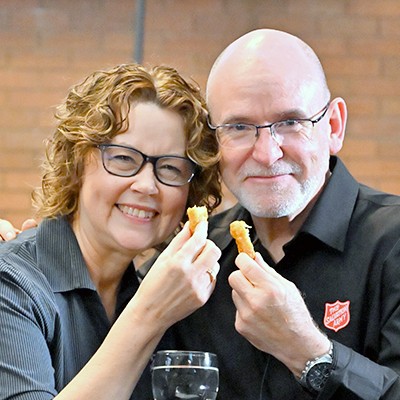
LB: We had lots of crazy ideas that we wanted to try, and the leadership team at South Windsor were very patient and accommodating of these young Kiwis from Down Under. And I think their patience and our adventurous spirit led to some exciting times in that corps. We saw God moving, we saw a fellowship of believers getting together to try new things to reach their community. We learned lots of lessons about leadership and ministry, and it shaped the rest of our officership journey. We’re so grateful for those years.
Last October, General, you experienced a health crisis, a heart attack while you were visiting Hong Kong. What was it like to go through that while also being the international leader of the Army, and how was God faithful to you in that difficult time?
LB: Looking back, I’m grateful because so many people intervened on that day—the Lord had the right people in the right place at the right time, and so we can see his hand on it. As a result, the actual incident—the heart attack and follow up—was not really where I had most of my journey to do. The dark night of the soul came afterward. I felt like, “Come on, Lord—I was about your business. What’s the deal here?” And then there were moments of doubt: Am I going to be well enough to keep going? Would the Army be better served by having a different leader? Do I want to keep going? All of that occupied my mind in those weeks of recuperation. But again, I’m thankful to God for mentors and other people who spoke into my life at the right time, and the Lord used them to help me on that journey and get my heart and mind back into the place where it’s surrendered to the will of the Lord, where I’m trusting and joyful and ready to go.
And I was very grateful, in February of this year, to have confirmation that there’s no damage to the heart muscle. My cardiologist told me that if I look after myself, I’ll have even more energy than I had before. So, the Lord’s good hand has been on us.
BB: And we were so grateful for the prayers of the people.
LB: Yes, we were flooded with messages from people promising ongoing prayer support, and we’re carried by that. It’s very humbling. So, we’re both determined to continue to serve with energy and passion, because that’s what the Lord is calling us to do.
You both come from multi-generation Salvationist families. How has that influenced the way you lead the Army today? How do you continue the Army’s legacy while also leading us into the future?
BB: I’m incredibly grateful for that heritage. I know I’m the product of praying grandparents, praying parents who dedicated me as a baby and gave me back to the Lord. I’m grateful for my home corps, the programs that I was involved in, the mentors that surrounded me as a child and a teenager. But what I realized, many years ago, is that while it’s beautiful to be a multi-generation Salvationist, you can only be a first-generation believer. The heritage is a gift, but each of us has to own the faith for ourselves.
Do you know the impact that your life, your witness, your service, is having, not only in your time, but in generations to come?
LB: I’m inspired by my family’s history. In 1883, a 19-year-old and a 20-year-old came from the United Kingdom to bring The Salvation Army to New Zealand. My family became involved with the Army around 1886 under the ministry of one of those young men—two generations got saved in one evening. Those two officers had no idea that the meeting they conducted in that town, which resulted in two people coming to the Lord, would result in another generation and another and another coming under the influence of the gospel. It gets me thinking about the legacy we are creating today—the decisions we make, the actions we take. I think about Salvationists all around the world sharing the gospel, engaging in ministry. It’s not just the immediate reaction; it’s the impact on subsequent generations. Do you know the impact that your life, your witness, your service, is having, not only in your time, but in generations to come? Those young men were brave enough to say yes and come and bring the gospel to my family. So, I’m looking for men and women and young people now who are saying yes, because it’s going to have a similar impact on future generations.
As you leave the Canada and Bermuda Territory, what’s the final message you’d like to give to Salvationists here?
LB: We’ve shared about having Jesus as our compass—not losing sight of the fact that we are in mission and ministry for the king. Salvationists are enthusiastic about sharing the good news, about living a life that brings honour and glory to God. And I think if we can keep that focus, then the Lord will continue to use us in powerful ways.
BB: I’d like to finish by encouraging everyone who’s been moved by the Spirit, to hold on to that and keep going deeper with it. Don’t let it be just a high moment—“That was great a week ago, but now I’m back at work or school, and I’ll just let that go.” What was the Spirit saying to you in those moments? Keep going hard after that and keep following Jesus with everything you’ve got.
LB: Stay faithful, press in and press on.
This story is from:



Leave a Comment