



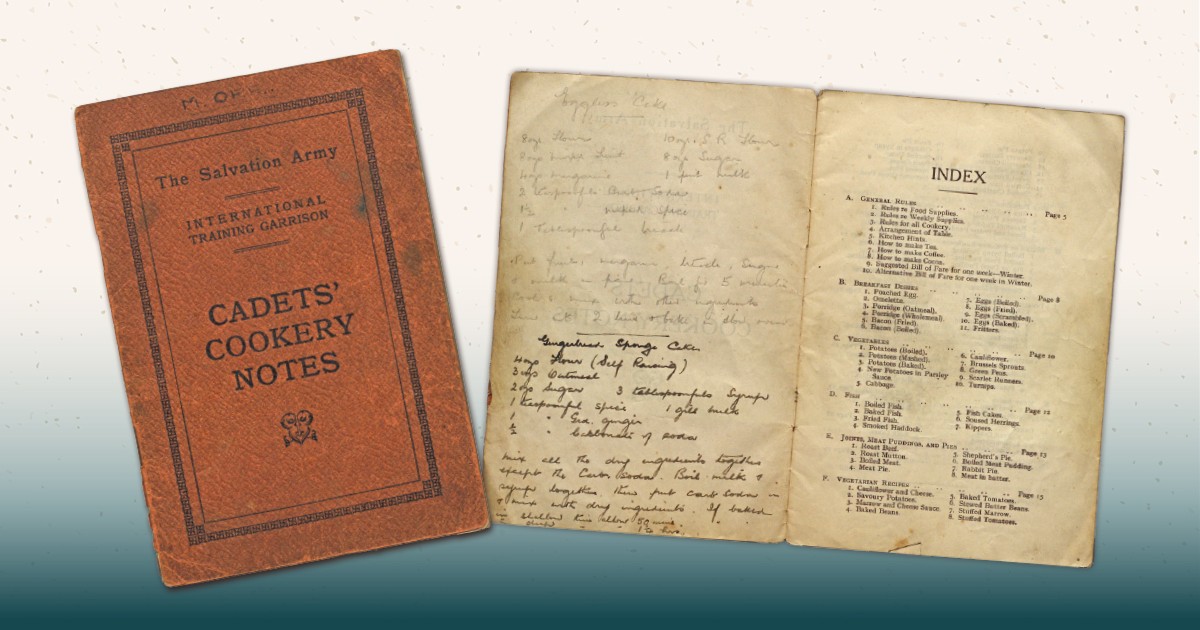
The Cadets’ Cookery Notes is an example of informational booklets created and distributed to cadets at the International Training College/Garrison in London, England. Other booklets, to name just a few, included Outlines of Cadets’ Lessons in Orders and Regulations, Outlines of Cadets’ Bible Lessons, Summary of Cadets’ Doctrine Lessons and Summary of Fifty Lessons for Cadets in Field Organization.
Salvation Army cadets were expected to prepare some of their own meals. These booklets likely helped guide them on what they could cook, as well as provide general cooking information about such things as food supplies, fireless cookery, how to make tea and coffee, and basic kitchen hints, and even offered a suggested weekly bill of fare. The suggested bill of fare section, which is kind of like a menu plan, is particularly interesting because it gives a snapshot of what cadets might have eaten during that time. The 1928 copy of the Cadets’ Cookery Notes has several pages of handwritten recipes, including an eggless cake, gingerbread sponge cake, and (wartime) lemon curd. These recipes likely reflect the realities of the times in which they were written—the interwar period and the Second World War.
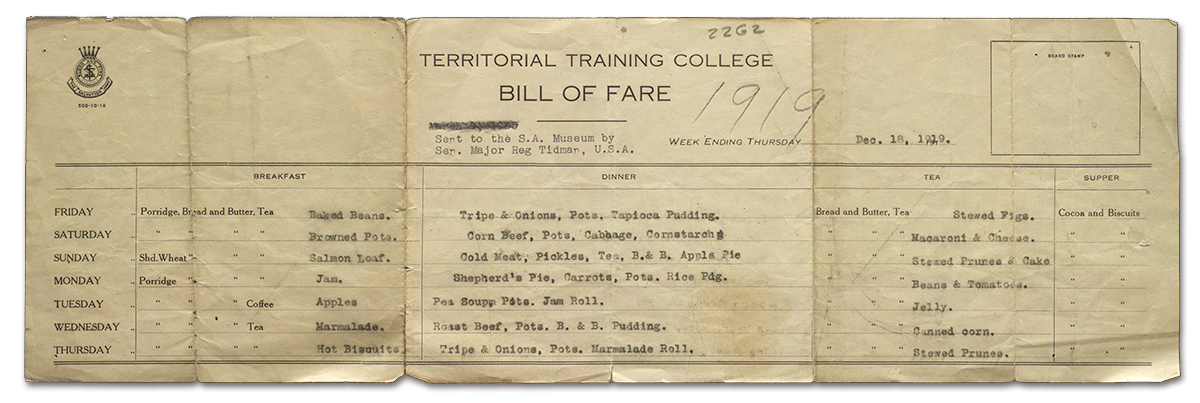
Also included in the Heritage Centre’s collection is a copy of a bill of fare from the Territorial Training College in Toronto, dated December 18, 1919. This document provides information about what cadets and probably training college staff would have been eating during the interwar period in Toronto.
It was also common for recipes to appear in the weekly editions of The War Cry. The earliest recipe that the Heritage Centre has found dates to 1923. However, it is likely that recipes appeared in even older issues of The War Cry. The recipes that comprise the Lite Stuff department of Faith & Friends are thus part of a long and venerable culinary tradition!
It is somewhat of a mystery how these booklets made their way from England to Canada. It seems likely that Salvationists who were trained in the United Kingdom brought them when they immigrated. One booklet has “M. Orr” written on the cover and another has “Annie McDonald” inscribed on the inside cover. These booklets could have belonged to Margaret Orr or Annie May McDonald, who were both officers in Canada during the 1900s. It is not known if the owners of these booklets were trained in London, England, and then immigrated to Canada or if they were given these booklets when they were at training college in Canada.
This story is from:




Leave a Comment