



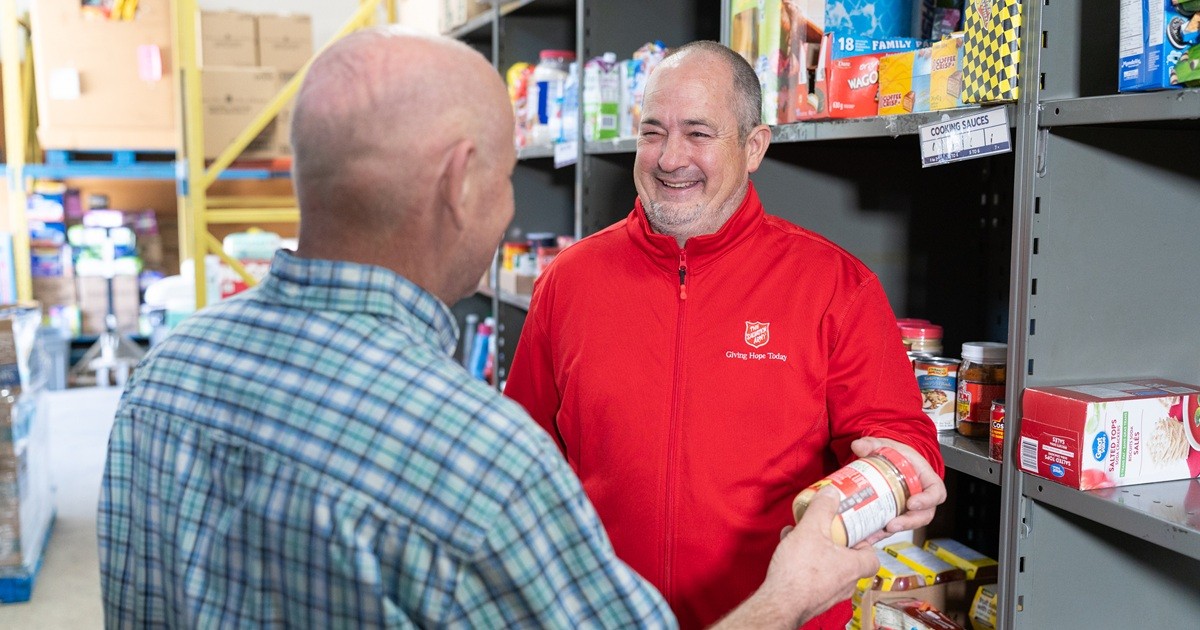
Nearly one in three Canadians are skipping or reducing meals because they can't afford groceries, according to a new national report from The Salvation Army, as financial pressures continue to force households to make difficult choices about everyday necessities.
The Salvation Army's 2026 Canadian Poverty and Socioeconomic Analysis reveals that 31% of Canadians have skipped or reduced the size of a meal because they couldn't afford groceries, up from 27% in 2025. Meanwhile, 15% have accessed community food supports, up from 11% last year. Both figures have reached their highest levels in the study's four-year tracking period.
The report also finds that half of Canadians aren't confident they could find another suitable, affordable home in their community if they had to move, while nearly one in four spend at least half their after-tax household income on housing.
The Salvation Army surveyed more than 1,500 Canadians to better understand their attitudes, behaviours and experiences related to poverty, food and housing affordability, financial security and other socioeconomic challenges. As Canada's largest non-governmental direct provider of social services, the organization uses this research to better understand evolving community needs and inform the support it provides.
“It's deeply concerning that nearly one in three Canadians are having to skip meals or eat less because they can't afford groceries,” says Glenn van Gulik, national spokesperson for The Salvation Army. “For many families, making ends meet is no longer about cutting back on extras. It's about making difficult choices between food, housing and other basic necessities. These findings reinforce why accessible, compassionate support is so important in communities across the country.”
Food Insecurity Intensifies as Younger Canadians Face Growing Pressure
Food affordability has surged into Canadians' top three national concerns, rising 11 percentage points from 26% in 2025 to 37% in 2026, overtaking homelessness and housing insecurity in the survey's ranking.
The findings also reveal that younger Canadians are particularly affected:
- 41% of Canadians aged 18–34 report skipping or reducing meals because they couldn't afford groceries, compared with 31% nationally.
- Nearly one in four younger Canadians (23%) accessed community food supports, up from 15% in 2025.
- More than three in four Canadians aged 18–34 (76%) report challenges managing limited financial resources, compared with 55% of those aged 55 and older.
“When people are struggling to put food on the table, the effects can reach every part of their lives,” says van Gulik. “At The Salvation Army, we provide food assistance, community meals and practical support to help individuals and families through difficult times. No one should have to face food insecurity alone.”
Half of Canadians Fear They Couldn't Find an Affordable Home if Forced to Move
The report reveals another dimension of Canada's housing crisis, with many Canadians concerned about their ability to find affordable housing if their circumstances change.
Half of Canadians (50%) say they aren't confident they could find another home in their community that both meets their household's needs and is affordable.
The research also finds:
- Nearly one in four Canadians (24%) spend at least half their after-tax household income on housing.
- 84% identify high rents or home prices as a barrier to finding suitable, affordable housing.
- 59% identify affordable rental housing as one of the hardest types of housing to find in their community.
“Housing insecurity isn't only about losing a home. It's also about the fear of having nowhere affordable to go if your circumstances change,” says van Gulik. “When so much of a household's income is going toward housing, there's often very little left for food, transportation and other essentials. Through shelter services, housing-related assistance and community programs, The Salvation Army is helping people facing these challenges find support and stability.”
U.S. Trade Tensions Add to Household Financial Pressures
Economic uncertainty is adding to concerns about household affordability, with Canadians increasingly identifying U.S. tariffs as a major national issue.
The report finds:
- Nearly nine in 10 Canadians (89%) are concerned that proposed U.S. tariffs will increase prices for everyday goods.
- Three in five (60%) say their household has felt a financial impact from U.S. tariffs or trade disputes.
- More than one in four (26%) identify U.S. tariffs as one of Canada's top three concerns, up from 20% in 2025.
- 58% are concerned about their household being financially impacted by U.S. tariffs, up from 55% last year.
The findings demonstrate how Canadians perceive international trade uncertainty as an additional source of pressure on household budgets already stretched by the cost of essential goods and services.
Support Services Make a Difference — But Charitable Giving Is Declining
Despite the challenges facing Canadians, the report highlights the positive impact of community support services.
More than eight in 10 surveyed support-service users (83%) say accessing services improved their family's wellbeing, up from 80% in 2025.
Among respondents reporting improvements, the research identifies several areas where support services have made a difference:
- 53% report improved access to food.
- 37% report an improved ability to care for their family.
- 36% report improvements in their sense of dignity and hope.
However, charitable participation is declining at a time when many Canadians continue to face financial hardship. The proportion reporting monetary charitable donations fell from 79% in 2025 to 75% in 2026, while participation in three or more charitable activities declined from 65% to 60%.
“We know that support services can make a meaningful difference in people's lives,” says van Gulik. “But we also recognize that many Canadians are feeling financial pressure themselves, which can make it harder to give. Every donation, every volunteer hour and every act of generosity helps us continue providing food, shelter and practical support to people who need it most.”
This holiday season, Canadians can help The Salvation Army continue meeting needs in communities across the country.
Give hope this holiday season. Your donation helps The Salvation Army provide food, shelter and support that can help families move from crisis toward greater stability.
To learn more or support The Salvation Army's work, visit www.salvationarmy.ca.
About the Report
The Canadian Poverty and Socioeconomic Analysis is an annual national survey commissioned by The Salvation Army to better understand the financial, social and structural challenges Canadians are facing.
The 2026 study was conducted by Edelman Intelligence from September 11 to 18, 2026, among a nationally representative sample of 1,525 Canadians who are members of the online Angus Reid Forum, balanced and weighted by age, gender and region. The sample also included 180 current and past users of Salvation Army services. Residents of Yukon, Northwest Territories and Nunavut were not included.
A margin of error cannot be calculated for a non-probability sample. For comparison purposes only, a probability sample of 1,525 respondents would carry a margin of error of approximately ±2.5 percentage points, 19 times out of 20.




Leave a Comment