



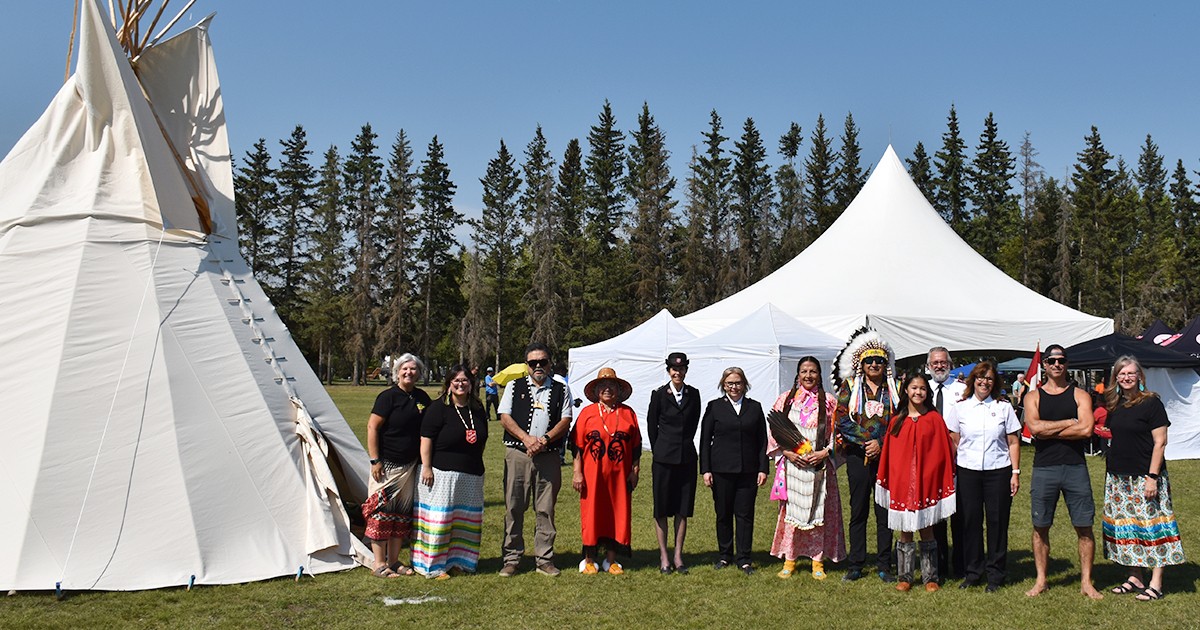
(Above, from left) Claire Dunmore, territorial community mission secretary; Captain Crystal Porter (Mi’kmaq and Euro-Canadian); Collier and Lorna Azak (Nisga’a); Colonel Margaret McLeod; Lt-Colonel Leslie Wiseman; Tracy Desjarlais (Piapot First Nation of Saskatchewan); FSIN Second Vice Chief, Edward (Dutch) Lerat, member of Cowessess First Nation in Saskatchewan; Tory Adams (Nisga’a); Lt-Colonels Don and Donna Bladen; Matt LeBlanc, (Mi’kmaq); and Dianne Climenhage, director of operations at Indigenous Pathways
The 2026 Celebration of Culture, a partnership between The Salvation Army and Indigenous Pathways, was held at Pine Lake Camp, Alta., from August 28-30. The weekend was a time of listening, learning, growing, healing and celebrating as stories were shared around circles and through song and dance throughout the weekend.
“It has been 10 years since we gathered here for the first Celebration of Culture,” said Captain Crystal Porter (Mi’kmaq and Euro-Canadian), event director and territorial Indigenous ministries consultant, at the welcome gathering, which began with a welcome song and smudging ceremony. “May this be a weekend of growth, healing, celebration and fun.”
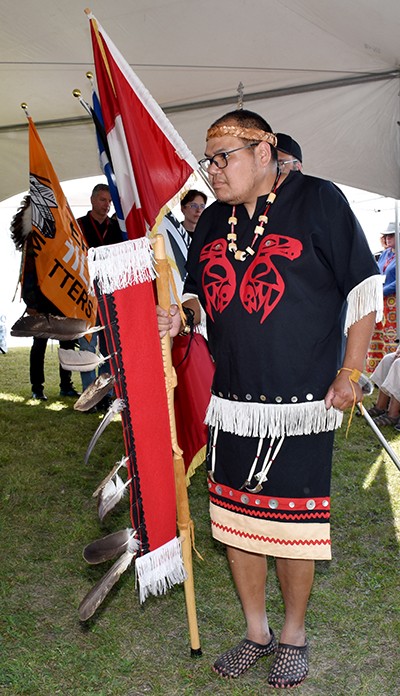
As the sun began to set on Friday evening, Nichole Forbes (Métis), program co-ordinator at NAIITS, and Matt LeBlanc (Mi’kmaq), director of iEmergence, led a teaching time as participants volunteered to lift and carry tipi poles and hammer stakes into the ground. The tipi served as a space for reflection and children’s circles throughout the weekend.
“What a gift it is to be here on Treaty 7,” said Erica Azak, who leads the corps in Gitwinksihlkw, B.C., with her husband, Damian Azak (Nisga’a), as she acknowledged the land on which the event was held and opened Friday evening’s sharing circle. “Let’s walk with curiosity, generous hearts and a position of learning.”
As part of the sharing circle, Lorna Azak, a Nisga’a elder, told the story of the Salvation Army corps in her community of Gitwinksihlkw.
“Next year will be 100 years since The Salvation Army has been in our community,” Lorna Azak shared. “Now, part of our culture and traditions are included in the church. Today we are very strong in our culture.”
Marylou Nason, thrift store manager in Fredericton, N.B., one of two National Recycling Operations employees who attended the event, was encouraged by the story of The Salvation Army in Gitwinksihlkw.
“Learning about the history of The Salvation Army with the Indigenous communities makes me proud to be part of the Army,” she shared.
For early risers, Saturday started with sunrise reflections where Erica Azak invited participants to look at nature and the trees and consider the stories they tell.
Participants then had the opportunity to choose between workshops on contextualization of Christian worship, stories in song, floral beading and how to hold stories in a good way.
Major Karen Hoeft, assistant territorial director of public affairs, reflected on her own story and the power of storytelling. “Knowing my own story and then hearing Indigenous stories and finding common space between them means that the generations that come behind us can walk forward in a good way,” she said.
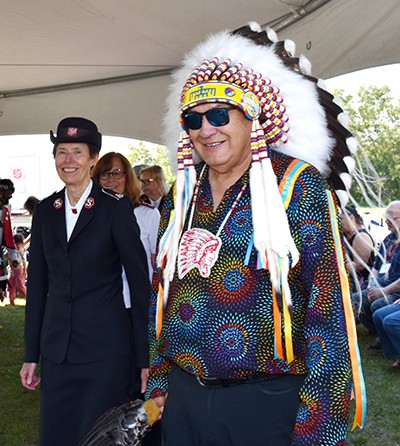
The afternoon powwow started with a Grand Entry led by Damian Azak, and included Federation of Saskatchewan Indian Nations Second Vice Chief Edward (Dutch) Lerat, member of Cowessess First Nation in Saskatchewan; Collier and Lorna Azak (Nisga’a); Colonel Margaret McLeod, chief secretary; Lt-Colonel Leslie Wiseman, territorial secretary for mission; Lt-Colonels Don and Donna Bladen, divisional leaders, Prairies and Northern Territories Division; and representatives from Indigenous Pathways.
Tory Adams (Nisga’a) gifted an eagle feather to Colonel McLeod in a ceremony that takes place at the Celebration of Culture each year. The ceremony signifies a desire to keep building relationship and a commitment to continuing on the path of reconciliation.
During the powwow, Sorrel Rider was on the host drum and Frank Turning Robe, master of ceremonies, introduced individuals dancing in full regalia and invited everyone to join for intertribal dances.
Marylou Nason described how exciting it was to not only learn and watch but participate in the powwow and feel a sense of belonging. “When you know more, then you can lessen the fear and really move forward with reconciliation,” she said.
Following the powwow, Tracy Desjarlais (Piapot First Nation of Saskatchewan), Indigenous liaison for public affairs and emergency disaster services, and Major Hoeft led a pipe ceremony to introduce the feast. Men then served soup, bannock, salmon and corn, vegetables, cookies and fruit to guests who sat in a circle around the powwow tent. At the end of the feast, gifts were presented to all in attendance.
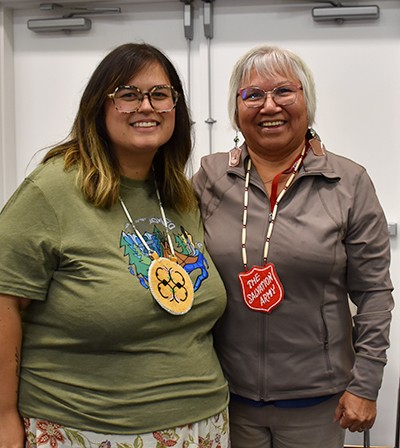
“Indigenous Peoples, even though we’re separated by land or by air or by water, there are practices we have in common,” said Captain Faye Molen (Maori), who came from the New Zealand, Fiji, Samoa and Tonga Territory to attend the event.
As the first international guest at a Celebration of Culture and as a part of ongoing Indigenous work for the Army’s International Social Justice Commission, Molen described her experience at the event as a “homecoming” as she connected with elders and familiar practices, such as food, kinship lines and respect for elders. She was also encouraged by the safe space that the event offered for Salvationists who are Indigenous to worship together and express their own culture.
Saturday evening concluded with a campfire where stories were shared through song and dance.
Sarah Faval, administrative officer for Indigenous Pathways, challenged participants: “We are accountable to what we hear, what we learn and to be transformed by that. Let’s consider what the journey of reconciliation is asking of us.”
Participants were given time to consider this challenge on Sunday morning during sunrise reflections with Mackenzie Griffin (Cree and Saulteaux), Indigenous liaison specialist for The Salvation Army in Kelowna, B.C., who also shared a drum song.
Dr. Kenny Wallace (African American Choctaw Pawnee) invited everyone to join the Sunday morning gathering with an honour song and tobacco ceremony. Participants turned to the east, south, west and north before gazing upward, downward and inward to reflect as part of a seven-directional prayer.
After a time to individually pray and connect with nature around Pine Lake Camp, everyone gathered in the chapel for a meaningful time of worship.
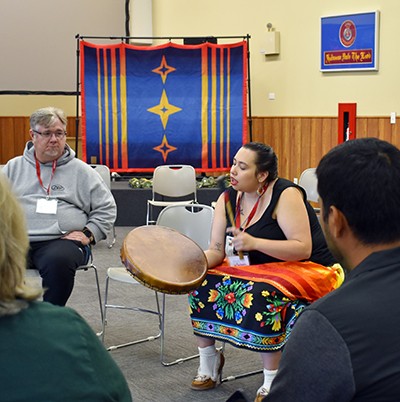
The weekend wrapped up with Lorna Azak sharing about her life and experiences growing up in Gitwinksihlkw—from the four clans to the Nisga’a volcano story to the Nisga’a new year, celebrated on the crescent moon each February.
“I thank God for all that he has done for us throughout the weekend,” she said. “I wanted to share the stories that caution us and encourage us in our lives and carry us today.”
Words such as justice, authenticity, unity and community filled the room when Captain Porter invited everyone to share one word they would carry as they departed. A final round dance closed out the event.
“We leave this sacred ground as changed people,” said Colonel McLeod. “So may we leave as vessels for our Creator in the communities that we live in, that we serve in and that we breathe in.”
Photos: Chesley Ryder

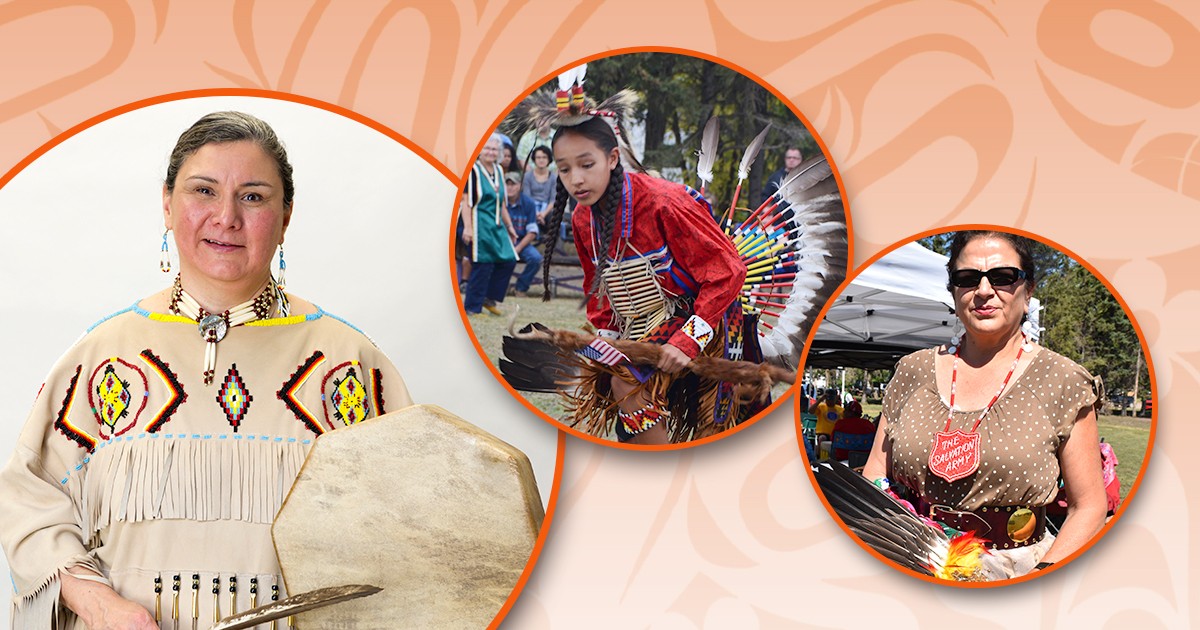


It was a humbling experience to attend the Celebration of Culture (COC) at Pine Lake Camp. I am grateful for the opportunities I had to connect with mission partners in the BC and PNT divisions, and to serve in various capacities throughout the weekend. The conversations on reconciliation were fruitful and impactful and the calls to action continue to resonate with me to this present day.
Thank you to Captain Crystal Porter, Claire Dunmore, and the entire COC Committee for their time and effort dedicated to ensuring the success and positive impact of the COC!