


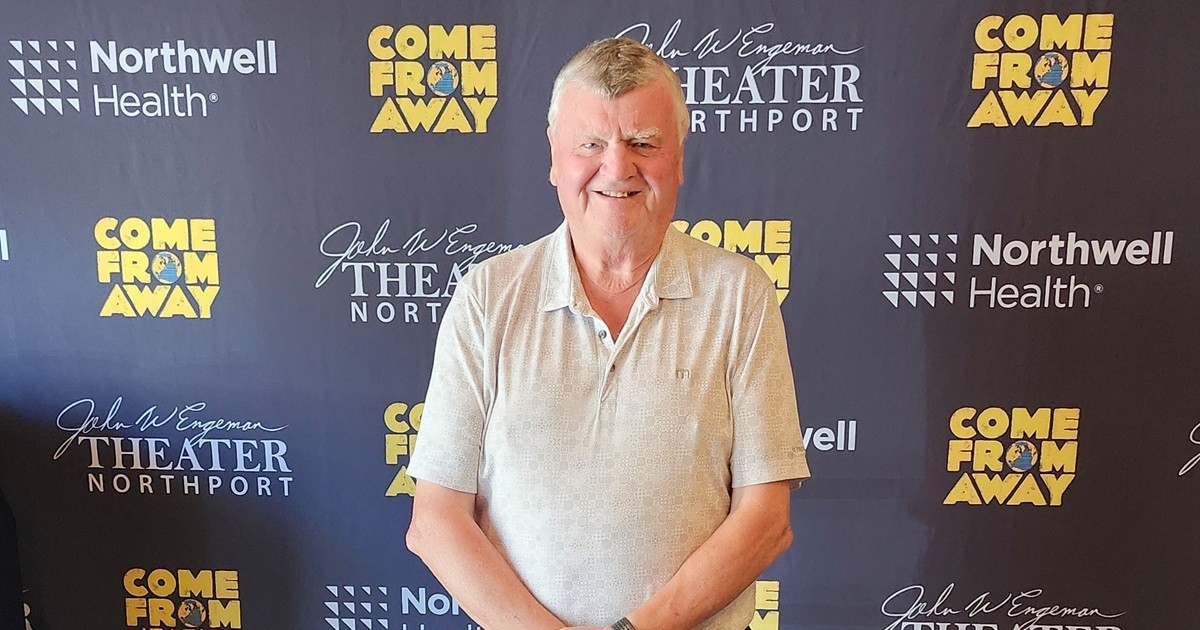
On September 11, 2001, two airplanes hit the World Trade Center in New York City, while a third plane crashed into the Pentagon in Washington, D.C., killing almost 3,000 people and injuring thousands more. With U.S. airspace closed following the terrorist attack, 38 airplanes landed in Gander, N.L., where Salvationist Claude Elliott was mayor. As the population of the town nearly doubled in a matter of hours, Gander rose to the occasion—providing comfort and a home-away-from-home for thousands of stranded passengers.
Ahead of the 25th anniversary of the 9/11 attacks, Elliott spoke to Kristin Ostensen, managing editor of Salvationist.ca, about the phone call that changed his life, The Salvation Army’s pivotal role in the emergency response, and what we can all learn from what Gander did on that tragic day. Listen to the interview with Elliott, along with others who were affected by 9/11 and served at Ground Zero, on the Salvationist podcast:
When did you first learn about the 9/11 attacks?
Claude Elliott: I was at Tim Hortons with my friends, and someone came in and said that a plane had crashed in New York. So, I went home and turned on my TV to see what was happening. I wasn’t home very long before I got a call from the town manager saying, “You better come in.” He told me the United States was under a terrorist attack and was going to close down their airspace, and that Canada had agreed to take all the aircraft in the air. We knew that we would probably get the European traffic, because once you get halfway across the ocean, the nearest airport is Gander. We ended up with 38 planes and almost 7,000 people.
As mayor, how did you help get the town ready for thousands of passengers to arrive?
CE: At the beginning we were told that the planes were only going to be on the ground for a few hours until the United States could figure out how widespread this terrorist attack was. So, we were operating hour by hour, not knowing really what to do. But by mid-afternoon, we realized that it was going to be a lot longer. So, the decision was made to set up the emergency operations centre and contact all the people who were part of our disaster plan. Ironically, The Salvation Army was not a part of our disaster plan back then, but we knew that they had a wealth of resources and knowledge in dealing with disasters, and we called them in.
As the mayor, I declared a state of emergency, and that gave us access to everything in the community, and particularly the hotel rooms. The biggest challenge we faced was accommodations, with only 500 hotel rooms and almost 7,000 people. But what we did was, we contacted every church, every organization, every school, and said, “How many can you take?” And before the first person came off the plane, we knew where everybody was going. We had that all planned out. It was a time when you had to rely on your faith and expect that the good Lord was going to help us through this.
What role did The Salvation Army play in the response?
CE: We put them in charge of distributing the food. The people weren’t allowed to come off the planes right away—the last plane, the people were on there for 28 hours. So, all the food was gone, all the water. There was nothing left on board the planes, and that’s where The Salvation Army came in. They took 300 or 400 volunteers up to the airport, and we trucked the food up, and they made up 7,000 lunchboxes at the airport. As people came off the planes, they were given this lunchbox, which consisted of juice, fruit, a sandwich and water. And a lot of the volunteers hugged the people as they came through and welcomed them.
All the food was trucked to the community centre, where we used the hockey rink as a refrigerator. And The Salvation Army co-ordinated all the meals. For example, there were 700 people staying at Gander Academy. They would go up to the community centre, to The Salvation Army and their volunteers, and they would say, “Here’s what we need for breakfast, lunch, dinner, snacks.” All that was then put together on trucks and delivered to every place in Gander where people were staying. And over the five days that The Salvation Army co-ordinated, more than 200,000 meals were sent out. Along with the passengers, you had to feed the volunteers, too, because they were there 24 hours a day, around the clock. So, there’s no question about it: The Salvation Army played an enormous role. I go all over the world speaking where I’m invited, and I always tell people: if you have a Salvation Army in your community, put them in your disaster plan if they’re not already there, because they have a wealth of resources, and they’re there to help in no time at all.
What’s your personal connection to The Salvation Army?
CE: I grew up in Twillingate, N.L., and my father was Salvation Army, so I’ve been Salvation Army all my life, and I wouldn’t want to be any other thing. I love what they stand for, and I love worshipping there.
You were a main character in the hit musical Come From Away and are played by Rick Mercer in a new Heritage Minute. What’s it like to see yourself portrayed in this way?
CE: It never really struck home until I went to New York and watched Come From Away on Broadway. I thought, “Oh my, I’m a character on Broadway! What am I doing here?” This is not something that I ever expected. I don’t consider myself important. All I am is an individual who does good things for people because that’s what my Bible tells me to do: to be good to people, no matter who they are.
What’s your main takeaway from the event, 25 years later?
CE: One of the questions I’ve been asked quite a bit is, “How did you keep your composure?” And I said, “It’s like a death in the family. When there’s a death in the family, there’s often one person in the family that can carry the family through it.” Those7,000 people—they needed our shoulders to cry on, and we were there for them. We cried after they were gone, not while they were here, because they didn’t need that. They needed us to be strong and to help them through a very difficult time.
If we can all be a little bit kinder to people … just because we disagree on things, or we don’t go to the same church or don’t vote the same, that doesn’t mean we can’t be good to people and be generous. If we aren’t kind to people, I think God would be disappointed with us. You’ve got to help people regardless. We did that, and we had a great time doing it.
This interview has been edited and condensed for length and clarity.



God is so good. People coming together for the good of all people. We simply need to trust God