



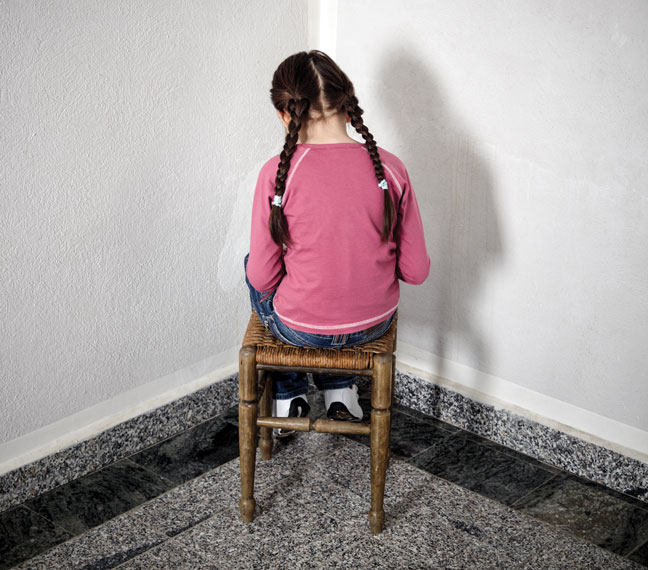
While sitting in a boardroom last October, waiting for a meeting to start, I found myself drawn into a discussion about corporal punishment. Initially, the conversation was just about football. But then we started talking about NFL running back Adrian Peterson and his suspension. Peterson, as you may have heard, was arrested late last summer when it was revealed he had injured his son while meting out discipline. The child had cuts and welts over most of his body from a “whupping” that he received from his father. Peterson stated that he was correctly punishing his child using parenting practices similar to those he experienced as a child growing up in east Texas.
Our conversation about what was wrong with the Seahawks evolved into a debate about the place of corporal punishment in society. One person at the table noted that he had heard Peterson on television taking about his faith in Jesus Christ. Another person in the room looked at me and made a statement that sounded more like a question: “Well, I guess religion does promote that sort of parenting. You know, spare the rod and spoil the child.” I can only assume that he looked at me because he knew I am a person of faith and thought I might have some perspective on the situation. I tried my best to correct his understanding of what “spare the rod” meant—in Scripture, the “rod” is for comforting and guiding, not punishing—and told him that not all Christians practise discipline in physical ways. But he was undeterred, arguing that if Christians worship a “Father” who punishes by crucifying his own Son, then we probably don't have a big problem with retributive methods. I had to admit I knew many believers who rooted their practice of corporal punishment in their Christian faith. To have such a direct comparison drawn between corporal punishment and the violent death of Jesus was unsettling.
To Spank or Not to Spank
Having children of my own brought me face to face with the issue of violence as a form of punishment. I don't want to be so tolerant of their actions that I refuse to intervene when I see them heading in the wrong direction, but does that mean I must resort to physical punishment? The question is not a critical one now that they are teenagers, but when they were younger, my wife and I had to decide whether or not to spank them. Regrettably, as a novice at this parenting thing, I chose to spank on occasion. As the years went by and I gained more experience and patience, I questioned the value of such measures.
The scientific evidence against using physical force to discipline children is overwhelming. Corporal punishment does not work. In fact, it does more harm than good. Regular physical discipline often leads to children becoming more aggressive as they get older. It also negatively impacts their psychological and neurological development. Children who are spanked regularly are often more prone to mental illness, addiction and depression. In the face of such catastrophic results, I had to ask myself if this was a godly activity. The bigger question was why I thought violence was an appropriate response to dealing with transgression. Were there “Christian” undercurrents that supported a philosophy of punishment as a necessary way to deal with evil? Do we accept violence as a means of justice because that is how we see God behaving?
Many Christians view the death of Christ as being a substitutionary payment (for our wrongdoing) in order to appease an angry Father. However, the predominant theme of Jesus' teaching on social relationships was that of peace and forgiveness. To forgive is to release one from the payment of a debt and remove any penalty associated with it. If one requires payment or punishment for wrongdoing, can one say with integrity that he or she has truly forgiven? If we approach life with a bent toward forgiveness and peace rather than violence and punishment, how will our relationships change? Does the way in which I see God and the expression of my relationship with him cause me to be a vindictive individual or a loving neighbour?
How we view wrongdoing and the way it should be corrected not only impacts how we raise our children, but it influences key social issues: how and when we go to war; why LGBT people are targets of bullying; why domestic abuse still affects one in four women in Canada; and how we treat offenders in the criminal justice system. Simply put—violence only begets more violence. As parents and Christians, we can stop the cycle.
Our conversation about what was wrong with the Seahawks evolved into a debate about the place of corporal punishment in society. One person at the table noted that he had heard Peterson on television taking about his faith in Jesus Christ. Another person in the room looked at me and made a statement that sounded more like a question: “Well, I guess religion does promote that sort of parenting. You know, spare the rod and spoil the child.” I can only assume that he looked at me because he knew I am a person of faith and thought I might have some perspective on the situation. I tried my best to correct his understanding of what “spare the rod” meant—in Scripture, the “rod” is for comforting and guiding, not punishing—and told him that not all Christians practise discipline in physical ways. But he was undeterred, arguing that if Christians worship a “Father” who punishes by crucifying his own Son, then we probably don't have a big problem with retributive methods. I had to admit I knew many believers who rooted their practice of corporal punishment in their Christian faith. To have such a direct comparison drawn between corporal punishment and the violent death of Jesus was unsettling.
To Spank or Not to Spank
Having children of my own brought me face to face with the issue of violence as a form of punishment. I don't want to be so tolerant of their actions that I refuse to intervene when I see them heading in the wrong direction, but does that mean I must resort to physical punishment? The question is not a critical one now that they are teenagers, but when they were younger, my wife and I had to decide whether or not to spank them. Regrettably, as a novice at this parenting thing, I chose to spank on occasion. As the years went by and I gained more experience and patience, I questioned the value of such measures.
The scientific evidence against using physical force to discipline children is overwhelming. Corporal punishment does not work. In fact, it does more harm than good. Regular physical discipline often leads to children becoming more aggressive as they get older. It also negatively impacts their psychological and neurological development. Children who are spanked regularly are often more prone to mental illness, addiction and depression. In the face of such catastrophic results, I had to ask myself if this was a godly activity. The bigger question was why I thought violence was an appropriate response to dealing with transgression. Were there “Christian” undercurrents that supported a philosophy of punishment as a necessary way to deal with evil? Do we accept violence as a means of justice because that is how we see God behaving?
Many Christians view the death of Christ as being a substitutionary payment (for our wrongdoing) in order to appease an angry Father. However, the predominant theme of Jesus' teaching on social relationships was that of peace and forgiveness. To forgive is to release one from the payment of a debt and remove any penalty associated with it. If one requires payment or punishment for wrongdoing, can one say with integrity that he or she has truly forgiven? If we approach life with a bent toward forgiveness and peace rather than violence and punishment, how will our relationships change? Does the way in which I see God and the expression of my relationship with him cause me to be a vindictive individual or a loving neighbour?
How we view wrongdoing and the way it should be corrected not only impacts how we raise our children, but it influences key social issues: how and when we go to war; why LGBT people are targets of bullying; why domestic abuse still affects one in four women in Canada; and how we treat offenders in the criminal justice system. Simply put—violence only begets more violence. As parents and Christians, we can stop the cycle.





The Salvation Army went apostate many years ago. Never a bastion of theological insight, leftism has deeply infected this organization. Very sad.