Canada has always been a nation of immigrants and refugees opening their doors to other immigrants and refugees. While our most recent wave of newcomers arrived through airports, for almost a million immigrants between 1928 and 1971, Halifax's Pier 21 was the gateway to Canada. And throughout the years of its operation, The Salvation Army played an important role in supporting and assisting immigrants at the facility and beyond. Here is just a small sampling of stories:
Sara Davis (nee Calaminici) was an 11-year-old immigrant from Italy when she and her family arrived in 1961. “When we arrived at Halifax's Pier 21, The Salvation Army was there to welcome us, and handed my sister and me a box of cereal. That gesture of kindness to someone who had left friends and family behind was never forgotten.”
Bent GrØnlund, a young immigrant from Denmark, remembers Salvation Army members meeting them in Winnipeg when his family changed trains from Halifax. “Us kids were fed up with peanut-butter sandwiches. The Army pastor took us across the street to a restaurant where my mother bought a loaf of bread, real butter and strawberry jam. What a feast!”
“My biggest memory of landing at Pier 21 was being greeted by The Salvation Army,” Dutch immigrant Tineke Kirby recalls. “Each of us children was given a bag containing a colouring book, crayons and candy. I remember feeling amazed that we actually received something for each of us personally. Being from a large family, it wasn't often that we had something we didn't have to share. I was thrilled.”
The Salvation Army exhibit chronicles the important role of the organization in Canada's immigration history, and features uniforms and artifacts, as well as photos
Poignant Reminder
Now a National Historic Site, the Canadian Museum of Immigration at Pier 21 has created an exhibit spotlighting The Salvation Army's contribution to the immigrant experience.
Pride of place belongs to a Salvation Army cornet dating back to the 1950s and a uniform from the '60s, both donated from the Army's Halifax Citadel Community Church. The artifacts were presented to the museum in commemoration of The Salvation Army's 120th anniversary in the Maritimes, and included an appearance by the Canadian Staff Band. Halifax Citadel Community Church bandmaster Peter van der Horden was in attendance.
The opportunity was especially poignant for him: Peter and his family arrived at Pier 21 from Holland in 1954 when he was six.
“Salvation Army representatives were a constant presence at Pier 21,” says Pier 21 historian Steve Schwinghamer. “Sometimes, the aid was as simple as offering direction to immigrants as they made their way around the facility at Pier 21. They gave oranges to arriving Hungarian refugees, reading material to English war brides and made sure other newcomers had places to stay as they made their way across Canada to new homes.”
As Sara Davis concludes, “The Salvation Army sponsored thousands of immigrants and left an indelible impression on thousands more, as Pier 21's exhibit demonstrates. People, no matter how young, never forget those who were kind to them. It's a beautiful legacy.”
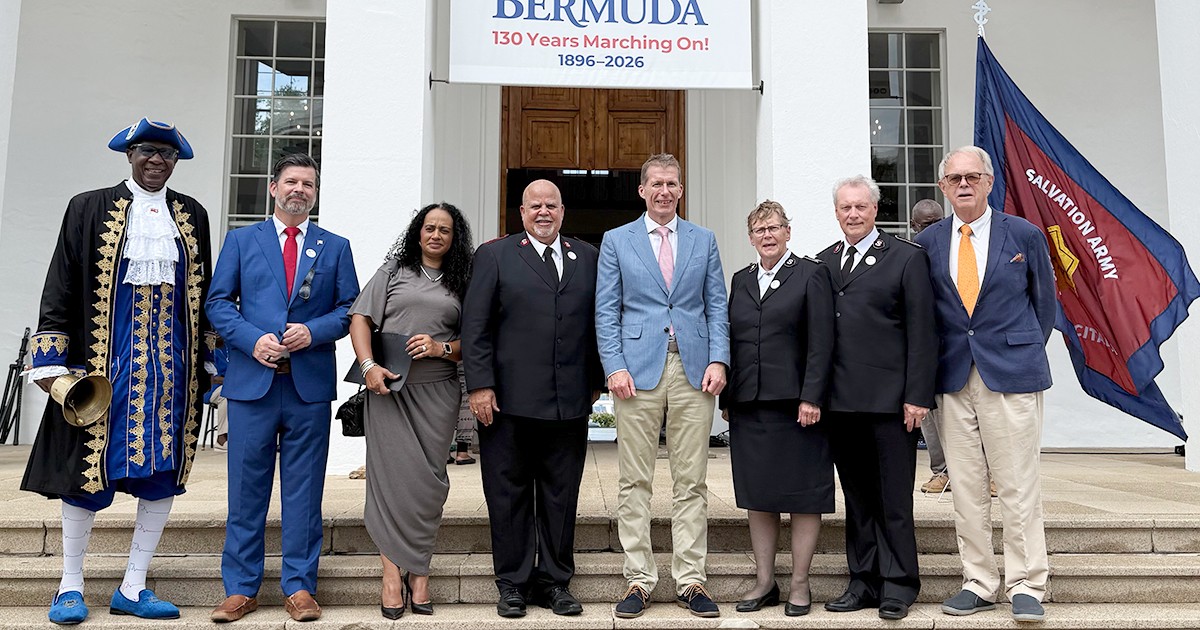
For 130 years, The Salvation Army has been a familiar presence in Bermuda, offering practical assistance, spiritual encouragement and hope to generations of island residents. That legacy was celebrated September 25-27, 2026, as Salvationists, community members and civic leaders gathered for a weekend of anniversary events that honoured the past while looking toward the future.
A fourth-generation business owner in Wiarton, Ont., Josie Myles believes strong communities are built when people support one another. That belief is one of the reasons she continues to support The Salvation Army’s work in the area.
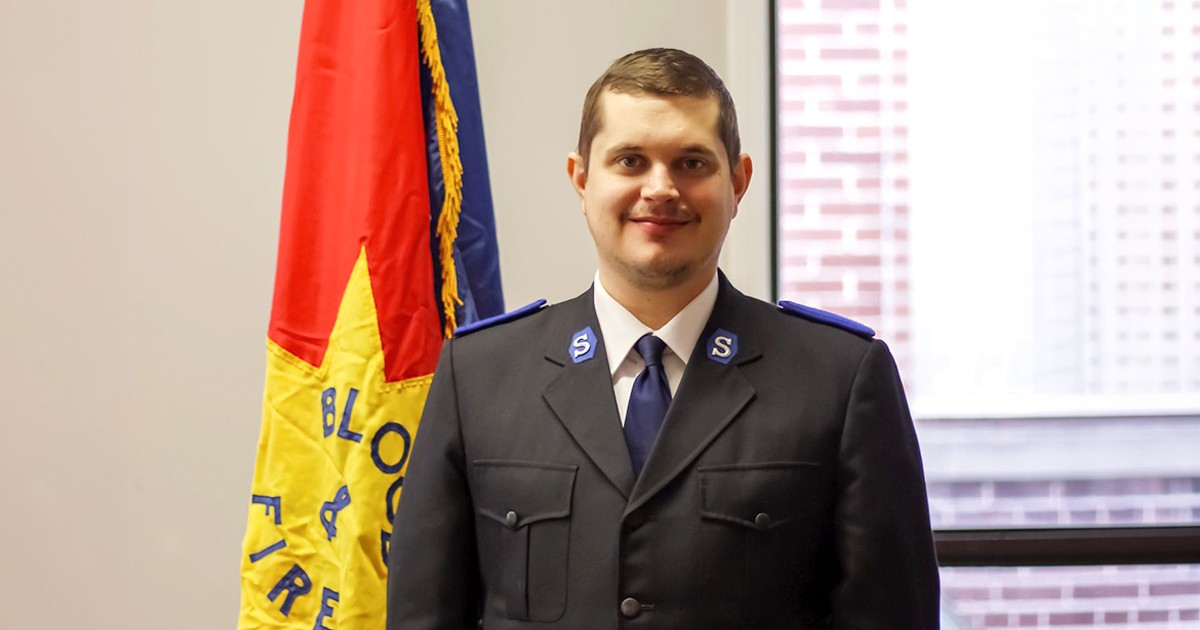
Stuart Walter’s is a sixth- or seventh-generation Salvationist, tracing his family’s roots in The Salvation Army back to the late 1800s in London, England, back to a moment when the organization stepped in to help his ancestors during a time of genuine need. That single act of generosity rippled forward through generations, sending relatives to serve in India, China and across North America, and Stuart to Kenora, Ont., where he is making a difference.





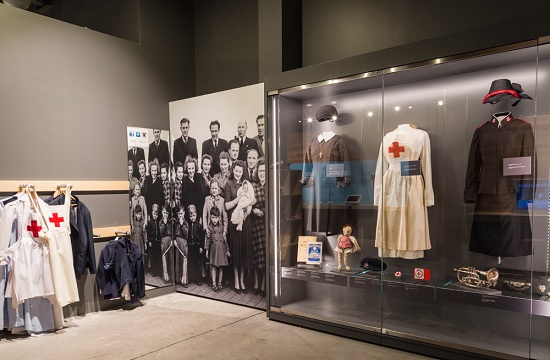 The Salvation Army exhibit chronicles the important role of the organization in Canada's immigration history, and features uniforms and artifacts, as well as photos
 The Salvation Army exhibit chronicles the important role of the organization in Canada's immigration history, and features uniforms and artifacts, as well as photos



Leave a Comment