In Malawi, a landlocked nation in southeast Africa, food security is a serious concern. The subtropical climate often leads to drought and soil erosion in a country highly dependent on agriculture. Hunger is a daily reality, especially in the remote, isolated communities of Funwe and Matapang'ombe. But with the help of donors and funding generated by the Canada and Bermuda Territory's Gifts of Hope program, the Army in Malawi has been able to reach these areas.
Cpt Felix Phiri distributes fertilizer in Malawi
In September 2015, the United Nations set 17 Sustainable Development Goals (SDGs) to eradicate poverty and hunger by 2030. The second goal is to “achieve food security and improved nutrition and promote sustainable agriculture.” In response, The Salvation Army in Malawi consulted community members and leaders to assess problem areas and discovered that farming techniques, along with the high cost of farming resources, were the main barriers to food security.
As a result, the local Salvation Army partnered with Foundations for Farming (FFF)—a Christian organization that teaches conservation agriculture—to train 100 local farmers from Funwe and Matapang'ombe. Conservation agriculture is a method of farming that prevents soil erosion by minimizing tillage. Covering the soil reduces evaporation, keeping water where it's needed. FFF also promotes crop rotation and the use of manure compost rather than non-organic fertilizers.
But training farmers in best agricultural practices is only one aspect of a multi-pronged approach to food security and nutrition. With this in mind, the Army provided farming families with the resources necessary to put FFF methods into action. Farmers were equipped with fertilizer, maize seeds and an assortment of farming chemicals.
In addition to providing resources, The Salvation Army regularly monitors and evaluates project activities.
While Funwe and Matapang'ombe are predominantly Muslim communities, villagers were fully aware of The Salvation Army's Christian faith and were welcoming and supportive of local efforts to improve farming techniques. On one of the monitoring visits to Funwe, representatives from The Salvation Army spoke to the village headman, Kalowa, who was happy with the results of the initiative.
“Before I was trained in Foundations for Farming by The Salvation Army, I used to harvest three bags of 50 kilograms each from my plot,” he said. “Now I have harvested 17 bags. I am very thankful to The Salvation Army for the work it is doing. It has benefited not only Christians but Muslims, and the general community as well.” Kalowa recently asked to be a FFF ambassador for The Salvation Army in Malawi.
Training farmers in best agricultural practices benefits the whole community on many levels while promoting sustainability. The practical knowledge gained by the farmers will allow them to feed their children, many of whom are severely undernourished. Additionally, once the farmers realize how much they are able to produce, they will pass along their knowledge to other farmers. The expectation is that with proper resources and sound agricultural methods, villagers will be able to sustain themselves and their families for years to come.
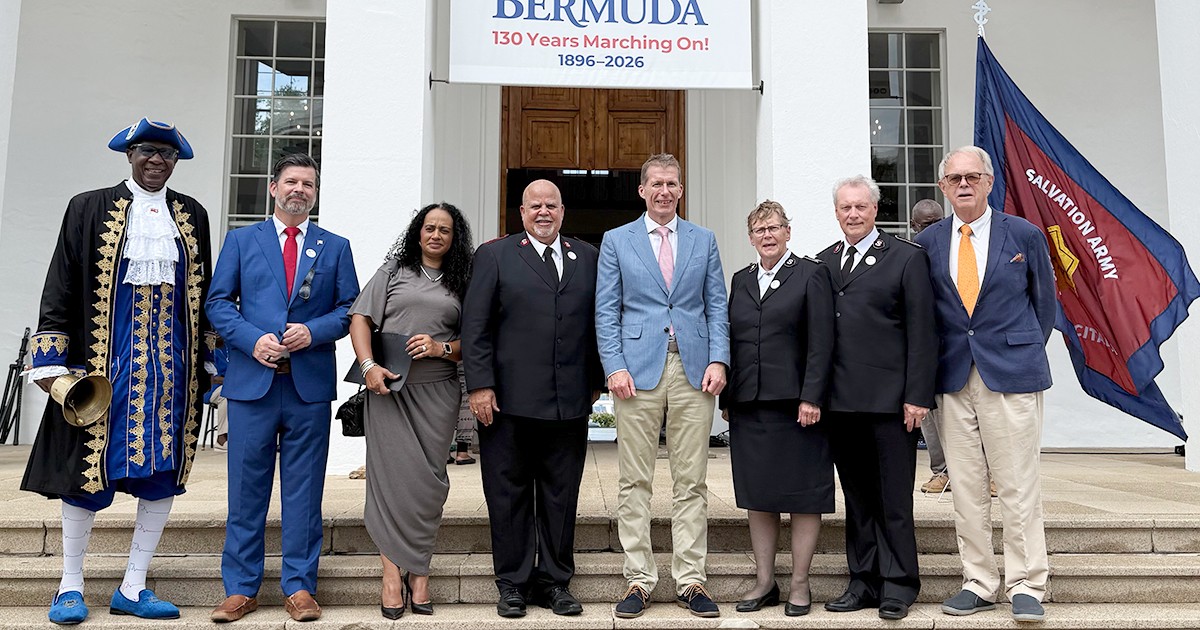
For 130 years, The Salvation Army has been a familiar presence in Bermuda, offering practical assistance, spiritual encouragement and hope to generations of island residents. That legacy was celebrated September 25-27, 2026, as Salvationists, community members and civic leaders gathered for a weekend of anniversary events that honoured the past while looking toward the future.
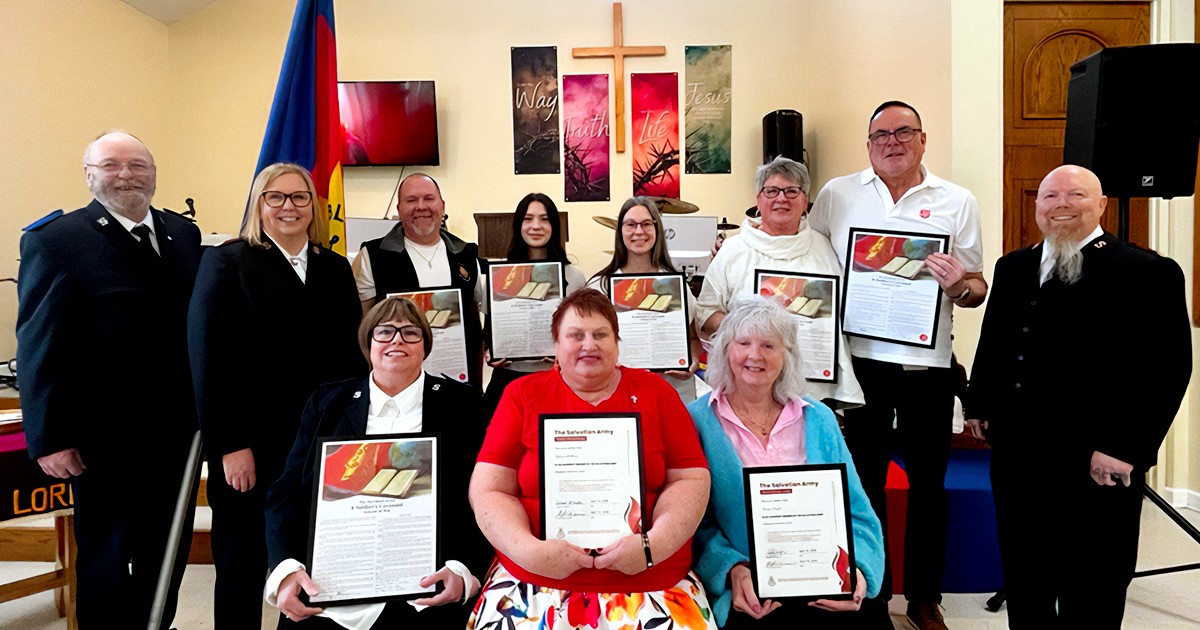
Kim Looyenga never thought she would be a Salvation Army soldier. Just a few years ago, all she knew about the Army was that it put out red kettles at Christmas and had community service programs. Today, she is a proud Salvationist participating in soldiership classes at Bridgetown Community Church, N.S., and she looks forward to being enrolled
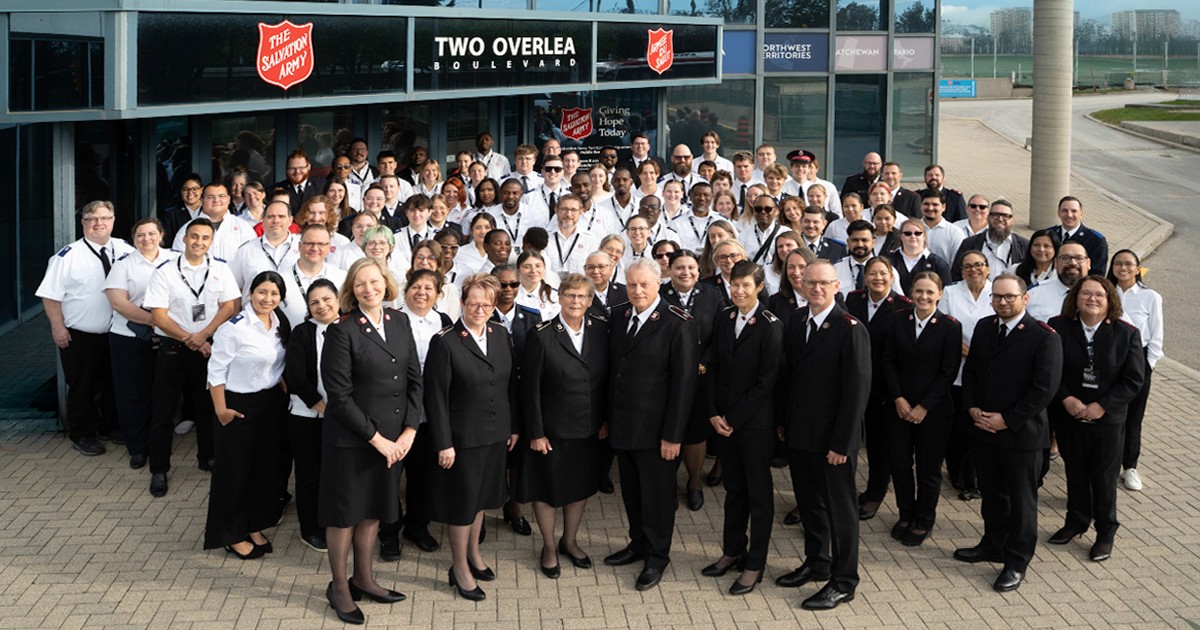
During the first weekend of October, the College for Officer Training and Leadership Development (CFOT) overflowed with people, energy and expectation as delegates from across the Canada and Bermuda Territory gathered for Explore Your Call. Rooted in Jeremiah 1:5, the weekend’s theme was “Made for a Divine Purpose,” celebrating the truth that





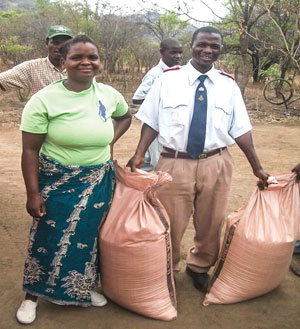 Cpt Felix Phiri distributes fertilizer in Malawi


Leave a Comment