



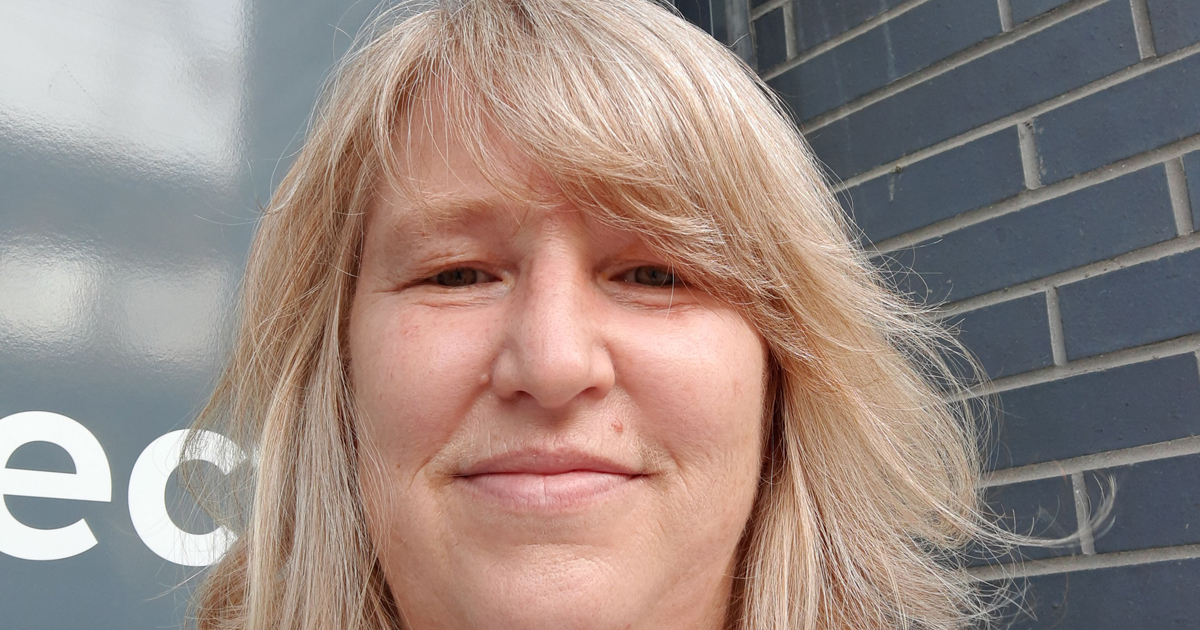
(Above) “I was humbled when The Salvation Army agreed to walk alongside me in my commitment to wellness and recovery again,” says Lesley.
In her early 30s, Lesley’s true challenges began. A severe and chronic mental health diagnosis coupled with alcohol and addiction issues left her no longer able to function. Throughout her journey she found The Salvation Army, they helped her—no matter what condition she arrived in.
“I had graduated from the University of Alberta with honours and moved to Toronto to pursue a master’s in women’s studies at York University,” says Lesley. “Alcohol was a constant since my teens, but when I started to suffer with delusions and paranoia I turned to hard drugs. As a result, my ability to maintain relationships in shared student housing accommodations became impossible and I found myself in the shelter system.”
A Life Without Hope
“I fell into the wrong crowd and used the shelter system when I would get kicked out of housing for not paying rent or bad behaviour,” says Lesley. “I was involuntarily admitted to psychiatric wards on a regular basis and involved in the criminal justice system with charges, probation and time in jail.”
When Lesley could no longer maintain housing with numerous providers who tried to help, she lived in Salvation Army emergency shelters and a transitional housing unit. She became well enough to have temporary custody of her daughter but eventually a tough decision about the adoption process had to be made.
“My mental health and addiction issues prevented me from providing the stability my daughter needed and deserved,” says Lesley. “I tried to stop using but kept relapsing. I was physically, emotionally, mentally and spiritually bankrupt.”
Lesley eventually found a room to rent that was within her social assistance budget, but in terms of work no one would take her on with gaps in her resume, challenges and lack of belief in her abilities.
A Boost in Morale
In 2013, Lesley was introduced by a social worker to The Salvation Army’s Booth Packaging and Supportive Services (BPSS) in Toronto, which taught and
maintained work skills for adults with mental health needs and/or developmental disabilities.
“The training opportunity in the front office helped me commit to routine and responsibility,” says Lesley. “A counsellor helped me work on goals and personal development. I began to believe I was valuable and worthwhile again.”
While at The Salvation Army, Lesley maintained relationships with support services in the community and committed to abstinence from alcohol and drugs through a 12-step fellowship. She gained friends with good values and who cared for her. But life wasn’t always smooth sailing.
The Tough Task of Recovery
Lesley had reverted to her old lifestyle of despair and destitution for over a year when The Salvation Army welcomed her back with open arms.
“I was humbled when The Salvation Army agreed to walk alongside me in my commitment to wellness and recovery again,” says Lesley. “This was a huge demonstration of the power of unconditional love. There was no judgement about the state I arrived in, but a smile and a kind word.”
In 2018, when BPSS changed direction in service provision, Lesley became a client of the Army’s Transitional Employment Program (TEP) and a full-time receptionist at their Community Engagement and Pre-employment Program (CEPE). Here she set goals and areas for improvement that included training to be a peer support worker.
Today, Lesley maintains strong ties with her family and continues to build on her friendships. She has stable housing and recently moved into the apartment of her dreams. Lesley remains committed to her goal of working in the field of peer support for addictions and mental health by taking advantage of online learning opportunities while The Salvation Army’s CEPE Program is closed due to COVID. Lesley has had the confidence to put out resumes and even had some calls for interviews. Thanks to TEP she had a solid resume to work from. Meanwhile, she has secured a volunteer position with a local mental health agency as a peer facilitator and telephone supporter and continues to find additional volunteer roles as her time and resources permit.


Leave a Comment