
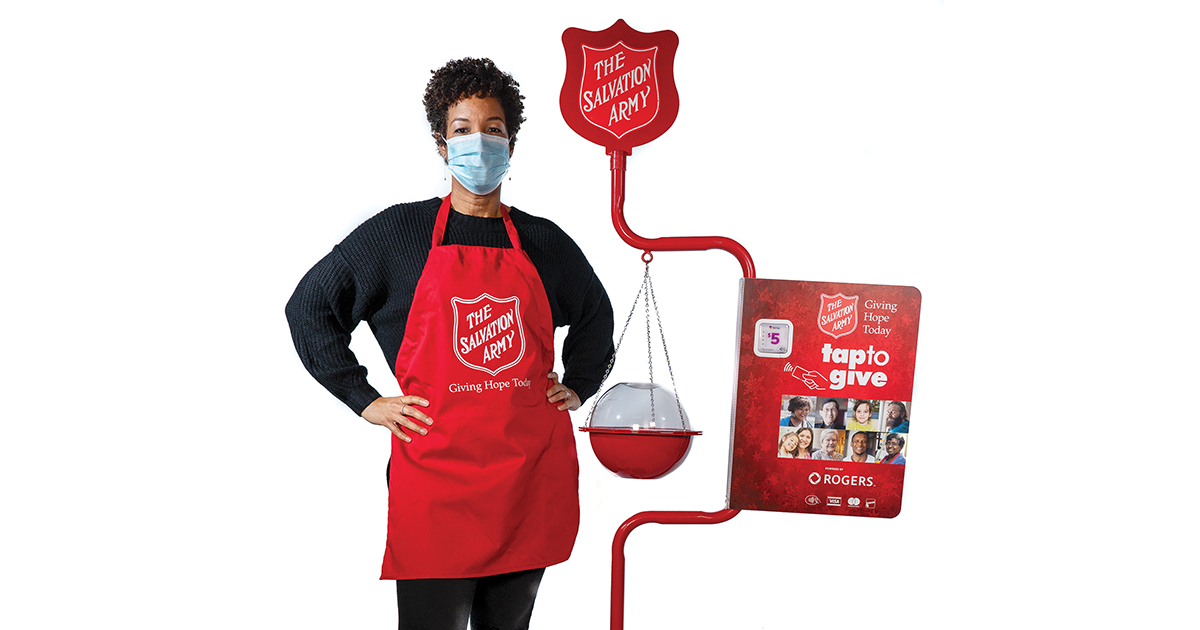
Often you hear it before you see it—the bell-ringing coming from a volunteer standing at a Salvation Army kettle. Every year, the sight and sound of the bells are part of the Christmas experience, an opportunity to give back during the hustle and bustle of holiday preparations.
The Salvation Army turns to the Christmas kettle campaign to raise funds needed to support programs and services for those who need a leg up. It all started in San Francisco in 1891, when Captain Joseph McFee rang the bell to “keep the pot boiling” for those in need by standing at the San Francisco ferry landing. Today, the need is still great, and with millions feeling the impacts of COVID-19, leaders expect the need to grow exponentially.
Bell-ringers are a key part of how The Salvation Army helps people who have fallen on hard times—many of whom have never had to ask for help before. Like many aspects of 2020, bell-ringing will look different this year, too. The Salvation Army has created bell-ringer COVID-19 guidelines and safety protocols to ensure safety, while making it possible for The Salvation Army to keep food on the table, the roof over families’ heads, the lights on and more for those in need. Last year, funds raised at the kettle helped The Salvation Army in Canada and Bermuda serve 1.9 million people.
Here’s how The Salvation Army will keep bell-ringers—along with the customers and associates working at kettle locations—safe this year.
1. Training. Before reporting for a shift, bell-ringers across Canada and Bermuda will be provided with training on how to safely perform their duties and engage with the public in today’s COVID-19 environment. Bell-ringers are encouraged to first consider the risk to his or her personal health as well as that of his or her family before committing to volunteer. If bell-ringers decide not to ring this year, it is no reflection of one’s ability to serve as a bell-ringer in the future.
2. Following health and safety guidelines. The Christmas kettle program will adhere to all Salvation Army policies and protocols, provincial ministry of health and local public health guidelines, and asks that bell-ringers follow the guidelines, too, when volunteering at the red kettle. If a volunteer is exhibiting symptoms or has had any known exposure to someone who has tested positive for COVID-19 in the 14 days preceding a shift, they should inform The Salvation Army so a replacement can be found. It’s important for bell-ringers to get well and not potentially expose others to COVID-19.
3. Providing personal protective equipment (PPE). All bell-ringers will be required to wear a face mask at all times while at the kettle, and The Salvation Army will provide bell-ringers with masks for their kettle shifts.
4. Following social distancing recommendations. Bell-ringers will be instructed to maintain social distancing, remaining two metres or more from customers and donors at all times. As an individual approaches the kettle, bell-ringers will not have any physical contact with them or their donations. Instead, bell-ringers will be trained to ask for people to place their donations directly into the kettle.
5. Cleaning equipment regularly. All kettle equipment will be cleaned prior to each shift. At the end of a kettle shift, bellringers will be asked to clean the bell with provided disinfectant spray or wipes so it is clean and ready for the next bellringer to use. Different kettle locations might require additional safety measures that the area’s kettle co-ordinator will discuss with volunteers, and if volunteers have any questions or concerns about COVID-19 or the safety precautions The Salvation Army is taking, they can contact their local Salvation Army for more information.
6. Embracing digital options for giving. Many of The Salvation Army’s kettle stands across Canada have a touchless, cashless donation option with tiptap, which offers a tap-and-go payment. This is a safe way to give and it’s also great for those who don’t carry cash.
Adapted from Caringmagazine.org.
Photo: Tony Cicero




EDITOR’S NOTE: Thank you for your question. Some areas of Canada still permit volunteers to stand on kettles; others are in a stricter lockdown. We are following all provincial health protocols to keep everyone as safe as possible.